

Do you feel like your hormones might be out of balance? Like something's off, but your labs say everything's normal.
Let's talk about what you can do about it.
There are clear signs your hormones may be out of balance, but they're often missed and don't always show up on labs. You can tell that you're fatigued, you don't handle stress as well, your day-night cycles are off. You just know something's off.
Three Clear Signs Your Hormones Are Out of Balance
#1: Sleep Disruption
If you have trouble falling asleep or staying asleep, you wake up wired, or you wake up tired, you may have hormonal imbalances. These imbalances range from adrenal dysfunction with erratic cortisol production, poor melatonin production by the pineal gland, and even sex steroid dysfunction. Or prolactin levels that can be off and are causing waking up tired instead of refreshed.
Your hypothalamus controls your day-night cycles, affecting controlling sleep. It's what turns on your pineal gland to make more melatonin. It recognizes when the sun goes down, it gets messages from the cytochromes that it receives light messages in your skin, not just from your eyes, but literally in the cells of your skin.
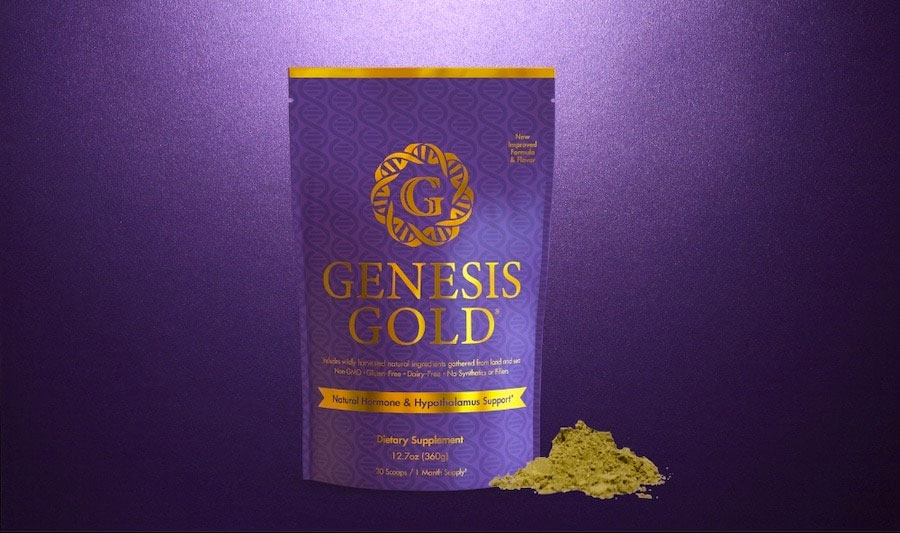
Supporting your hypothalamus nutraceutically with Genesis Gold® helps to restore your sleep cycles, but it does not happen overnight. This is not a sleep aid. In fact, you take Genesis Gold® in the morning to support your hypothalamus with the phytonutrients it needs to optimize its function, increase your daytime energy, and regulate your sleep cycles.
Usually, people notice a change in their sleep cycles, a deepening of their sleep, feeling more refreshed, and more energy during the day after two to six weeks of taking Genesis Gold®. It matters how long you've been out of balance. It takes at least 90 days to rebalance the hypothalamic pituitary axis to the lower endocrine glands, adrenals, thyroid, and gonads.
So it's important that you give your hypothalamus time to heal. And if you've suffered insomnia for years, you need to add a month per year you've been out of balance to the baseline 90 days for hypothalamic support. It just takes time to heal. You didn't get there overnight.
#2: Mood Swings & Irritability
Did you know that your hormones affect your neurotransmitters? Yes.
Estrogen helps to promote serotonin. Progesterone helps to promote the calming neuropeptide, GABA, and testosterone helps to promote dopamine. If your sex hormones are out of balance, your moods are going to be disturbed. If you're not making enough thyroid hormone, your mood will be affected. Without adequate T3, your neurotransmitters cannot get into the cells, and that will disturb your mood.
If your cortisol levels are spiking in the middle of the night or crashing during the day, that will also affect your mood because cortisol releases stored sugar, which fuels your brain. When your brain can't get the glucose it needs to function normally, your moods will be affected.
Really, you're not crazy. It's chemistry. It's neurochemistry. What we call the neuroendocrine system. And the hypothalamus is the root controller of your neuroendocrine system. The interface between your brain and your hormones. Your hypothalamus perceives what your hormones, your body needs, and what it's making.
Supporting your hypothalamus with Genesis Gold® can help your moods by stabilizing your neurotransmitters and balancing your hormones. For over 20 years, Genesis Gold® users have reported improved anxiety, depression, and mood swings.
#3: Weight Gain or the Inability to Lose Weight
We always blame our hormones when we're gaining weight, and that's actually true, but it's because they're out of balance. None of your hormones are bad. None of them are trying to make you gain weight. They're just trying to keep you in balance, and when they're out of balance with one another, you start to gain weight.
If you have estrogen dominance, meaning you don't make enough progesterone to counterbalance the estrogen you're making, you will have a tendency to gain water weight and put on body fat.
If you're not making enough growth hormone and testosterone, you're not going to be able to maintain muscle and bone mass. Losing lean body mass will actually lower your metabolism, and you will gain body fat.
When your glucose and insulin levels are out of balance, you're going to see an increase in weight gain, especially if you're insulin resistant. When insulin cannot unlock the cell receptors to get glucose into your cells, you cannot make enough energy, your metabolism lowers. Insulin resistance is the main reason for weight gain, especially around your middle.
If your thyroid hormone is low, your hypothalamic pituitary thyroid axis is off, your metabolism will be slower, and you will gain weight.
All of these hormonal imbalances are rooted in the hypothalamus. Science shows that targeting the GLP-1 receptor in the hypothalamus helps people lose weight. Your hypothalamus controls your metabolism, and GLP-1 is not the only player in obesity. That's why we don't always see sustained weight loss with GLP-1 receptor site agonists.
The new weight loss drugs are just pushing buttons; they're not fixing the hypothalamic dysfunction. If you support your hypothalamus nutraceutically with Genesis Gold®, you start to correct hypothalamic dysfunction. Once your hypothalamus adjusts your weight set point, you start to lose weight, and you're less likely to bounce back again.
Nourish The Hypothalamus
With hypothalamus support, your cellular metabolism increases your sex steroids, thyroid hormone, and adrenal hormones get back into balance. You can even reverse insulin resistance. When you're experiencing clear signs of hormonal imbalance, you need to begin at the top with a master controller, the hypothalamus.
A lot of providers practice downstream medicine by just taking care of the symptoms. Prescribing something for energy, something to sleep, something to help with mood swings. Quick fixes are bandaids, they're not getting to the root issue. You need to start upstream with the hypothalamus, that is where the imbalances begin.
Nourishing your hormonal operating system, the hypothalamus, will make a huge difference in keeping your hormones balanced naturally. Genesis Gold® is a natural plant-based all-in-one support for hormonal harmony, and I created Genesis Gold® because my patients were so hormonally challenged, had multiple endocrine issues, and were taking so many medications and supplements in order to just try to feel better, and it wasn't working. They'd get temporary relief, and then symptoms would recur, or new symptoms would crop up because they weren't focusing on correcting hypothalamic dysfunction.
To learn more about your hypothalamus controls, and all of these symptoms, why don't you join us in our FREE Hormone Reboot Training? If you recognize even one of these signs, your body's asking for support. Start by balancing your hypothalamus naturally with Genesis Gold®, and your hormones will follow. Subscribe for more videos and share this with a friend!

What are the most common signs of hormonal imbalance in women?
The most common signs of hormonal imbalance in women include disrupted sleep, mood instability, and unexplained weight gain or difficulty losing weight — three symptoms that are deeply interconnected through the hormonal system rather than being separate, unrelated problems. Beyond these three core signs, women with hormonal imbalance frequently experience fatigue that does not resolve with rest, brain fog or difficulty concentrating, anxiety or depression that seems to have no clear cause, irregular or painful menstrual cycles, low libido, hair thinning, temperature dysregulation, and digestive changes. One of the most frustrating aspects of hormonal imbalance is that these symptoms often appear together as a cluster and are frequently dismissed when standard lab work comes back within normal reference ranges. This is because conventional labs measure hormone levels at a single point in time and against population averages, while the actual issue is often one of hormonal rhythm, receptor sensitivity, or upstream signaling dysfunction — all of which standard panels are not designed to detect.
Why do labs come back normal when hormones still feel off?
Standard hormone labs measure circulating levels of individual hormones against reference ranges derived from population averages, but they do not assess hormonal rhythms, receptor site sensitivity, the ratio of hormones to one another, or the upstream signaling from the hypothalamus and pituitary that drives hormone production. A woman can have estrogen levels that fall within the normal reference range but still experience significant symptoms if her progesterone is too low to counterbalance it, if her cortisol is spiking at the wrong times of day, or if her hypothalamic signaling is disrupted in ways that affect how hormones are produced and used at the cellular level. Additionally, reference ranges are broad by design — a level that is technically "normal" may still be suboptimal for a particular woman's physiology and symptom picture. This is why clinical evaluation of symptoms alongside lab work, and attention to the hypothalamic-pituitary axis as the root of hormonal regulation, often reveals imbalances that standard panels miss entirely.
How does hormonal imbalance affect sleep?
Hormonal imbalance disrupts sleep through several overlapping mechanisms, which is why sleep problems are one of the earliest and most reliable indicators that the endocrine system needs support. Cortisol follows a diurnal rhythm — it should be highest in the morning and gradually decline through the day — but when adrenal function is dysregulated, cortisol can spike in the middle of the night, causing the brain to register a stress signal and wake the body unexpectedly. Low estrogen, particularly in perimenopause and menopause, reduces the hypothalamus's ability to regulate body temperature, leading to hot flashes and night sweats that fragment sleep. Progesterone has a natural calming effect through its influence on GABA receptors, so declining progesterone levels increase nighttime anxiety and restlessness. The hypothalamus also directly controls melatonin production through the pineal gland — when hypothalamic function is compromised, melatonin output is reduced and the sleep-wake cycle loses its natural rhythm. Because so many hormonal systems converge on sleep quality, addressing the hypothalamus as the root regulator is more effective than targeting any single hormone in isolation.

0 Comments