
Why Isn’t My Moisturizer Working During Menopause?
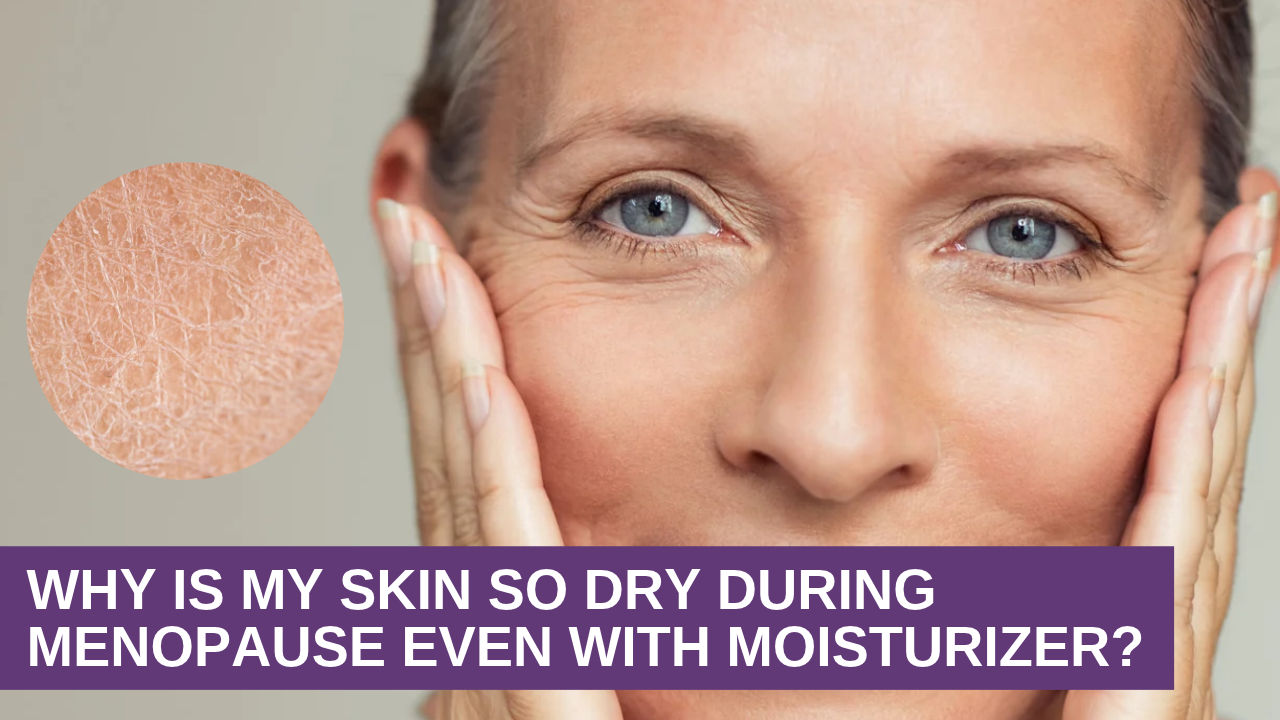
Your moisturizer isn’t working because menopause changes your skin below the surface. As estrogen falls, your skin makes less hyaluronic acid and oil, and it loses collagen: up to 30% in the first five years after menopause. Moisturizer only treats the surface, so your skin can’t hold onto water the way it used to.
And there’s another layer most people never hear about: your hypothalamus, which helps regulate your hormones and your body’s water balance.
If your skin suddenly feels dry no matter how much moisturizer you use, this is for you. I’m going to explain what estrogen has to do with it, how your hypothalamus fits in, and what you can do to support your skin.
Maybe your usual moisturizer doesn’t seem to be enough anymore. Your skin feels tight after a shower, or you’ve noticed more itching and thinning. If this started around menopause, it’s often because your estrogen levels have dropped significantly.
What Does Estrogen Have to Do With Dry Skin?
One of estrogen’s jobs is helping your skin hold onto water and maintain the protective barrier at the surface.
Your skin is full of estrogen receptors, especially on your face, genital area, and legs. So when estrogen falls, your skin feels it.
Your Skin Holds Less Water
As estrogen falls, your skin makes less hyaluronic acid, a molecule that binds water and keeps skin plump and hydrated. Your protective skin barrier also weakens, so water escapes more easily.
Your Skin Makes Less Oil
Your skin’s natural oil (sebum) helps seal moisture in. As oil production decreases, your skin loses water more easily and becomes harder to keep hydrated.
That’s why the moisturizer you’ve used for years may suddenly feel like it isn’t doing enough.
Your Collagen Declines
As estrogen declines, collagen does too. Research shows women can lose up to 30% of their skin collagen in the first five years after menopause, and about 2% more each year after that.
Collagen gives your skin its structure. With less of it, your skin becomes thinner, wrinkles become more visible, and your skin bruises and tears more easily.
Where Else Might You Notice Dryness During Menopause?
And dryness may not be the only thing you notice. It often shows up in other places too:
- Your eyes. Shifting hormones, including estrogen and androgens, affect the glands that make your tears. Your eyes may feel drier, grittier, or more irritated.
- Your hair. Your hair may become drier and more brittle.
- Vaginal tissue. Vaginal tissues respond to estrogen too, so they can become thinner and drier.
How Does Your Hypothalamus Affect Skin Hydration?
Lower estrogen is part of the story. But there’s another layer most people never hear about.
Your hypothalamus is the master regulator in your brain. Working through your pituitary gland, it helps direct your hormones, your metabolism, and your body’s water balance.
Your Hypothalamus Regulates Water Balance
Your hypothalamus makes a hormone called vasopressin, also known as antidiuretic hormone (ADH). Your pituitary gland releases it, and it tells your kidneys how much water to hold onto. This is one of the main ways your body keeps its fluids in balance.
Your Hypothalamus Directs Your Thyroid
Your hypothalamus signals your pituitary, and your pituitary signals your thyroid. Your thyroid sets the pace of your metabolism, and low thyroid function is one of the best-known causes of dry skin and dry, brittle hair.
Menopause Changes Your Hypothalamus Too
Your hypothalamus is sensitive to estrogen. When estrogen drops in menopause, your hypothalamus changes how it functions, which is what’s behind hot flashes. That’s why, when I see dry skin alongside other menopause symptoms, I look for signs of hypothalamic dysfunction. I don’t treat it as just a skin problem.
What Can You Do About Dry Skin During Menopause?
1. Protect the Moisture You Already Have
Use warm rather than hot water. Moisturize while your skin is still slightly damp to help trap water in. I particularly like to use coconut oil as a moisture barrier.
2. Be Gentler With Your Skin
Thinner skin is more fragile. Back off anything that leaves it feeling tight or irritated.
3. Support Your Skin From the Inside
Protein, healthy fats, and colorful plant foods give your body what it needs to build and repair tissue.
4. Stay Hydrated
Your body still needs enough fluid to function well, even though drinking water alone won’t fix menopausal dry skin.
5. Look at the Bigger Hormone Picture
Dry skin alongside hot flashes, vaginal dryness, or sleep changes points to the same underlying hormonal shift. Supporting your hypothalamus helps your whole hormone system work together, including the hormones that affect your skin.
What I’ve Seen in My Practice
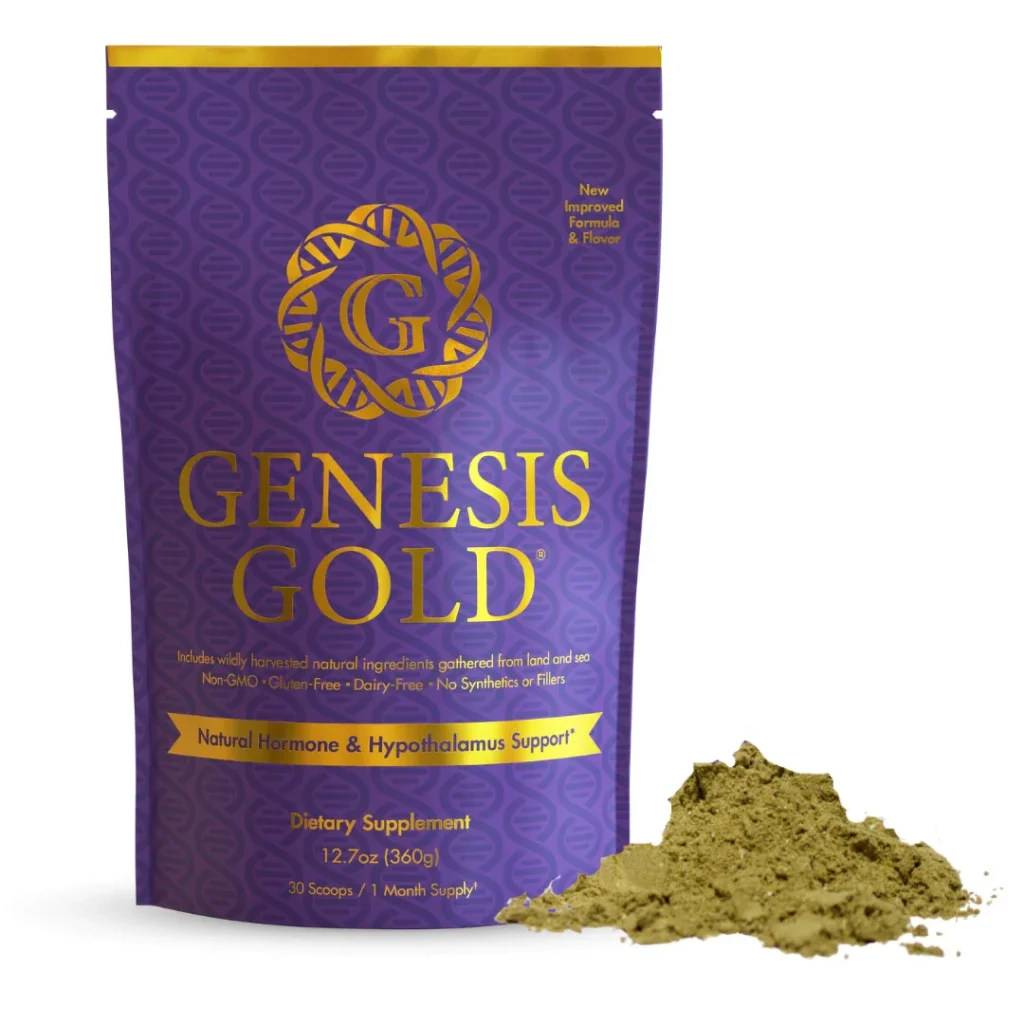
In my practice, many women who support their hypothalamus with Genesis Gold® tell me they notice a real difference in how hydrated they feel. Their eyes feel more comfortable, natural moisture returns, and their skin feels softer and more supple. Some even find they reach for moisturizer less often. Genesis Gold® is designed to nourish your hypothalamus, which supports healthy hormone balance and hydration during menopause.
One of my postmenopausal patients couldn’t wear contact lenses for most of menopause because her eyes were so dry. Dryness had changed the surface of her corneas. About six months after she started Genesis Gold®, her ophthalmologist was surprised at how healthy her eyes looked, and she was able to wear her contacts again. Every woman’s body is different, and individual results vary. But stories like hers are exactly why I focus on the hypothalamus.
When Should You See Your Healthcare Provider About Dry Skin?
Dry skin is common in menopause, but check in with your provider if:
- Itching, cracking, or a rash doesn’t improve with gentle care, or your skin bleeds or looks infected
- Dryness comes with fatigue, feeling cold, weight changes, or hair loss, which are reasons to have your thyroid checked
- Your eyes stay dry, painful, or red, or your vision changes
- You have dry eyes along with a dry mouth
- Vaginal dryness makes intimacy or daily activities uncomfortable
If you want to understand how your hypothalamus, estrogen, and the rest of your hormones fit together, that’s what I teach in my free Hormone Reboot Training.
Resources:
- Thornton MJ. Estrogens and aging skin. Dermato-Endocrinology. 2013;5(2):264–270. https://pmc.ncbi.nlm.nih.gov/articles/PMC3772914/
- Shah MG, Maibach HI. Estrogen and skin. An overview. Am J Clin Dermatol. 2001;2(3):143–150. https://pubmed.ncbi.nlm.nih.gov/11705091/
- Calleja-Agius J, Muscat-Baron Y, Brincat MP. Skin ageing. Menopause International. 2007;13(2):60–64. https://www.um.edu.mt/library/oar/bitstream/123456789/6405/1/Jean%20Calleja-Agius%20-%20Skin%20ageing.pdf
- Kamp E, et al. Menopause, skin and common dermatoses. Part 2: skin disorders. Clin Exp Dermatol. 2022;47(12):2117–2122. https://academic.oup.com/ced/article/47/12/2117/6966236
- Physiology, Hypothalamus. StatPearls. https://www.statpearls.com/kb/viewarticle/768
- Dermatologic manifestations of thyroid disease: a literature review. Front Endocrinol. 2023;14:1167890. https://pmc.ncbi.nlm.nih.gov/articles/PMC10214500/
- Peck T, Olsakovsky L, Aggarwal S. Dry eye syndrome in menopause and perimenopausal age group. J Midlife Health. 2017;8(2):51–54. https://pmc.ncbi.nlm
0 Comments