
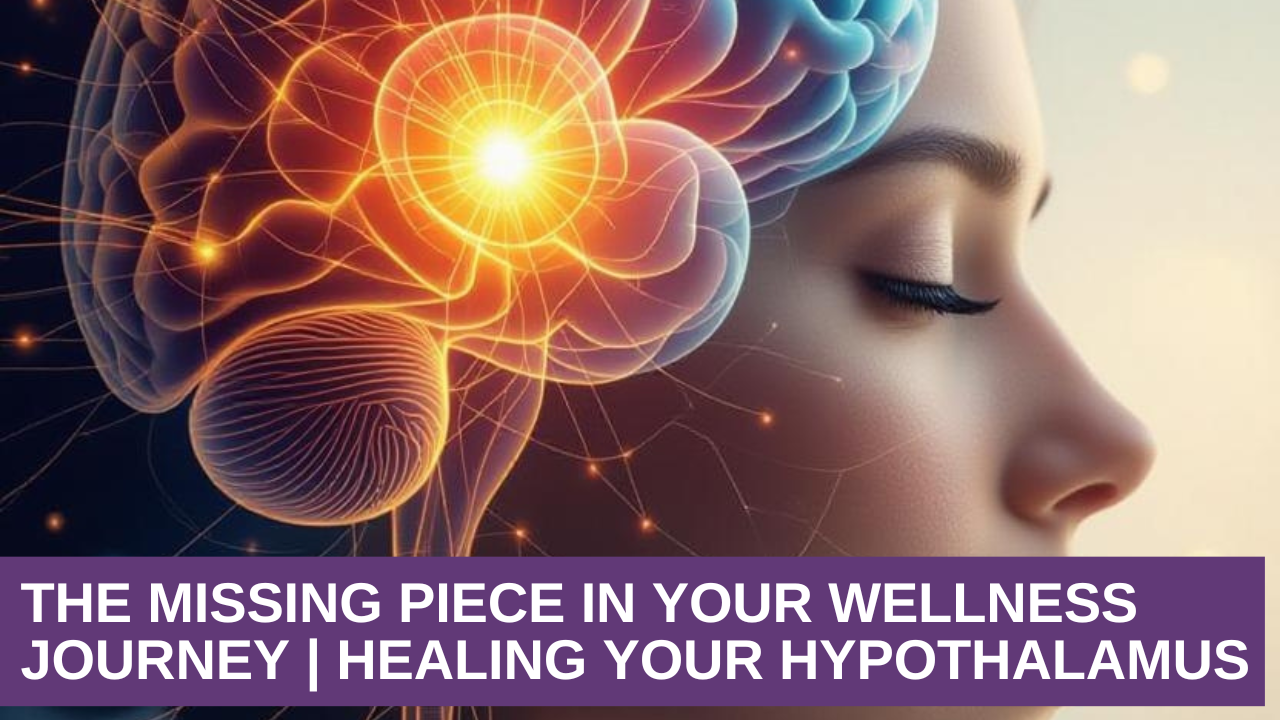
High-end wellness clinics. Designer supplements. Personalized labs. There is a lot of beauty in that world, but there is also a big blind spot. No matter how luxurious the treatments, if you are not addressing this one critical piece, you will not get the results you are hoping for in your wellness journey.
I have seen this again and again. People spend thousands of dollars on IV drips, detoxes, peptides, and biohacking gadgets, yet they are still struggling with:
Why?
The missing piece in so many luxury wellness programs is healing the hypothalamus.
The hypothalamus is the control center in your brain that regulates your entire endocrine system, including your adrenals, thyroid, ovaries or testes, and even your pituitary. It also controls your nervous system and your immune response. That is three critical systems, all coordinated by one small but mighty part of your brain.
If the hypothalamus is out of sync, no amount of expensive protocols will create sustainable change.
Why?
Because it’s like trying to fix a house by repainting the walls… when the foundation is crumbling.
Here’s What Often Gets Missed:
1. Hormones don’t function in isolation.
Testing estrogen, testosterone, or thyroid in isolation does not tell you why they are off.
2. Over-supplementing can make things worse.
Flooding your system with hormones or adaptogens without considering your circadian rhythm and hypothalamic signaling can push your body further out of balance.
3. Long-term results come from rhythm, not reaction.
Quick fixes feel good in the moment, but healing requires your brain and body to feel safe, supported, and stable.
That is why my approach is different.
I do not start with the glands. I start with the conductor of the hormonal orchestra.
When You Support the Hypothalamus, Everything Downstream Starts to Recalibrate:
- Energy improves
- Sleep deepens
- Mood stabilizes
- Inflammation reduces
- Metabolism becomes more responsive
- And most importantly… You stop fighting your body and start working with it.
If you have tried the luxury path and still do not feel like yourself, it is not your fault. You were probably just missing the upstream solution.
That’s exactly what I teach in my free Hormone Reboot Training.
I’ll show you how to support your hypothalamus, rebalance your hormones naturally, and create results that last.
Let’s build your wellness on a foundation that actually holds.
What is the hypothalamus and why is it so important for overall health?
The hypothalamus is a small but extraordinarily powerful region of the brain that serves as the master control center for three of the body's most critical regulatory systems — the endocrine system, the nervous system, and the immune system. It governs the function of every major hormonal gland in the body, including the adrenals, thyroid, ovaries or testes, and pituitary. When the hypothalamus is functioning optimally, all of these systems communicate efficiently and work in coordinated rhythm. When it is impaired or overwhelmed, the downstream disruption affects virtually every aspect of how you feel, function, and heal.
Why do so many wellness programs fail to produce lasting results?
Most conventional and even high-end wellness approaches target individual glands or hormones in isolation — testing estrogen, testosterone, or thyroid independently, then supplementing or treating each one separately. While this can produce short-term symptomatic relief, it does not address the root of why those hormones fell out of balance in the first place. Without correcting the upstream signaling dysfunction in the hypothalamus, the body has no stable foundation from which to heal. Protocols built on this incomplete picture tend to create temporary improvements that fade, leaving many women feeling like nothing truly works for them long-term.
What are the signs that your hypothalamus may be out of sync?
Because the hypothalamus regulates so many interconnected systems simultaneously, dysfunction tends to show up across multiple areas of health at once rather than in a single isolated symptom. Common signs include:
Persistent fatigue that does not improve with rest
Mood instability including anxiety, irritability, or low mood
Unexplained weight gain or difficulty losing weight despite effort
Poor or non-restorative sleep
Brain fog and difficulty concentrating
Low libido
Temperature dysregulation such as hot flashes or feeling consistently cold
When multiple symptoms are present simultaneously and conventional treatments have not resolved them, hypothalamic dysfunction is often the common thread.

Can I take cod liver oil while I’m taking geniuses gold?
Yes, you can take cod liver oil and Genesis Gold together. Genesis Gold helps to optimize hypothalamus function which when dysfunctional is at the root of the inflammation. An anti-inflammatory diet is also critical to maintaining your hormonal health as well as preventing chronic illnesses.
You can access my diets and recipes in my free hormone reboot training here —> https://members.genesisgold.com/hrt. See you there!