

What are the energetics of health and healing in adulthood?
Let's talk about it.
Every stage of your life holds a different potential for health as well as healing. What health issues you may be facing, as well as what mindset best serves your most optimal state of wellness differs throughout life.
ADULTHOOD (25-40)
By your mid-20s through your early 40s, you are navigating adulthood. That may include having a career, your own home, and no longer being dependent on family. It may include long-term relationships, marriage, and maybe a family of your own.
There are a lot of changes that happen in adulthood.
Because of all the responsibilities that you've taken on with career, relationships, and children, you may find that you have less time to take care of yourself. Less time to be as active, less time to sleep. Less time to prepare healthy meals, to meditate, journal, and do what you need to do for your mental health.
Yet adulthood is the time to ingrain healthy habits in your life if you haven't already in your youth. Your habits, choices, diet, exercise, sleep. nutraceutical intake, even your mindset affects how you will age. Choose poorly and you may be prone to illnesses, infections, autoimmunity, or infertility. You may not be as productive or have the energy necessary to reach your goals in life.
Your choices are critical to your health.
Your health physically, psychologically, and spiritually will benefit from making the best choices in your nutrition, activity, sleep habits, mindset, and hypothalamus support.
Here are five tips to stay healthy in adulthood:
1. Nutrition
Consuming a plant based diet with adequate protein and healthy fat is critical.
You need half a gram of protein per pound of lean body mass if you're going to maintain a healthy metabolism. Make sure you're eating healthy fats especially monounsaturated fats like olive oil, avocados, nuts and seeds.
Make sure you're eating a variety of colorful fruits and vegetables to make sure you're getting enough antioxidants, vitamins, and minerals for your body to function optimally.
Eating the majority of your calories, at least two-thirds, in the daytime will help you maintain a healthier metabolism.
2. Sleep
Make sure you're getting enough sleep.
Adults need seven to nine hours of sleep at night. Establish a sleep routine that works for you. Your hypothalamus actually remembers your sleep routine.
So as soon as you start getting ready for bed - whether it’s turning down the lights, taking a warm bath, reading a book, or getting in your pajamas - your hypothalamus starts triggering the circadian nocturnal mode telling your pineal gland to produce high levels of melatonin.
3. Exercise
It’s imperative you stay active.
If you can't do formal exercise, make sure you're not sitting all the time. Being sedentary is the new smoking. It will shorten your life, so move your body.
It’s best to exercise earlier in the day. Do aerobic exercise at least a few times a week and then try to do some kind of long slow distance during the weekend. A long hike, a long bike ride, a long swim, over 45 minutes to set a healthy metabolism so that you're burning fat, building muscle, and getting out in nature.
I know it’s hard.
I worked full-time but made time to train for triathlons when my children were young. It is possible to fit in exercise. You have to make it a priority.
4. Mindset
Your mindset is super important.
We know affirmations work with children as well as adults. So if you're not well, not as energetic as you'd like to be, not sleeping, then you need to look at what belief systems and even some internal dialogue you're having that's keeping you out of balance.
I recommend the emotional freedom technique to help shift from negative emotions and unhealthy belief systems to more positive ones. The emotional freedom technique has been well-researched and involves tapping on acupressure meridians to help to reprogram your nervous system.
What you believe becomes. So it’s best now to program your neuroendocrine system towards health.
5. Hypothalamus Support
The key to optimal health and well-being physically, mentally, emotionally, and spiritually is hypothalamic support.
My patients who support their hypothalamus with Genesis Gold® report less sick time, more energy, faster metabolism, easier weight control, better sleep, healthier sex drive, and balanced hormones.
It’s hard to get every nutrient your hypothalamus needs from your diet alone which is why I created Genesis Gold®.
If you have any questions about how to stay healthy throughout your adulthood and want access to my recommended diets, exercise routines and meditations, please join us in our Hormone Reboot Training.
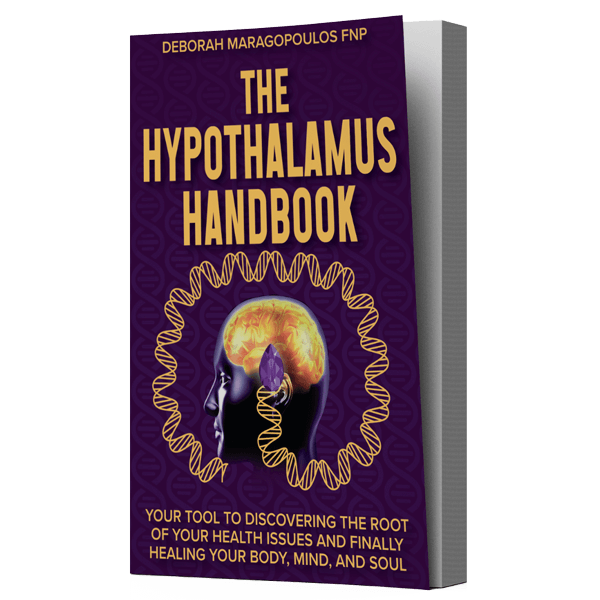
You can also learn more in my newest book The Hypothalamus Handbook.
Resources:
https://joe.bioscientifica.com/view/journals/joe/258/3/JOE-23-0079.xml
0 Comments