
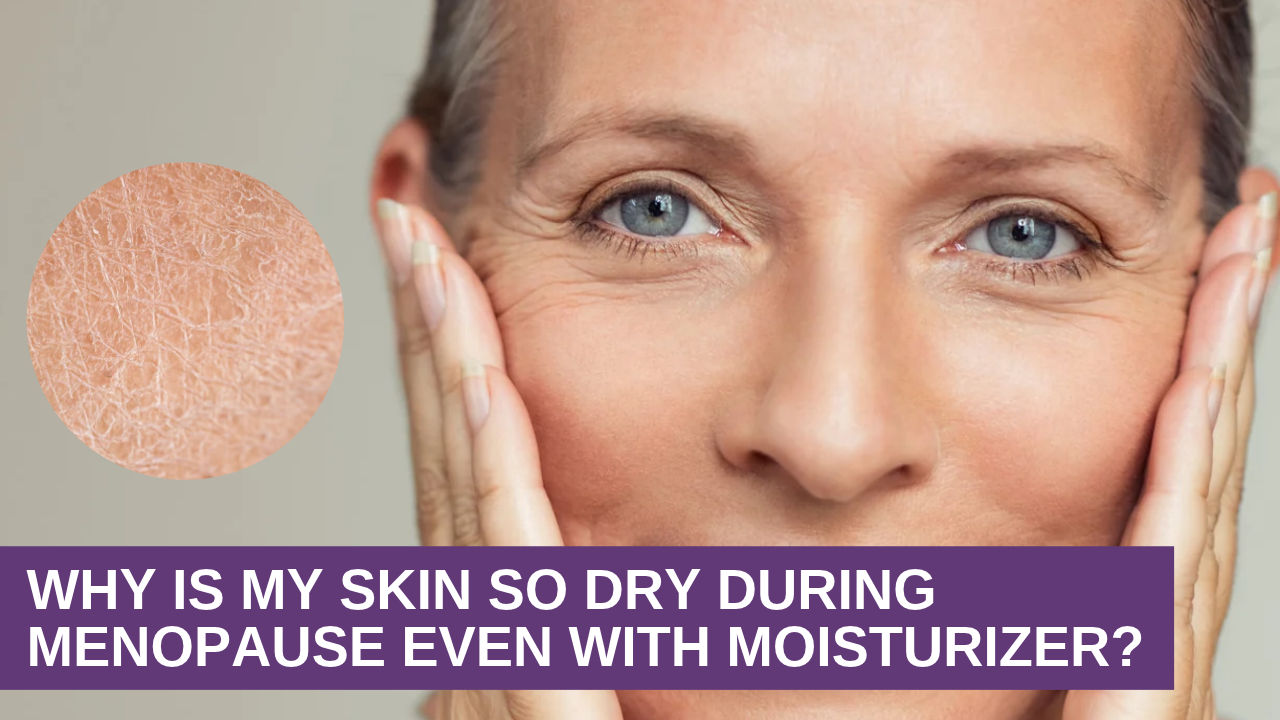
If your skin suddenly feels dry no matter how much moisturizer you use, this is for you. I’m going to explain what estrogen has to do with it and what you can do to support your skin.
Maybe your usual moisturizer doesn’t seem to be enough anymore. Your skin feels tight after a shower, or you’ve noticed more itching and thinning. If this started around menopause, it’s because your estrogen levels have dropped significantly.
One of estrogen’s jobs is helping your skin hold onto water and maintain the protective barrier at the surface.
As estrogen falls, your skin produces less of the substances that help hold moisture in. Oil production can also decrease, so your skin loses water more easily and becomes harder to keep hydrated.
That’s why the moisturizer you’ve used for years may suddenly feel like it isn’t doing enough.
And dryness may not be the only thing you notice.
As estrogen declines, collagen also decreases. Collagen helps give your skin structure, so lower estrogen can contribute to thinner skin, more visible wrinkles, and skin that bruises or tears more easily.
You may even notice dryness in other places.
Your eyes may feel drier. Your hair may become drier. Vaginal tissues can also become thinner and drier because those tissues respond to estrogen too.
While lower estrogen is part of the story — there’s another layer most people never hear about.
Your hypothalamus doesn’t just regulate hormones like estrogen.
Your hypothalamus also controls cellular metabolism — the repair processes happening inside every cell in your body, and the fluid balance inside and outside those cells. When hypothalamic function declines, cellular repair and hydration signaling decline with it. Cells throughout your body start losing internal fluid, not just surface moisture. And you feel that dryness show up in the tissues that are most sensitive to it — your skin, your hair, your eyes, and vaginal tissue.
And estrogen decline in menopause triggers hypothalamic dysfunction, which initiates dryness everywhere too. So thinning tissues bruise more easily.
What Can You Do?
#1: Protect the Moisture You Already Have
Use warm rather than hot water. Be sure to moisturize while your skin is still slightly damp to help trap water in. I particularly like to use coconut oil as a moisture barrier.
#2: Be Gentler with Your Skin
Thinner skin is more fragile — back off anything that leaves it feeling tight or irritated.
#3: Support Your Skin from the Inside
Protein, healthy fats, and colorful plant foods give your body what it needs to build and repair tissue.
#4: Stay Hydrated
Your body still needs adequate fluid intake to function, even though water alone won’t fix cellular-level dehydration.
#5: Pay Attention to the Bigger Hormone Picture
Dry skin alongside hot flashes, vaginal dryness, or sleep changes points to the same underlying hormonal shift. Getting your hormones back into balance by optimizing hypothalamic functioning makes a huge difference in collagen production and the skin’s ability to maintain its moisture.
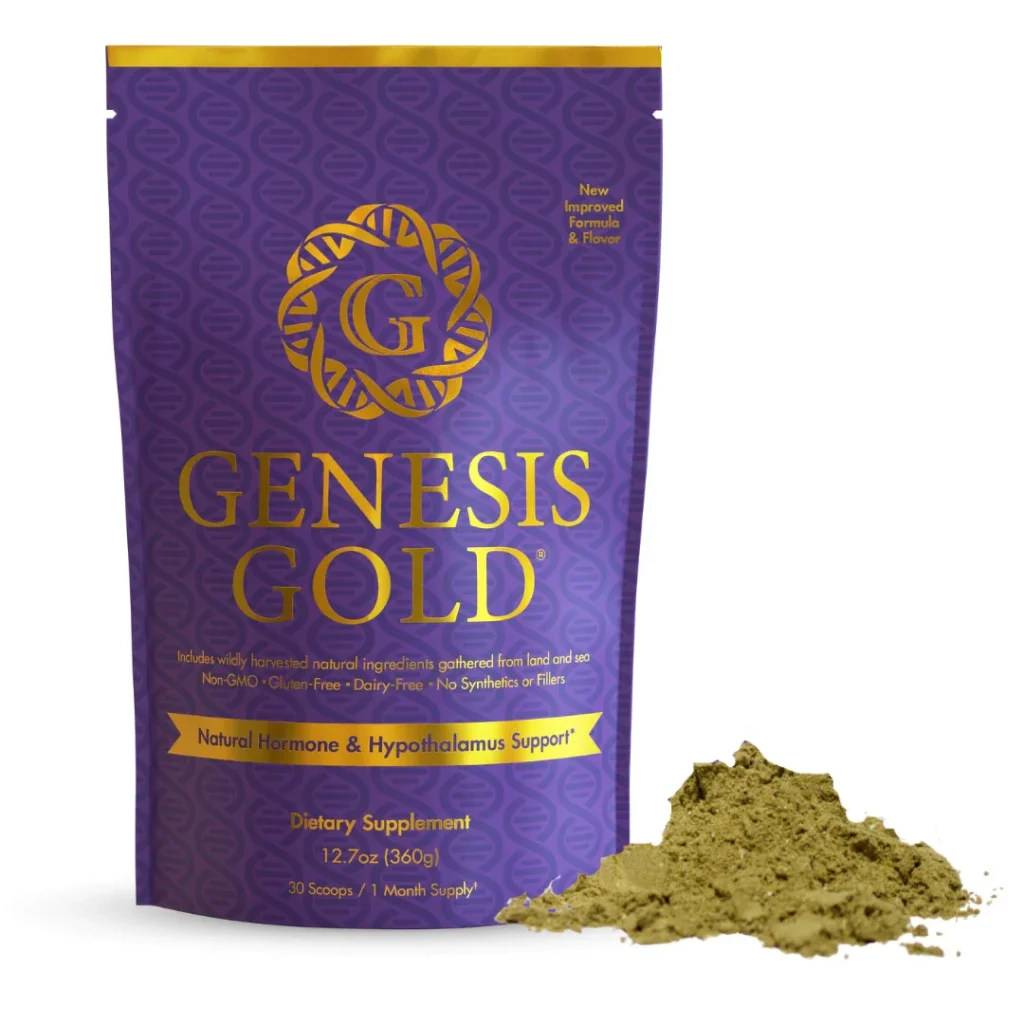
Here’s what I’ve seen in my own patient case studies: when women support their hypothalamus with Genesis Gold®, they consistently report increased cellular hydration — their eyes are less dry, vaginal dryness improves with natural lubrication returning, and their skin becomes noticeably more supple, often to the point they need less moisturizer. That’s because we’re not just moisturizing the surface — we’re supporting the cellular repair and fluid balance signaling that was driving the dryness in the first place.
One of my postmenopausal patients reported that her ophthalmologist was shocked at her eye health just six months after starting to use Genesis Gold®. Because her eyes were so dry and the lens flattened so much, she was unable to use contact lenses all through menopause, but after using Genesis Gold®, her eyes retained their normal hydration and moisture, and she was able to use contact lenses again.
If you want to understand how your hypothalamus, estrogen, and the rest of your hormones fit together, that’s what I teach in my Free Hormone Reboot Training.
0 Comments