
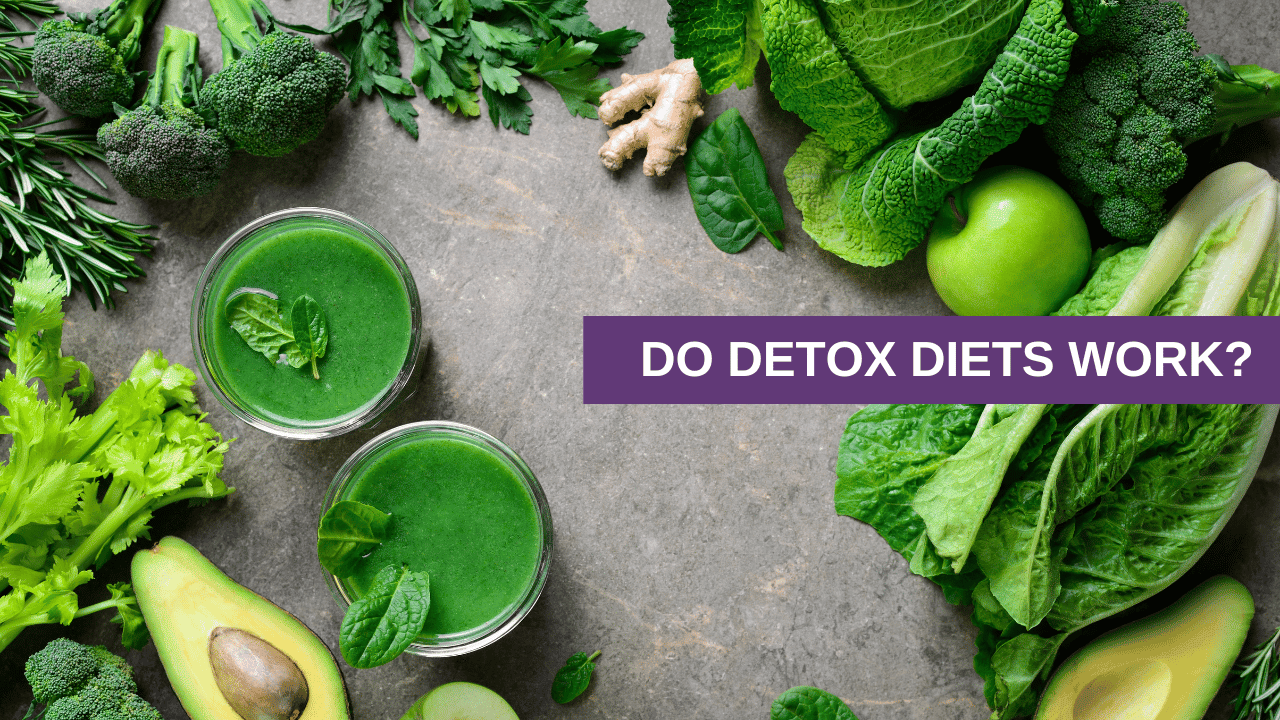
Do detox diets work? Let’s talk about it.
There’s a lot on the internet about detoxification diets – fasts, juice cleanses, weight loss detox. But there’s not a lot of research that shows that detox diets are very effective. While detox diets do seem to stimulate weight loss in the short run, a scientific review of the literature in 2015 concluded that there weren’t compelling resources for the use of detox diets for long-term weight loss or eliminating toxins from the body.
Yet if you have been eating a poor diet, living an unhealthy lifestyle, and not getting enough sleep, a short-term detoxification diet may be in order to get you started on a healthier lifestyle path.
Not all detox diets are the same
Some may include absolute fasting or just drinking liquids or dietary supplements. Some may include colon cleansing with enemas and some include supplementation. While research has shown that juicing and detox may help with early weight loss, it’s not a long-term fix. Detox diets can have some risks, especially if your hypothalamus is not functioning properly.
What I find with my patients is that many of them have tried detoxification and they’re in my office because it hasn’t worked for them. Some of my patients do need some detoxification when their lifestyles are not as healthy as they could be. But I always make sure that their hypothalamus is supported first before we do any type of detoxification. That’s because your hypothalamus controls your detoxification.
If you are toxic, your hypothalamus is going to slow your metabolism down in order to prevent more toxic cellular waste from accumulating. If you dump toxins from your tissues and your liver, kidneys, and colon are not functioning properly, your hypothalamus is going to slow down your metabolism to prevent you from poisoning yourself.
It’s vital that your hypothalamus is supported and detoxification is gentle. So after starting my patients on Genesis Gold® to support their hypothalamus for at least a month, I have them do a short-term dietary detox. My liver cleanse diet works fairly well for two reasons. Number one, it helps to get your liver and colon cleaned out. Number two, if you need to lose weight, it’s a great way to jumpstart before starting an insulin-resistant diet to lose that body fat.
And it’s completely dietary. Sometimes we’ll use extra supplementation to support faulty liver pathways or genetic detox pathway mutations, but this detox diet I recommend uses cleansing food.
For three to seven days, follow this liver cleanse diet:
Upon awakening drink about a cup of lemon tea which is two tablespoons of fresh lemon juice in hot water.
Doing that every morning stimulates a bowel movement. Then eat about half a cup of fibrous fruit like apples, pears, berries, melon but not citrus. About 15 minutes later eat ½ – 1 cup of cooked whole grains like oats, bulgar, quinoa, brown rice, without dairy and unsweetened.
Then for lunch and dinner eat two to four cups of steamed or roasted veggies.
I prefer roasted vegetables because roasting in olive oil maintains more nutrients, but you can have steamed veggies if you’d like. Just don’t use the microwave which robs the nutrients from your food. You want to include root vegetables like beets, garlic, onion, turnips, carrots, yams; stocks like broccoli, cauliflower, brussel sprouts, artichoke, asparagus, leeks and fennel; and leaves which you can sauté in olive oil like spinach, kale, mustard, chard.
Then before you go to bed, you want to drink a shot of olive oil and lemon juice – one tablespoon each to flush your bile ducts.
During the cleanse you’re not to have any saturated fats, no protein foods, absolutely no caffeine, no alcohol, no sugar, no processed food. If you have a tendency towards hypoglycemia, you may find that at about three to five o’clock in the afternoon, you feel like your blood sugar is low. You may need a little bit of lean protein at that time. You can use a clear unsweetened protein drink or 2 oz poultry or fish but no dairy products.
If you have any questions regarding detox diets, please join me in our Hormone Support Group. You can get access by signing up for my free Hormone Reboot Training.
“Detoxes” and “Cleanses”: What You Need To Know – https://www.nccih.nih.gov › health › detoxes-and-cleanses…
0 Comments