
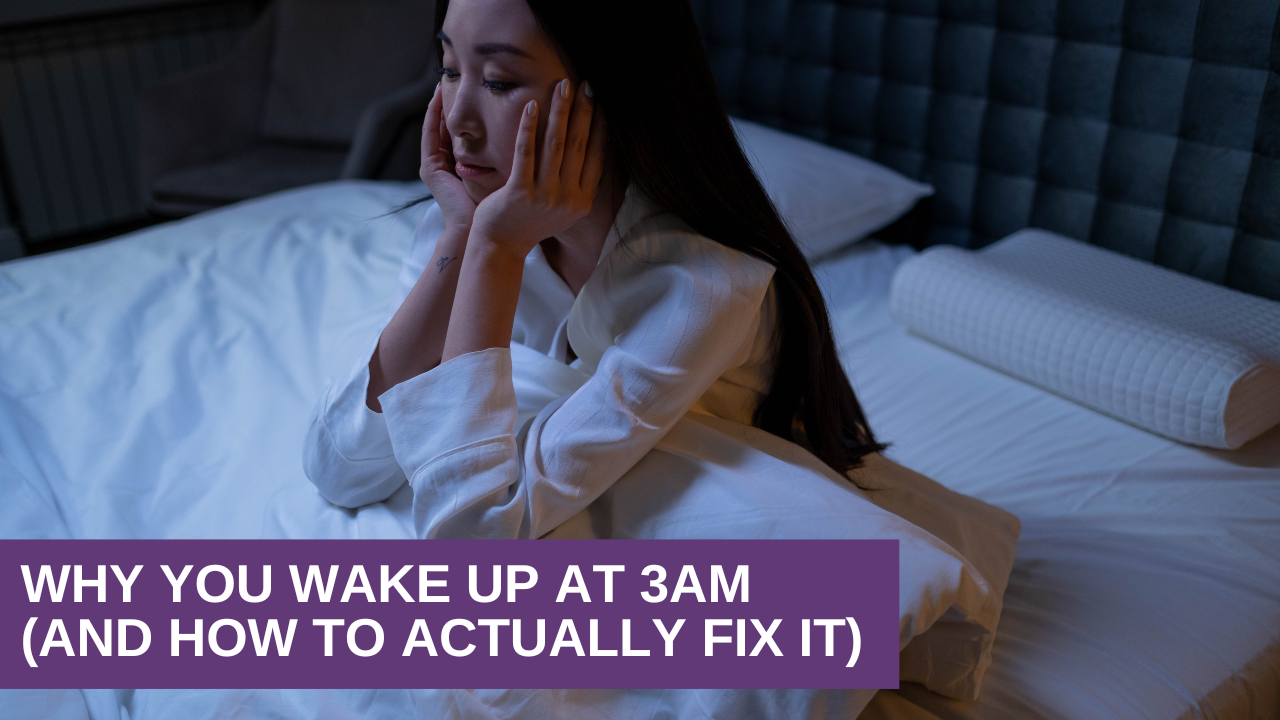
If you fall asleep just fine but you wake up at 3am staring at the ceiling — that is not random, and it's probably not insomnia the way most people use that word.
True insomnia is difficulty falling asleep. What you're describing — falling asleep fine, then waking in the early hours and struggling to return to sleep — is a different problem with a different cause. And once you understand what your brain is actually doing at 3am, the fixes become much clearer. And no, it's not melatonin.
The Pattern Is the Clue
Trouble staying asleep — as opposed to falling asleep — almost always points to a chemistry problem, not a habit problem. It's not your phone, your bed, or your racing thoughts (though those can be contributing factors). It's a disruption in the hormonal and neurochemical timing that governs your overnight architecture.
Sleep is not a single uniform state. It cycles through stages every 90 minutes or so, and the chemistry required to hold you in those later cycles is different from what gets you into sleep in the first place. The 3am wake-up happens precisely because something disrupts the chemistry of the second half of the night.
What's Happening When You Wake Up at 3am
The Cortisol Problem
Cortisol is your primary waking hormone. Under normal circumstances, it sits at its lowest point in the middle of the night and rises gradually toward dawn, reaching its peak shortly after waking. This rhythm is how your body prepares you to get up.
But when the stress axis is dysregulated — which is extremely common in perimenopausal and menopausal women whose HPA (hypothalamic-pituitary-adrenal) axis is already under strain — this rise can happen too early. Cortisol spikes at 3am instead of 6am. The body's alarm goes off in the wrong window. And you wake up at 3am wired in a way that's very difficult to talk yourself back down from.
The Blood Sugar Dip
A blood sugar drop in the early morning hours can trigger the same cascade. When glucose falls, the body releases counter-regulatory hormones — including cortisol and adrenaline — to raise it back up. That hormonal release is activating, and it can pull you cleanly out of sleep without you understanding why you feel anxious or alert.
Women with insulin sensitivity issues, women who eat a high-carbohydrate dinner, and women under chronic stress are all at higher risk for this overnight glucose pattern.
The Progesterone-GABA Connection
Progesterone — and specifically its metabolite allopregnanolone — is a natural activator of GABA receptors in the brain. GABA is your primary calming neurotransmitter, the chemical brake on neural activity. When progesterone falls in perimenopause, GABA tone drops with it. The nervous system becomes more reactive, more easily startled into alertness. The 2am to 4am window is consistently when this shows up — because that's when sleep becomes lightest and most chemically dependent on the calm that GABA provides.
All of this is run by the clock inside your hypothalamus. It's not your mattress. It's not your stress management. It's your control center firing an alarm at the wrong time — and the fix has to address that clock.
What the Sleep Apps Won't Tell You
The answer isn't another sleep aid layered on top of a disrupted system. Melatonin helps with falling asleep — it's an onset hormone, not a sleep-maintenance hormone. It won't address the cortisol spike at 3am or the progesterone-GABA deficit driving the early waking.
Benzodiazepines and similar sleep medications suppress the nervous system broadly, which gets you back to sleep in the short term but degrades sleep quality over time and doesn't resolve the underlying chemistry.
The fix is calming the system that's triggering the 3am alarm.
Here's where to start:
What Actually Helps
Morning light, first thing
Light exposure in the morning sets your circadian clock — the master timer inside the hypothalamus that governs when cortisol rises and falls, when melatonin builds, when the sleep-wake cycle turns. Without that morning anchor, the clock drifts. Cortisol timing drifts with it. Ten minutes of natural light within an hour of waking is a meaningful intervention for nighttime wake-ups.
Finish eating earlier in the evening
A late dinner, particularly one high in refined carbohydrates, sets up an overnight blood sugar pattern that can trigger those early-morning counter-regulatory hormone releases. Finishing your last meal at least three hours before sleep — and keeping that meal protein-forward — significantly reduces the overnight glucose disruption risk.
Wind down the stress response before bed
Whatever is loading the cortisol spring during the day is what fires it too early at night. This is a genuine physiological process, not a vague wellness recommendation. Practices that meaningfully lower HPA activation in the hours before sleep — restorative movement, breathwork, reducing screen-based stimulation — are not optional add-ons. For many women, they are the difference between sleeping through the night and not.
Support the hypothalamic clock directly
The circadian clock that governs all of these rhythms lives in the suprachiasmatic nucleus of the hypothalamus. When the hypothalamus is nutritionally depleted or neuroinflamed — both common states in women in midlife — the clock's precision degrades. Sleep timing shifts. Cortisol timing shifts. The 3am wake-up is often a sign that the clock is running ragged.
Supporting hypothalamic function with the specific nutrients it needs to maintain precise timing is not a substitute for good sleep hygiene — it's the foundation that makes sleep hygiene actually work.
→ If 3am is your wake-up call, the free Hormone Reboot Training shows you how to calm the control center that's setting off the alarm.


0 Comments