
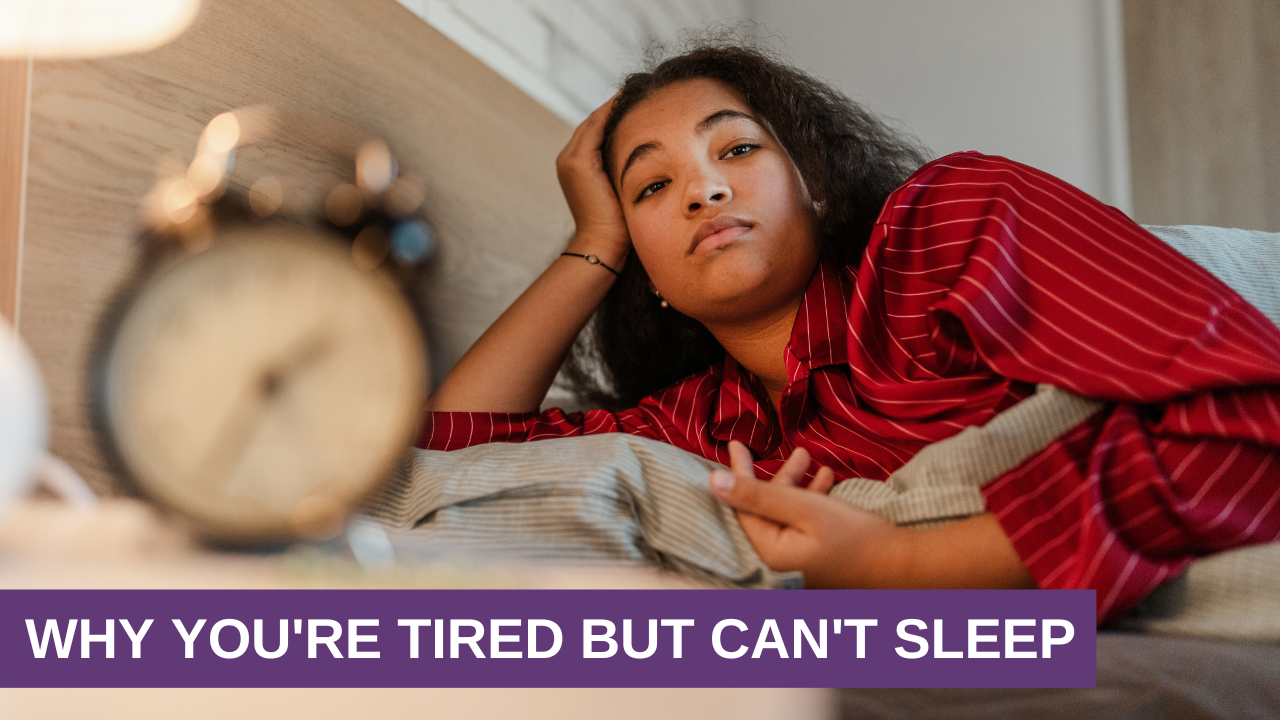
Dragging at 7:00 AM, dependent on caffeine by 10, hitting a wall at 3:00 PM, then 10 rolls around, and suddenly your brain is on. Wide awake, thoughts racing, body exhausted, but mind won't stop. You're tired but can't sleep. That's not insomnia, that's your hypothalamus firing cortisol at the wrong time, and no melatonin gummy is going to fix that.
Why You Feel Tired But Can't Sleep
I hear this every single week: "I'm dragging all day. I can barely function, but the moment I lie down, my brain turns on," or, "I'll fall asleep fine, but I wake up at 2:30, 3:00 AM, and I can't get back to sleep."
That pattern is not random. It's biochemical timing.
Your hypothalamus is your master clock. It regulates cortisol rhythm, melatonin release, body temperature, sleep drive, hunger timing, and alertness cycles.
In a healthy rhythm, cortisol rises early in the morning to wake you up, gradually declines throughout the day, and melatonin rises at night to help you sleep deeply.
But when the hypothalamus becomes dysregulated, cortisol can peak at night instead of the morning and crash in the morning instead of rising, so you feel foggy at 7:00 AM, wired at 10:00 PM, and alert at 2:00 AM.
That's not a willpower issue.
That's mistimed cortisol signaling, and no single sleep supplement fixes that because the problem isn't sedation, it's regulation.
What Disrupts Hypothalamic Timing?
So what actually disrupts hypothalamic timing?
The list may surprise you:
- Chronic stress
- Emotional trauma
- Blood sugar instability
- Inflammation
- Shift work
- Excessive screen exposure at night
- Over-training
- Under-eating
- Stimulant dependence
Over time, the body forgets when to rest.
The stress system stays lightly activated, and when your life looks fine on the outside, the amygdala is sending subtle distress signals, and the hypothalamus keeps cortisol levels slightly elevated, and your system never fully powers down.
Tired, but wired.
Sleep issues are rarely discipline problems; they're timing problems.
Your Body Is Waiting for the Right Signals
Your body isn't refusing to sleep; it's waiting for the right neurochemical signals, and one of the most important of those signals is dopamine balance in the daytime, which helps regulate prolactin, cortisol rhythm, and sleep-wake cycles.
When dopamine is low and stress chemistry is dominant, nighttime becomes alert time.
Supporting the Hypothalamus
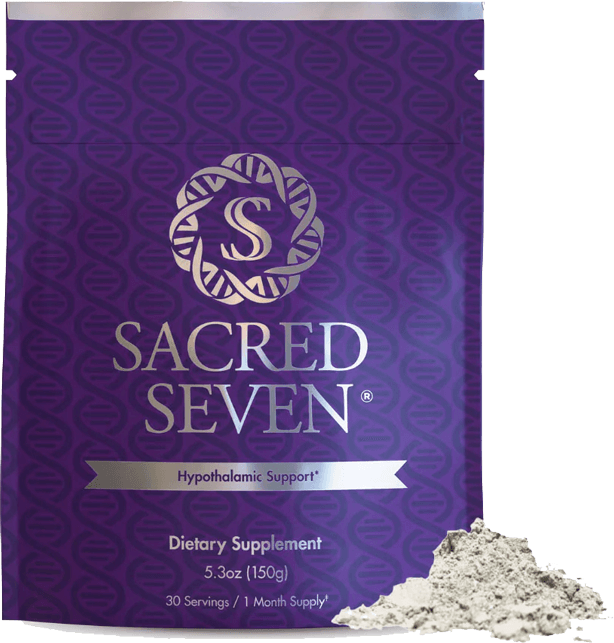
This is where a targeted hypothalamic support can help.
Sacred Seven® amino acids were designed to nourish the specific amino acid pathways the hypothalamus uses to regulate dopamine, cortisol timing, and neuroendocrine balance.
They're not sedatives.
They don't force sleep.
They support the signaling that allows the rhythm to normalize over time.
When cortisol peaks in the morning again, when dopamine stabilizes during the day, when stress chemistry softens, sleep follows naturally.
You are not broken.
Your sleep isn't failing.
Your timing is simply off.
Restore the rhythm, and the body remembers how to rest.

0 Comments