
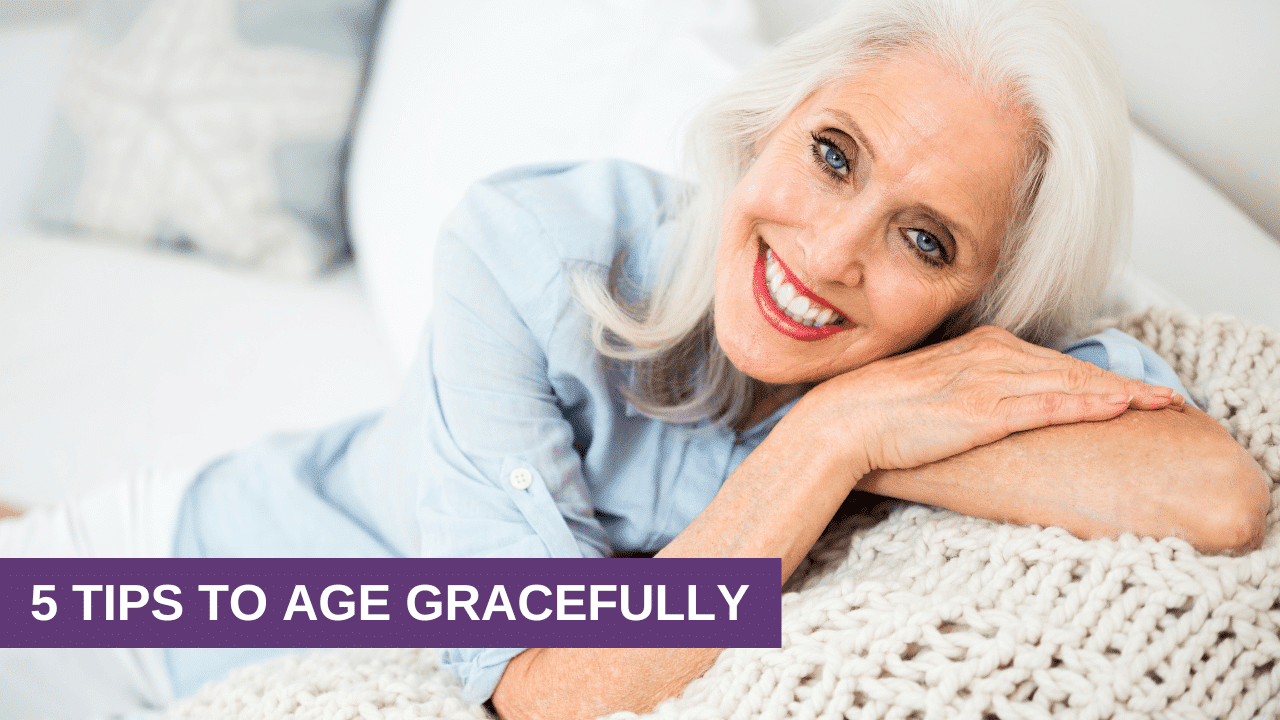
How do you age gracefully? Here are five tips to age with vitality and avoid chronic illnesses.
Aging Gracefully can be a challenge
A big part of it is your mindset. Some of it’s your genetics. Yet the biggest factor is your lifestyle. Even if you don’t have the best genes – people die early in your family of heart disease, diabetes, or cancer – how you live your life can actually influence your genetics in a positive way. Even if you wait until you’re at midlife, 40 to 60 years old, before you try to get healthier, the changes you make can have a profound effect on your ability to age gracefully.
Aging gracefully means having all the energy you need to do all the things that you desire. For me, it’s being able to keep up with my toddler grandchild. It’s being able to do all the activities I love – riding horses, cycling, dancing, and hiking. It’s being able to be mentally sharp to take care of my patients and guide my customers and provide health education to you. It is about feeling good in my physical form – strong, healthy, fit – and it shows up in pristine blood work. And it’s nice when people tell me that I haven’t changed after not seeing me for 15 years. At 61, I feel vital. So what is aging gracefully for you?
That’s the question you want to ask yourself so you’re motivated to follow my five tips for aging gracefully:
#1 Support your hypothalamus
Why is that so important? Because your hypothalamus orchestrates all of your vital biochemistry – your hormones, your neurotransmitters, and your immune system. If your hypothalamus is healthy and functioning optimally, you are much less likely to develop chronic illnesses related to age like heart disease, diabetes, metabolic syndrome, high cholesterol, high blood pressure, low metabolism, weight gain, dementia, and cancer. If you want to age gracefully, you need to support your hypothalamus. I don’t know of any better support than taking Genesis Gold®.
#2 Consume a nutritious diet
Your aging body needs micronutrients to stay healthy. A diet rich in antioxidants, vitamins, minerals and cofactors helps your body detox and your cells function optimally. Getting energy from low glycemic index carbohydrates – vegetables, some fruits, whole grains and legumes. Consuming healthy fat with 2/3 from mono unsaturated fats like olive oil, and 1/3 from saturated fats. Consuming enough protein to support your ideal lean body mass. Otherwise, you will break down your own muscle tissues in order to get the protein that your body needs to break down into amino acids to become hormones and neurotransmitters, immune cytokines, and enzymes.
#3 Get enough exercise for your body
Every body is created differently, needing different levels and types of activity. According to the miles you’ve put on your joints, you may not be able to do the same activity that you used to do when you were younger. But everybody needs some type of aerobic activity. Moving fast enough to get your heart rate up. And it doesn’t matter what you do to get your heart rate up – power walking, hiking, dancing, swimming, rowing, pickleball – just do it for 20- 30 minutes at least a few times a week.
Then you have to do some kind of strength training – weight resistance exercises with actual weights or resistance bands, yoga, pilates, calisthenics – you need to keep your muscles strong. Last, you need to stretch. As you age you lose flexibility. Your joints and muscles are not as limber as they used to be so you may hurt yourself. It’s important that you’re stretching every day.
#4 Get adequate sleep
It is true that as you get older, you need less sleep, but that is really for the very elderly who don’t make as much melatonin. Trying to get more deeper sleep is important. So you must turn off the lights and sleep in the complete dark. And it’s best to wake up early if you can so that you set a healthy circadian rhythm and all of that melatonin fluxes into serotonin in the morning sunlight and then you have enough serotonin to make into melatonin after dusk. Please get off the screens after dusk or protect yourself by using blue light blocking glasses.
#5 Adopt a youthful mindset
Your attitude makes a huge difference in how you age. If you believe that you will get all the chronic illnesses that your elders have gotten, you probably will. Not only do you have their genetics but you’re probably copying their lifestyle and their attitude. So start to develop a youthful mindset. After my mother passed away in 2015, I took a medical relief journey to Nicaragua and stayed with a host family. I provided medical care and we also brought food to the people around the villages up in the mountains.
While I was there, I was pretty active – jumping in and out of the back of a pickup truck along with my host family’s teenage grandchildren. They were so surprised that I was the same age as their grandmother. Well, she had an older attitude which is typical with most people. They start seeing the first gray hairs and wrinkles and become old in their mindset. But I don’t believe there isn’t anything that I can’t do. Adopting a youthful mindset makes a huge difference.
If you have any questions about aging gracefully, please join me in our Hormone Support Group, which you can access by signing up for my free Hormone Reboot Training.
0 Comments