
Are you trying to balance your hormones, but you're not sure what to eat? Today, I am sharing five powerful foods for hormonal balance, and three you want to avoid.
What you eat is one of the fastest ways to either heal or harm your hormonal balance. Everything you put in your mouth is either a building block or inhibits normal function of your hormones. Your hormones, every one of them, are made up of nutrients, particularly fats and protein. And your hormonal master, the hypothalamus, is very intimately connected to your gut. It knows exactly what nutrients you're getting and whether you're digesting or absorbing them, and communicates with a microbiome in your gut.
Your hypothalamus is designed to keep you alive no matter what, so it will change your biochemistry, your neurochemistry, your hormones, and your immune function. If it's not getting the nutrients it needs, your hypothalamus knows. Your gut is telling it what you've eaten, and your body communicates to the hypothalamus how much fat and sugar you're storing. Your hypothalamus and your hormones need the right nutritional building blocks to keep you optimally healthy.
The Five Best Foods for Hormonal Balance
#1: Leafy Greens
We're talking spinach, kale, arugula, collard greens. Leafy greens are rich in vitamins like folate, minerals like magnesium, and fiber. Leafy greens support liver detoxification. They also support healthy hormonal metabolism and detoxification, like estradiol and cortisol detox.
Leafy greens provide lots of phytonutrients for the hypothalamus. And now for the greatest absorption of the mineral in the nutrients, it's best to saute your greens and a little olive oil and then squeeze a little lemon juice on them. You don't get nearly as much iron from spinach when you eat it raw.
#2: Cruciferous Vegetables
We're talking about broccoli, cauliflower, and brussels sprouts. Cruciferous vegetables contain a unique phytonutrient called IC3. DIM is one that helps you metabolize excess estrogen safely. DIM helps your body to produce more of the safe 2-hydroxyestrone rather than the inflammatory 16α-Hydroxyestrone.
Cruciferous vegetables are anti-inflammatory, and they help support liver detoxification. They help to support the gut by providing excellent prebiotics for your gut flora.
#3: Healthy Fats
Now we're talking about monounsaturated fats like olive oil, avocado oil, nuts, and seeds. These healthy fats should make up the majority of your fat intake.
You need fat to produce sex hormones and other steroid hormones, like adrenal hormones. These fats are rich in Omega-3 fatty acids that are anti-inflammatory and help to balance out your cortisol and neurotransmitter levels and calm your mood.
#4: Clean Protein
Like wild salmon, beans, eggs, and lean poultry.
It's important to consume an adequate amount of protein for your lean body mass. That's half a gram of protein per pound of lean body mass to help maintain and build more lean body mass. Protein helps stabilize your blood sugars. It stimulates dopamine, which helps to calm down your hyper stress response. Protein is crucial for building cell components like hormone receptors.
#5: Fermented Foods
Like kimchi, yogurt, and sauerkraut.
Fermented foods have a natural anti-inflammatory effect, and they promote a healthy gut microbiome. When your gut is healthy and in balance, it really helps your hormonal health and balance. A healthy gut microbiome helps to metabolize your hormones, and it also helps with the absorption of nutrients to produce proper hormones.
Three Foods You Should Avoid
There are some foods that can disrupt your hormonal levels. These are the three that you should really avoid, especially in excess.
#1: Refined Sugars
Sugar spikes your insulin levels. It disrupts your cortisol production. Sugar can worsen premenstrual symptoms and menopausal symptoms. It can increase fatigue. You can develop insulin resistance from eating too much sugar, and you may gain weight.
#2: Processed Foods
Processed foods are highly inflammatory. Your body was meant to eat foods in their natural state. Ultra-processed foods provide just calories and not the micronutrients necessary for health and growth.
Most highly processed foods have to add back synthetic vitamins, which are removed in the processing, and they're just not as healthy for you as the natural vitamins found in the unprocessed foods. Processed can be damaging. To the gut, and can create hormonal imbalances. High consumption of processed foods is associated with learning disabilities and obesity.
#3: Conventionally Raised Dairy and Meat
Animal husbandry has changed a lot since humans first started herding animals and using their milk and meat as food sources. These naturally raised animals produced healthy dairy products like butter, yogurt, and cheeses, and their flesh was lean. Today, in order to get animals to market or to produce more milk, they're often fed highly refined, grain-based diets rather than grass-fed, which is their natural state. And they're given hormones to increase their size and production, and antibodies to prevent infections from overcrowded conditions.
Our modern animal husbandry has changed the quality of dairy and meat.
So what can you do?
- Eat whole foods as they come in nature to support the healthiest hormonal balance.
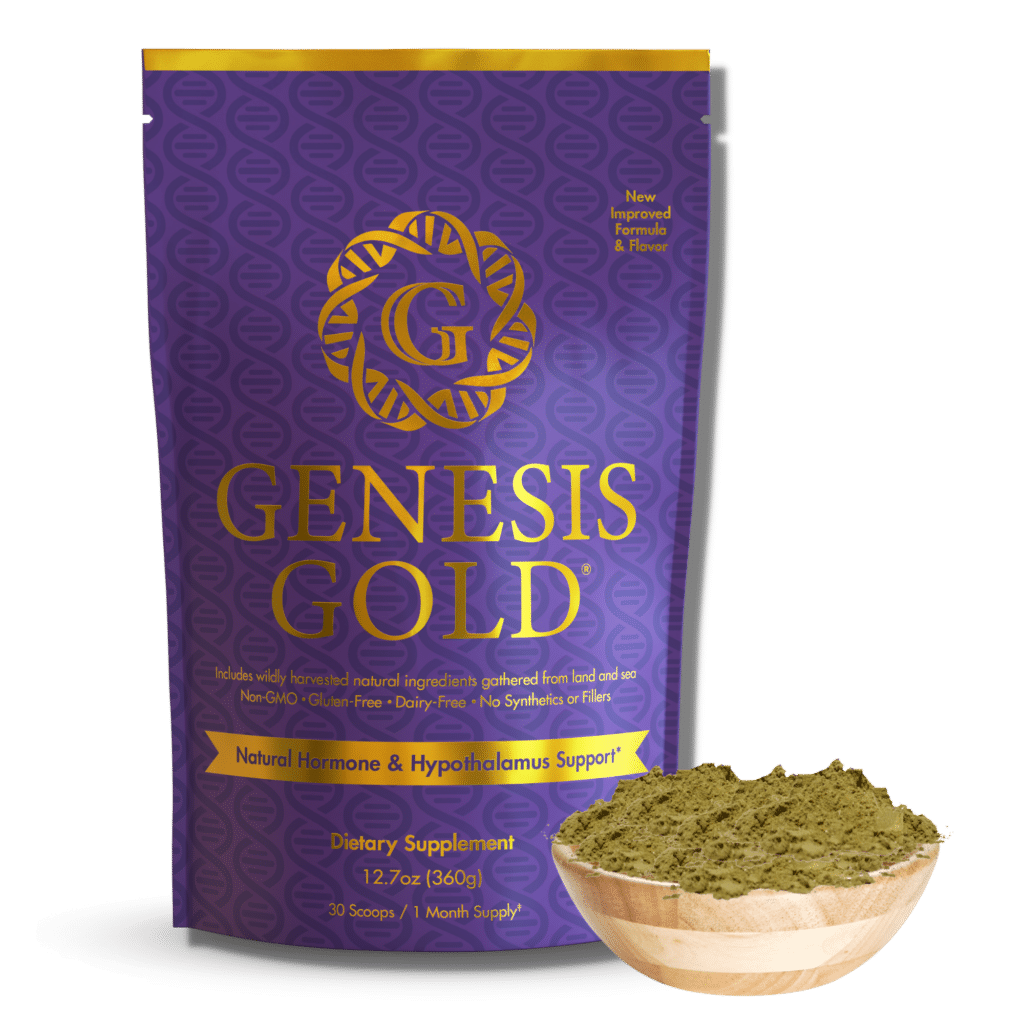
- Avoid the top offending foods and take your Genesis Gold® regularly to fill in your nutritional gaps and help your hypothalamus function optimally.
Join us in our free Hormone Reboot Training, where I go over all my best dietary tips so you can eat as healthy as possible, including figuring out exactly how much fat, protein, and carbohydrates you need based on your lean body mass and your activity level.
If you are ready to nourish your hormones from the inside out, start with your plate and support your hypothalamus with Genesis Gold®. Please subscribe and comment on your favorite hormone-friendly food!

What are the best foods for hormonal balance?
The best foods for hormonal balance provide the specific nutritional building blocks the body needs to produce, metabolize, and regulate hormones — starting with what the hypothalamus, the brain's master hormonal regulator, requires to orchestrate the entire endocrine system. The five most impactful categories are leafy greens (spinach, kale, arugula, collard greens) for their folate, magnesium, and liver-supportive phytonutrients; cruciferous vegetables (broccoli, cauliflower, brussels sprouts) for their estrogen-metabolizing compounds; healthy monounsaturated and omega-3 fats (olive oil, avocado, nuts, seeds, wild salmon) for steroid hormone synthesis; clean protein (eggs, beans, lean poultry, wild fish) for hormone receptor construction and blood sugar stability; and fermented foods (kimchi, yogurt, sauerkraut) for gut microbiome health, which directly influences how hormones are metabolized and recycled throughout the body.
Why does diet affect hormonal balance?
Every hormone in the body is built from nutrients — primarily fats and proteins. Without adequate dietary fat, the body cannot synthesize steroid hormones including estrogen, progesterone, testosterone, cortisol, and DHEA. Without adequate protein and specific amino acids, hormone receptors cannot be built and neurotransmitters that regulate the stress response cannot be produced. The hypothalamus is in continuous communication with the gut, receiving real-time signals about what nutrients are available, how much fat and sugar is being stored, and whether the microbiome is in balance. When the diet consistently fails to supply what the hypothalamus and endocrine system need, the hypothalamus shifts the body's biochemistry toward survival mode — altering metabolism, immune function, and hormonal output in ways that produce symptoms like fatigue, weight gain, irregular cycles, and mood instability.
How do leafy greens support hormone health?
Leafy greens support hormonal balance through several mechanisms. They are among the richest dietary sources of magnesium — a mineral that is essential for cortisol regulation, the conversion of T4 to active T3 thyroid hormone, and the production of progesterone. Folate, abundant in spinach and other dark greens, supports methylation, a biochemical process critical for estrogen detoxification in the liver. The fiber in leafy greens feeds beneficial gut bacteria that help metabolize and clear excess estrogen. Phytonutrients in greens also directly nourish hypothalamic tissue. For maximum mineral absorption, lightly sautéing greens in olive oil and finishing with lemon juice significantly increases bioavailability compared to eating them raw — the heat breaks down oxalates that otherwise bind to minerals like iron and calcium and prevent absorption.
What do cruciferous vegetables do for hormone balance?
Cruciferous vegetables contain indole-3-carbinol (I3C), a phytonutrient that converts to diindolylmethane (DIM) during digestion. DIM actively shifts estrogen metabolism in the liver toward the production of 2-hydroxyestrone — a protective, anti-inflammatory estrogen metabolite — and away from 16α-hydroxyestrone, a more inflammatory form associated with estrogen dominance, heavy periods, breast tenderness, and increased cancer risk. This makes cruciferous vegetables particularly valuable for women dealing with estrogen dominance symptoms in perimenopause. Beyond their estrogen-metabolizing effects, cruciferous vegetables are strongly anti-inflammatory, support liver detoxification pathways, and provide excellent prebiotic fiber that feeds the beneficial bacteria responsible for healthy hormonal metabolism in the gut.

0 Comments