
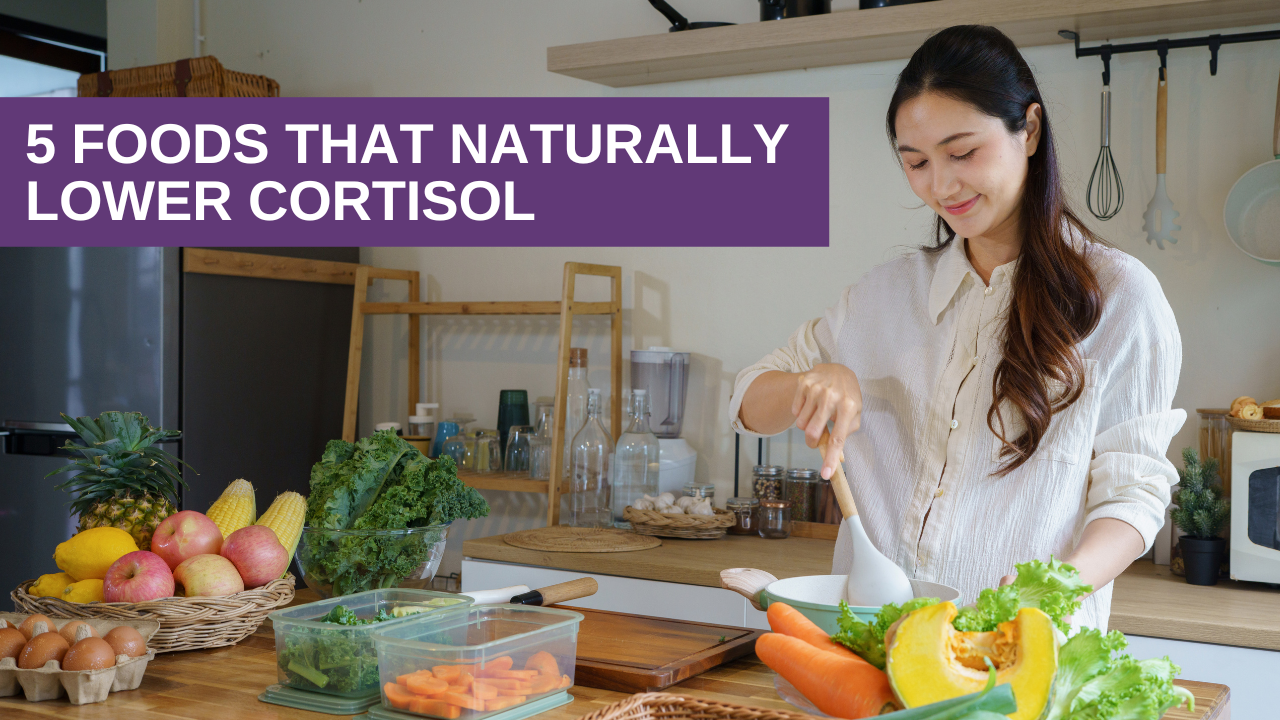
Most people think starting with stress management is the way to lower cortisol.
And yes, calming your nervous system matters.
But what you eat can either tell your body, “You’re safe,” or it can keep your hypothalamus sounding the stress alarm all day long.
Because cortisol is not only triggered by emotional stress.
It can also rise when your blood sugar crashes, when your gut is inflamed, when your body is missing key nutrients, or when your meals are sending the wrong message to your hormones.
So today, I’m going to show you five types of foods that naturally support healthier cortisol levels, calm your stress response, and help your body move out of survival mode.
Now remember, cortisol is not bad.
Cortisol is your main stress hormone, and you need it to wake up, focus, and respond to stress.
The problem happens when cortisol stays high for too long or rises at the wrong time of day.
Cortisol should be higher in the morning and lower at night.
But when your hypothalamus thinks you are under constant stress, your adrenal glands may keep releasing cortisol.
And that can affect your:
- Sleep
- Blood sugar
- Belly fat
- Inflammation
- Mood
- Cravings
- Hormones
Your Hypothalamus is the Master Controller of Your Hormones
It tells your adrenal glands when to make cortisol.
So if you want to support healthy cortisol levels naturally, you need to feed your hypothalamus and stabilize your blood sugar.
Because when your blood sugar crashes, your hypothalamus reads that as danger.
Then it tells your adrenal glands to release cortisol to bring your blood sugar back up.
That is why food matters so much.
So let’s talk about the five types of foods that naturally support lower cortisol and a calmer stress response.
#1: Foods High in B Vitamins
B vitamins are essential for your nervous system, your brain chemistry, your energy production, and your stress response.
When you are under chronic stress, your body uses more nutrients to keep up.
And if you are not getting enough B vitamins, you may feel more tired, more anxious, more irritable, and less resilient.
So focus on foods that naturally contain B vitamins, like:
- Eggs
- Grass-fed meats
- Poultry
- Fish
- Leafy greens
- Legumes
- Seeds
- Nutritional yeast
These foods help your body make energy, support your mood chemistry, and give your hypothalamus the nutrients it needs to better regulate your stress response.
#2: Foods High in Omega-3 Fatty Acids
Omega-3 fats help support your brain, your cell membranes, and a healthy inflammatory response.
And inflammation and cortisol are deeply connected.
When your body is inflamed, your stress response can become more active.
When your stress response is constantly active, your body can become more inflamed.
So omega-3-rich foods like salmon, sardines, mackerel, anchovies, trout, chia seeds, flaxseeds, and walnuts can help support your body’s ability to calm that inflammatory stress cycle.
Your hypothalamus is part of your brain, and your brain needs healthy fats to communicate well.
#3: Magnesium-Rich Foods
Magnesium is one of the most important minerals for calming your nervous system.
When magnesium is low, you may feel more tense, restless, anxious, crampy, or unable to sleep deeply.
And when your body is stressed, it uses up magnesium faster.
So magnesium-rich foods are a beautiful way to help your body feel safer.
Think:
- Leafy greens
- Pumpkin seeds
- Almonds
- Cashews
- Avocado
- Black beans
- Lentils
- Cacao
- Mineral-rich whole foods
Magnesium helps support relaxation, blood sugar balance, sleep, and a calmer stress response.
#4: Foods That Help Regulate Blood Sugar
This is huge.
Because when your blood sugar crashes, your hypothalamus reads that as danger.
Then it tells your adrenal glands to release cortisol to bring your blood sugar back up.
That is why you may feel shaky, anxious, irritable, foggy, or suddenly desperate for sugar.
It is not just a craving.
It may be your body trying to rescue your blood sugar.
So, to naturally support lower cortisol, build meals with protein, healthy fat, and low-glycemic plant foods.
That could look like:
→ Eggs with avocado and greens
→ Chicken with olive oil and vegetables
→ Fish with salad and seeds
→ Plain yogurt with nuts
→ Or a protein-rich meal with fiber and healthy fat
Stable blood sugar tells your hypothalamus, “We are safe. We have fuel. You do not need to sound the alarm.”
#5: Foods That Promote a Healthy Gut
Your gut and hypothalamus are constantly communicating.
If your gut is inflamed, irritated, constipated, bloated, or out of balance, your body can interpret that as stress.
And that can keep cortisol elevated. So you want foods that support a healthy gut microbiome.
That includes high-fiber foods and probiotic-rich foods.
High-fiber foods include:
- Vegetables
- Berries
- Chia seeds
- Flaxseeds
- Lentils
- Beans
- Artichokes
- Asparagus
- Other plant foods that feed your beneficial bacteria
Probiotic-rich foods include:
- Sauerkraut
- Kimchi
- Plain yogurt
- Kefir, miso
- Fermented vegetables
You do not have to eat a lot at once.
Start small, especially if your gut is sensitive.
But over time, supporting your gut can help calm the signals going back to your brain and hypothalamus.
So remember, if you want to naturally support healthier cortisol levels, focus on foods high in B vitamins, foods high in omega-3 fats, magnesium-rich foods, foods that regulate blood sugar, and foods that promote a healthy gut with fiber and probiotics.
These foods do not just feed your body.
They send safety signals to your hypothalamus.
And when your hypothalamus feels safe, your cortisol can be calm.
→ Your cravings can decrease
→ Your sleep can deepen
→ Your inflammation can lower
→ Your blood sugar can become more stable
→ And your body can start moving out of survival mode and back into healing mode
If you are struggling with high cortisol symptoms like belly fat, sugar cravings, anxiety, poor sleep, 3:00 a.m. waking, inflammation, or feeling wired but tired, I created my free Hormone Reboot Training to help you understand how to support your hypothalamus and bring your hormones back into balance naturally.
And tell me in the comments: which of these cortisol-supporting foods do you need to add more of?


0 Comments