
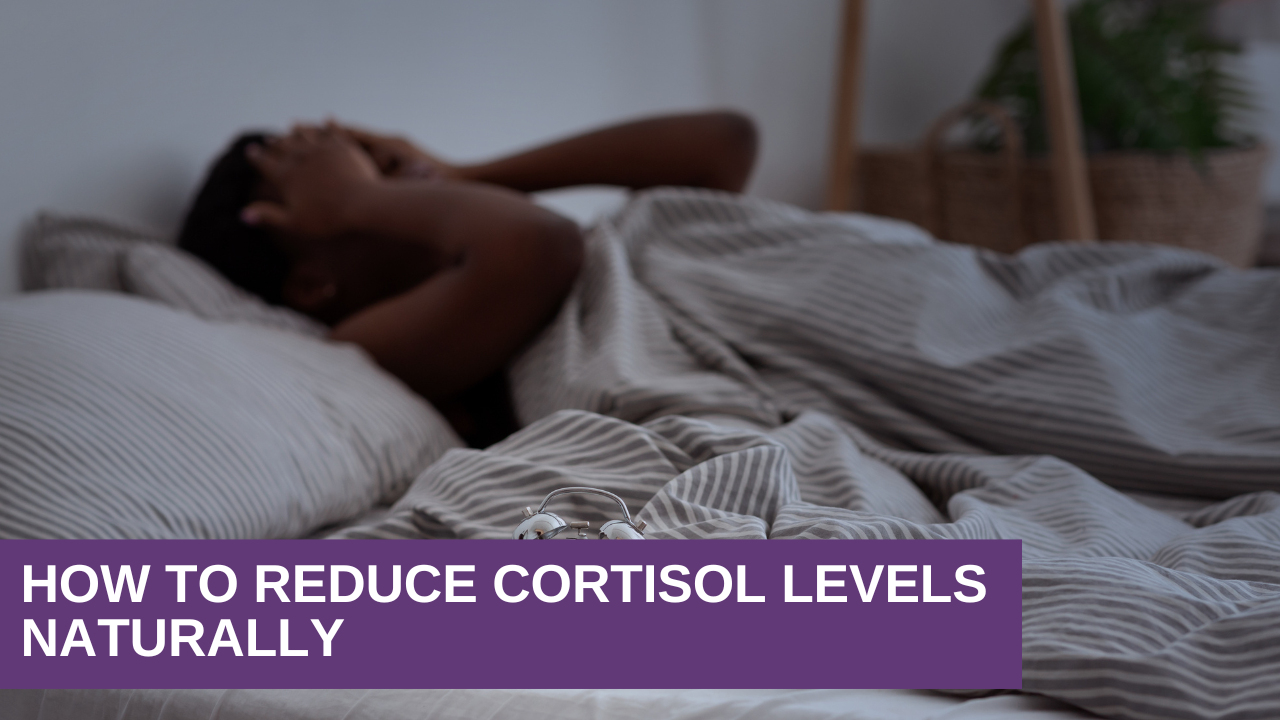
If your cortisol is too high, you may feel wired but tired, anxious, inflamed, puffy, hungry for sugar, and wide awake at 3:00 a.m. So how do you reduce cortisol levels naturally?
I’m going to show you what cortisol is doing in your body, why it gets stuck in stress mode, and the simple steps that help calm your cortisol by supporting the real control center, your hypothalamus.
Cortisol Is Your Main Stress Hormone
Your adrenal glands make cortisol when your body thinks you need energy to survive. Cortisol tells your liver and muscles to release stored sugar into your bloodstream so you can run, fight, think fast, or get through a stressful situation.
That’s helpful if you’re actually in danger.
But if your stress is emotional, mental, chronic, or happening all day long, that sugar has nowhere to go.
So where does it go?
Usually right around your middle.
That’s why high cortisol is often connected to belly fat, blood sugar swings, insulin resistance, inflammation, sugar cravings, poor sleep, and feeling like your body is always on alert.
Cortisol Is Not Bad
You need cortisol in the morning to wake up, focus, and have energy. But cortisol is supposed to follow a rhythm. It should be higher in the morning and lower at night.
The problem happens when your cortisol rhythm gets flipped.
You wake up exhausted.
You drag through the day.
Then at night, when your body should be calming down, your mind starts racing, your heart may feel a little faster, and you suddenly feel awake.
That is not random.
That’s your hypothalamus and adrenal glands stuck in a stress pattern.
Your hypothalamus is the master controller of your hormones. It tells your pituitary gland to signal your adrenal glands to make cortisol. This is called your stress response.
So if you want to reduce cortisol naturally, you do not just want to calm the adrenals.
You want to calm the system that is telling your adrenals to stay on.
That starts with your hypothalamus.
What Does That Look Like?
#1: Stop Starting Your Day With Stress
If you wake up and immediately grab your phone, check messages, look at the news, scroll social media, or start thinking about everything you have to do, your hypothalamus reads that as danger.
Before your feet even hit the floor, your cortisol is already rising.
Instead, give your body a calm signal first.
Open your curtains. Get natural morning light. Take a few slow breaths. Drink water.
Put your hand over your heart or belly and remind your body, “I’m safe.”
That may sound simple, but your nervous system is always listening.
#2: Eat Breakfast With Protein
A lot of women with high cortisol do not feel hungry in the morning. Then they drink coffee on an empty stomach and push through the day.
But coffee without food can spike cortisol even more, especially if your blood sugar is already unstable.
Your hypothalamus is very sensitive to blood sugar.
If your blood sugar drops, your hypothalamus signals your adrenals to make more cortisol to release stored sugar.
So if you’re skipping breakfast, craving sugar later in the day, or getting shaky, irritable, or anxious between meals, your cortisol may be trying to rescue your blood sugar.
Start your day with protein, healthy fat, and low-glycemic plant foods.
- That could be eggs with vegetables and avocado
- Plain whole milk yogurt with nuts
- Leftover protein from dinner
- Or a smoothie with enough protein and fat to keep your blood sugar stable
#3: Stop Eating Sugar to Calm Stress
Sugar may feel calming for a few minutes because it gives your brain quick fuel.
But then your blood sugar rises, insulin rises, and later your blood sugar crashes.
When your blood sugar crashes, cortisol rises again.
That is why sugar cravings are so common in women with stress, insulin resistance, and hormone imbalance.
It is not just willpower.
Your hypothalamus thinks you need fast energy.
The more stable your blood sugar is, the safer your hypothalamus feels.
So focus on protein, healthy fats, and vegetables. Avoid sugar and starchy carbs, especially later in the day.
#4: Stop Eating Late At Night
Cortisol and melatonin work opposite of each other.
Cortisol should be higher during the day.
Melatonin should rise after dark.
But if you eat late, especially carbs, sugar, alcohol, or heavy snacks, your body has to digest and manage blood sugar when it should be repairing.
That keeps your metabolism active at the wrong time.
And if your blood sugar spikes and crashes overnight, cortisol can wake you up between 1:00 and 4:00 a.m.
- Eat dinner earlier, ideally at least three hours before bed
- After dark, avoid sugar, alcohol, bread, pasta, rice, potatoes, and starchy snacks
- Let your body move into repair mode
#5: Protect Your Sleep Like It Is Medicine
Because for your cortisol, it is.
Your hypothalamus controls your circadian rhythm. That means it reads light and darkness to know when to make wake hormones and when to make sleep hormones.
If you are under bright lights, watching television, scrolling your phone, or working late at night, your hypothalamus thinks it is still daytime.
That suppresses melatonin and keeps cortisol higher than it should be.
- Dim the lights after dusk
- Get off screens earlier
- Keep your bedroom dark and cool
- And give yourself a real wind-down routine
You cannot expect your body to sprint all day and then suddenly collapse into deep sleep.
Your hypothalamus needs the signal that the day is over.
#6: Move Your Body, But Do Not Overtrain
Exercise can help reduce cortisol when it is done the right way.
Walking, strength training, stretching, dancing, rebounding, yoga, and short movement breaks throughout the day all help your body use the sugar cortisol releases.
But if your cortisol is already high and you are doing intense workouts, fasting, undereating, and not sleeping, your body may read that as more stress.
Like a lot of my patients, you may need less punishment and more rhythm.
- Start with walking
- Move after meals
- Get up every hour
- Build muscle with strength training
But do not use exercise to bully your body into weight loss.
Use movement to tell your body, “We are safe. We are using this energy. We do not need to store it.”
#7: Calm Your Nervous System Every Day
You do not have to meditate for an hour.
You just need to give your hypothalamus repeated signals of safety.
That can be five minutes of:
- Slow breathing
- Prayer
- Meditation
- A walk outside
- Journaling
- Gentle stretching
- Humming
- Singing
- Putting your bare feet on the earth
Anything that helps your body shift out of fight-or-flight and back into repair.
The Key Is Consistency
Your body cannot heal in survival mode.
High cortisol tells your body to store fat, raise blood sugar, suppress digestion, disrupt sleep, and stay alert.
Reducing cortisol naturally means helping your hypothalamus trust that you are safe again.
So remember, to reduce cortisol naturally, start with your rhythm.
- Morning light
- Protein breakfast
- Stable blood sugar
- No sugar and starches late at night
- Earlier dinner
- Deep sleep
- Daily movement
- Nervous system calming
- And hypothalamus support
When your hypothalamus feels safe, your adrenal glands do not have to keep pumping out cortisol.
Your metabolism can work better.
Your sleep can deepen.
Your cravings can calm.
Your inflammation can lower.
And your body can finally move out of stress mode and back into healing mode.
If you’re struggling with high cortisol symptoms like belly fat, sugar cravings, anxiety, 3:00 a.m. waking, inflammation, or feeling wired but tired, I created my free Hormone Reboot Training to help you understand how to support your hypothalamus and bring your hormones back into balance naturally.

How do you reduce cortisol levels naturally?
You can reduce cortisol naturally by supporting your body's stress rhythm rather than just calming your adrenal glands. Key steps include starting your morning calmly with natural light instead of your phone, eating a protein breakfast to stabilize blood sugar, avoiding sugar and late-night eating, protecting your sleep, moving your body without overtraining, and giving your nervous system daily signals of safety. Consistency matters more than intensity, and persistent symptoms are worth discussing with a provider
What are the symptoms of high cortisol?
High cortisol can leave you feeling "wired but tired" — anxious, inflamed, puffy, and craving sugar, while lying wide awake around 3:00 a.m. Because cortisol releases stored sugar into the bloodstream, chronically high levels are often linked to belly fat, blood sugar swings, insulin resistance, inflammation, sugar cravings, and poor sleep. If several of these sound familiar and persist, it's worth having your cortisol and overall health evaluated by a provider.
Why does high cortisol cause belly fat?
When cortisol rises, it signals your liver and muscles to release stored sugar into your bloodstream for quick energy. If your stress is chronic and emotional rather than physical, that sugar isn't burned off, so the body tends to store it — often as fat around the midsection. This is why high cortisol is so commonly connected to belly fat, along with blood sugar swings and insulin resistance.
How does blood sugar affect cortisol?
Your hypothalamus is highly sensitive to blood sugar. When blood sugar drops — for example, from skipping breakfast or drinking coffee on an empty stomach — the hypothalamus signals your adrenals to release more cortisol to free up stored sugar. This is why unstable blood sugar can drive cortisol up, and why eating protein, healthy fat, and low-glycemic foods to keep blood sugar steady is one of the most effective ways to help calm cortisol.

0 Comments