

What is the root cause of PCOS?
The root cause of PCOS is best understood as a disruption in the hypothalamic-pituitary-ovarian axis — the hormone communication system linking the brain and ovaries. This disruption creates both metabolic and reproductive hormone imbalances. Rather than being solely an ovarian problem, PCOS involves the hypothalamus, which helps regulate the metabolic and hormonal signaling that becomes dysregulated in the condition.
Let's talk about polycystic ovary syndrome, your hypothalamus, and progesterone.
Polycystic ovary syndrome affects 10% of women.
PCOS is one of the most common metabolic conditions for women of reproductive years, and your hypothalamus is at the root of the metabolic issues related to polycystic ovary syndrome.
In PCOS, the hypothalamic-pituitary-ovarian axis is dysfunctional, creating a metabolic as well as a reproductive hormone imbalance.
Hormone Imbalances in PCOS
In polycystic ovary syndrome, androgens are prominent, including testosterone and DHEA, yet progesterone is low, creating estrogen dominance, meaning estrogen is out of balance with progesterone.
Insulin resistance occurs, which is the cornerstone of metabolic issues.
In polycystic ovary syndrome, the theca cells of the ovary, which produce testosterone, the precursor hormone to estrogen, become insulin resistant.
More and more testosterone is produced, converting into more and more estradiol, but ovulation is not occurring regularly, so not enough progesterone is produced to counterbalance the high estrogen.
PCOS, Fertility, and Pregnancy
Polycystic ovary syndrome can contribute to infertility because of a lack of ovulation.
Even if a woman with PCOS does get pregnant, she oftentimes will miscarry because she does not produce enough progesterone to maintain an early pregnancy.
The Most Effective Treatment for PCOS
So what is the most effective treatment for polycystic ovary syndrome?
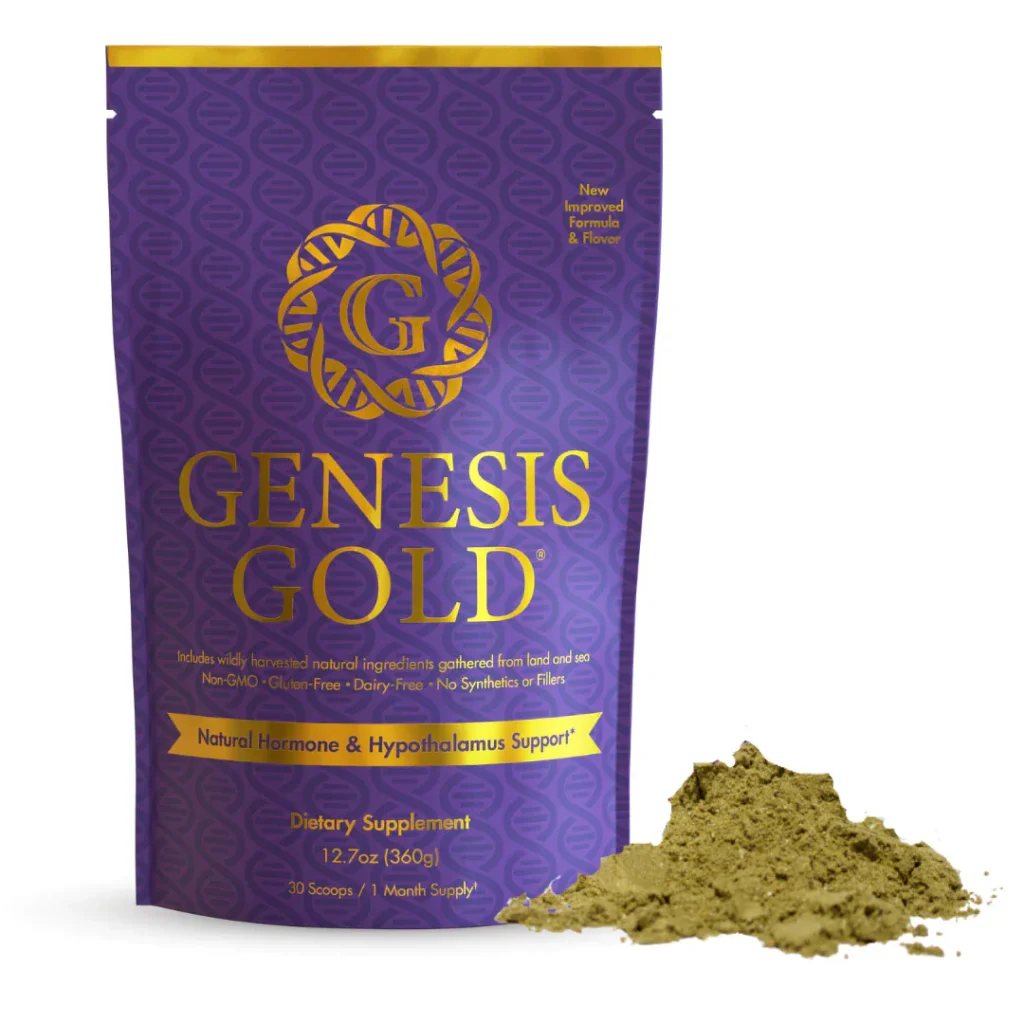
In my patients with polycystic ovary syndrome, I have found that supporting the hypothalamus with Genesis Gold® has corrected many of the metabolic issues, including insulin resistance, anovulation, and hormonal imbalances.
Some of my patients will require supplemental progesterone, especially if they want to get pregnant and avoid miscarriage.
Fortunately, we now have Gen-Pro™ available.
Gen-Pro™ is the prescription-grade transdermal progesterone in a liposomal base that my patients with polycystic ovary syndrome have used successfully for over 30 years.
This highly absorbable cream is a true transdermal and has been very effective in keeping women who threaten miscarriage pregnant.
How I Use Genesis Gold® and Gen-Pro™ for PCOS
All of my polycystic ovary syndrome patients start by taking Genesis Gold® at their body weight, which is four grams for 50 pounds of body weight.
Usually, within three to six months of taking Genesis Gold®, their menstrual cycles regulate, and they start to ovulate.
If they're still having issues, we add Gen-Pro™ transdermal progesterone cream to be used at about the time of ovulation, which is often marked by spinnbarkeit, egg-white-like vaginal mucus that indicates high estrogen levels in the follicular phase.
Gen-Pro™ transdermal cream is dosed at 100 to 200 milligrams twice daily, applied to the inner thighs for 10 to 14 days.
If they get a period, great. If there's any suspicion of pregnancy, they will do a urine pregnancy test, and if positive, continue the Gen-Pro™.
Progesterone levels can be lower. Usually, about 50 to 100 milligrams daily is more than enough to maintain the pregnancy.
But to prevent miscarriage, we've got to continue the progesterone for the first 14 weeks.
Learn More
If you have any questions, I explain polycystic ovary syndrome in depth, as well as infertility and metabolic disorders in young reproductive women, in my new book, The Hypothalamus Handbook.
And you can join us in our Hormone Reboot Training, where you'll get a discount on both Genesis Gold® and Gen-Pro™.


Frequently Asked Questions
How common is PCOS?
PCOS is one of the most common hormonal and metabolic conditions affecting women of reproductive age, estimated to affect around 10% of women. It's a leading cause of irregular cycles and infertility, yet it often goes undiagnosed or is attributed only to its surface symptoms rather than its underlying hormonal and metabolic drivers.
What hormone imbalances happen in PCOS?
In PCOS, androgens such as testosterone and DHEA tend to be elevated, while progesterone is often low. Because ovulation is irregular, not enough progesterone is produced to balance estrogen, a pattern sometimes described as estrogen dominance. Alongside these reproductive hormone shifts, insulin resistance is common and is considered a cornerstone of the metabolic issues seen in PCOS.
How does insulin resistance relate to PCOS?
Insulin resistance is central to the metabolic picture of PCOS. When the theca cells of the ovary — which produce testosterone — become insulin resistant, testosterone production can increase. This contributes to the hormonal imbalance that characterizes PCOS. Because insulin resistance affects the whole body's metabolism, it's often a key focus in understanding and managing the condition.
Why does PCOS affect fertility?
PCOS can contribute to infertility primarily because ovulation is irregular or absent. Without regular ovulation, the body doesn't reliably release an egg or produce adequate progesterone. Low progesterone can also make it harder to sustain an early pregnancy. Anyone with PCOS who is trying to conceive should work with a qualified healthcare provider for individualized evaluation and care.

0 Comments