
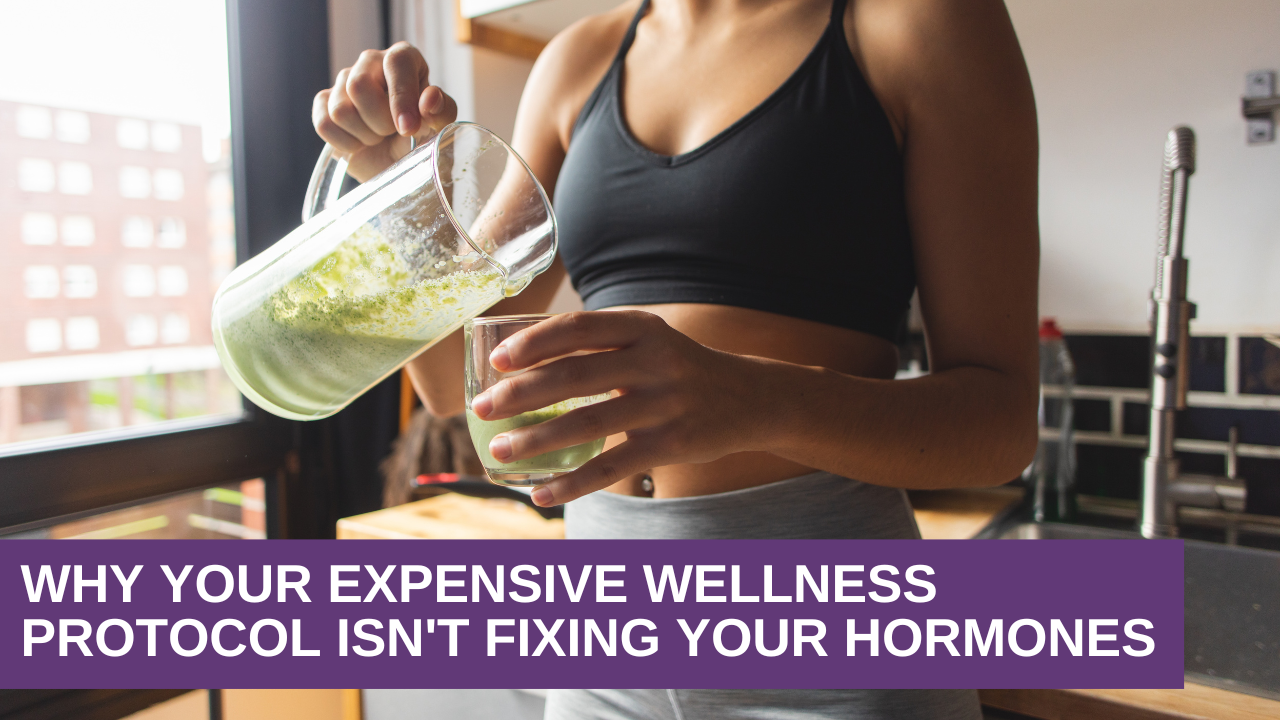
High-end wellness clinics, designer supplements, personalized labs. There's a lot of beauty in that world, but also a big blind spot. Because no matter how luxurious the treatments, if you're not addressing the one critical piece, you won't get the results you're hoping for.
The Big Blind Spot
I've seen it many times.
Someone spends thousands of dollars on IV drips, detoxes, peptides, biohacking gadgets, and yet they're still struggling with fatigue, mood swings, weight gain, poor sleep, low libido, and brain fog.
Why?
Because the missing piece in so many luxury wellness programs is not healing the hypothalamus.
The Hypothalamus Is the Control Center
The hypothalamus is the control center in your brain that regulates your entire endocrine system, your adrenals, thyroid, ovaries, or testes, and even your pituitary gland.
It also controls your nervous system and your immune response.
That's three critical systems all coordinated by one small but mighty part of your brain.
If the hypothalamus is out of sync, no amount of expensive protocols will create sustainable change.
Why?
Because it's like trying to fix a house by repainting the walls when the foundation is crumbling.
What Often Gets Missed
Here's what often gets missed.
Number 1: Hormones don't function in isolation.
Testing estrogen, testosterone, or thyroid in a vacuum doesn't tell you why they're off.
Number 2: Over-supplementing can make things worse.
Flooding your system with hormones or adaptogens without considering your circadian rhythm and hypothalamic signaling can push the body further out of balance.
Number 3: Long-term results come from rhythm, not reaction.
Quick fixes feel good in the moment, but healing requires your brain and body to feel safe, supported, and stable.
Why My Approach Is Different
That's why my approach is different.
I don't start with glands. I start with the conductor of the hormonal orchestration.
When you support the hypothalamus, everything downstream starts to recalibrate.
Energy improves, sleep deepens, mood stabilizes, inflammation reduces, metabolism becomes more responsive, and most importantly, you stop fighting your body and start working with it.
The Upstream Solution
If you've tried the luxury path and still don't feel like yourself, it's not your fault.
You were probably just missing the upstream solution.
That's exactly what I teach in my free Hormone Reboot Training.
I'll show you how to support your hypothalamus, rebalance your hormones naturally, and create results that last.
I'd love for you to join me. Let's build your wellness on a foundation that actually holds.
Frequently Asked Questions
Why isn't my wellness protocol fixing my hormones?
Even thorough, expensive wellness protocols can fall short if they focus only on individual glands or hormones without addressing the hypothalamus — the brain's control center that coordinates the entire endocrine system. If the hypothalamus is dysregulated, downstream treatments like supplements, hormone therapy, or IV drips may not produce lasting results, because the upstream signaling is still off. A provider who looks at the whole system can help identify what's being missed.
What is the root cause of hormone imbalance?
Hormone imbalance often traces upstream to the hypothalamus, which regulates the endocrine glands, the nervous system, and the immune response. Rather than a single hormone being "off," imbalance frequently reflects disrupted signaling from this control center, influenced by stress, sleep, circadian rhythm, nutrition, and inflammation. This is why testing one hormone in isolation rarely tells the whole story, and why a root-cause approach considers the whole system rather than one gland.
Why doesn't testing individual hormones tell the whole story?
Hormones don't function in isolation, so measuring estrogen, testosterone, or thyroid on their own doesn't explain why they're out of balance. These hormones are coordinated by upstream signaling from the hypothalamus and pituitary, and influenced by circadian rhythm, stress, and metabolism. A single out-of-range value is a clue, not a complete diagnosis. Interpreting hormone labs in the context of the whole system, ideally with a knowledgeable provider, gives a more accurate picture.
Can taking too many supplements make hormones worse?
It's possible. Flooding the body with hormones or adaptogens without considering circadian rhythm and hypothalamic signaling can sometimes push the system further out of balance rather than restoring it. More is not always better with hormone-related supplements, and combinations can interact in unexpected ways. This is one reason it's wise to work with a healthcare provider rather than layering multiple supplements on your own, especially if you're not seeing the results you expected.

0 Comments