
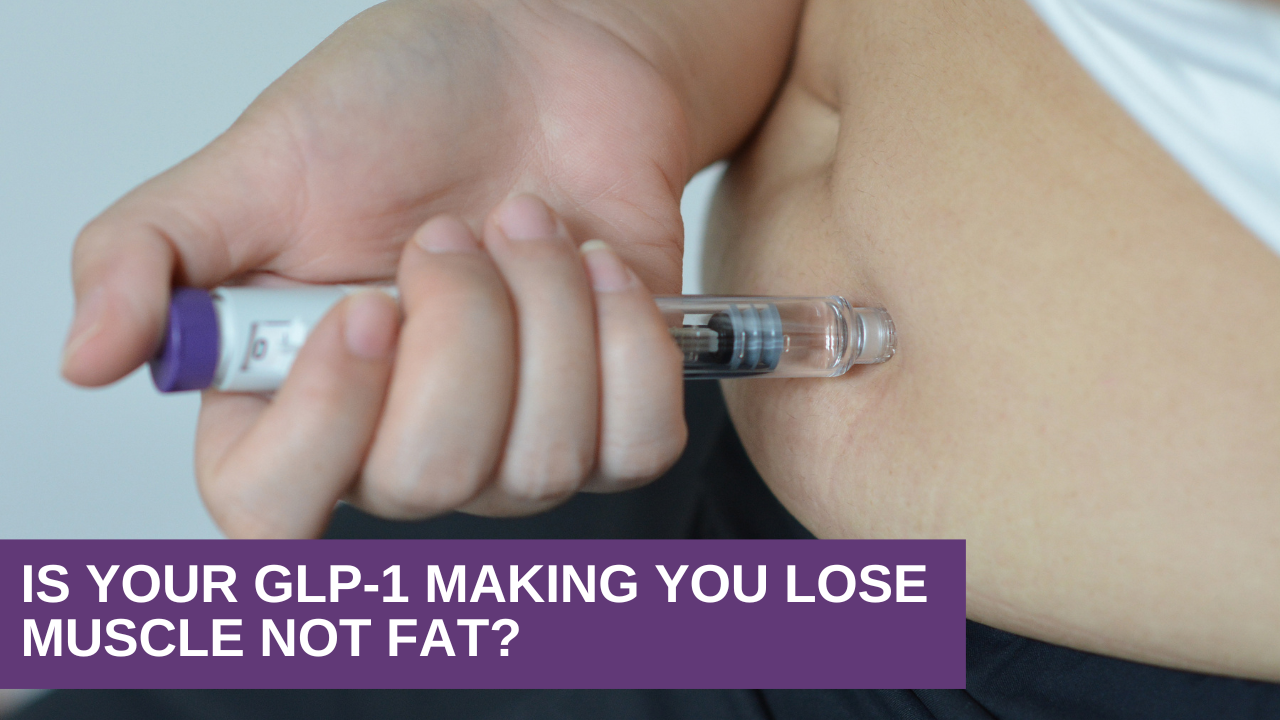
GLP-1 medications can cause a portion of weight loss to come from muscle rather than fat. Studies on GLP-1 receptor agonists suggest that a third or more of the weight lost may come from lean muscle tissue. This isn't unique to these drugs — it happens with most significant caloric restriction — but the powerful appetite suppression GLP-1s produce can amplify the effect, since eating less often means eating less protein.
If you're losing weight on a GLP-1, here is something you need to know: not all of what you're losing is fat. A meaningful portion can be muscle — and in menopause, muscle is the one thing you cannot afford to give away.
This isn't a reason to stop your medication. It's a reason to be smart, right now, about protecting what you've built over a lifetime. Because the risk is real, it's measurable, and it's almost entirely preventable if you know what to do.
What the Research Shows About Body Composition on GLP-1s
Studies on weight loss with GLP-1 receptor agonists consistently show that a significant portion of the weight lost — often estimated at a third or more — can come from lean muscle rather than fat tissue. This is not unique to GLP-1s; it happens with most forms of significant caloric restriction. But the appetite suppression these drugs produce is so powerful that the effect is amplified.
The mechanism is straightforward: when you're simply not hungry, you eat less. When you eat less, protein intake often falls disproportionately — because protein requires intention and planning in a way that, when you're not hungry, you don't bring. And when protein intake falls, muscle breakdown accelerates, regardless of what the number on the scale is doing.
Muscle isn't vanity at our age. Muscle is your metabolism, your blood sugar, your independence twenty years from now. Losing weight while losing muscle is not a win.
Why This Matters More in Menopausal Women
Women in perimenopause and postmenopause are already losing muscle. This is a normal and well-documented physiological shift — estrogen is anabolic, meaning it supports muscle maintenance, and its decline accelerates the natural process of muscle loss that begins in midlife. The clinical term is sarcopenia, and its consequences are not cosmetic.
Muscle mass is directly tied to:
- Metabolic rate — muscle tissue burns far more energy at rest than fat tissue. Less muscle means a slower metabolism, even at the same body weight.
- Blood sugar regulation — muscle is the primary site for glucose disposal. When muscle mass declines, insulin sensitivity declines with it.
- Bone density — muscles pull on bones; that mechanical stress is what keeps bone density from dropping. Weaker muscles mean less bone stimulus.
- Balance and fall prevention — falls are the leading cause of injury-related death in adults over 65. Strength, particularly in the lower body, is your best protection.
When you layer powerful appetite suppression on top of already-declining estrogen and already-declining muscle, the risk compounds. You eat less, take in less protein, and lose lean tissue at a rate the scale will never show you.
Worth knowing: Newer GLP-1 combinations being studied (including tirzepatide with leucine or other anabolic support) are specifically designed to improve body composition rather than simply total weight. This area of research is active precisely because muscle loss is a recognized limitation of the current drugs.
Three Things That Protect Your Muscle — None of Which Require Stopping Your Medication
1. Prioritize protein at every meal you eat
The appetite suppression is the trap here. You simply stop being hungry, and protein — which requires more effort to prepare and eat than a handful of crackers — becomes the thing that quietly disappears from your diet. You have to make it intentional.
Current research supports considerably higher protein targets for women in midlife than the standard RDA, particularly for muscle preservation during weight loss. At minimum, aim for protein at every meal, and consider working with a registered dietitian who understands both GLP-1 physiology and menopausal nutrition to establish a target that fits your actual intake.
2. Load your muscles several times a week
Resistance training sends a direct signal to your body that muscle tissue is needed and should be preserved. Without that signal, the body has no particular reason to maintain expensive metabolic tissue when overall caloric intake is dropping.
You do not need a gym. Bodyweight squats, lunges, push-ups, and resistance bands are sufficient to generate the mechanical load your muscles need. Two to three sessions per week is the minimum threshold. The goal is progressive — meaning you gradually increase difficulty over time as your strength improves.
3. Feed the control center
Your hypothalamus is coordinating muscle metabolism, recovery signaling, and anabolic hormone production behind the scenes. When it's under-nourished — as it often is in women already depleted from years of hormonal transition and metabolic stress — it defaults to conservation mode. It conserves energy rather than rebuilding tissue.
This is the layer that most GLP-1 conversations never reach. You can eat enough protein, and you can lift weights, and still find that your recovery is poor, your energy is low, and your body composition isn't shifting the way it should. The hypothalamus is often the missing piece.
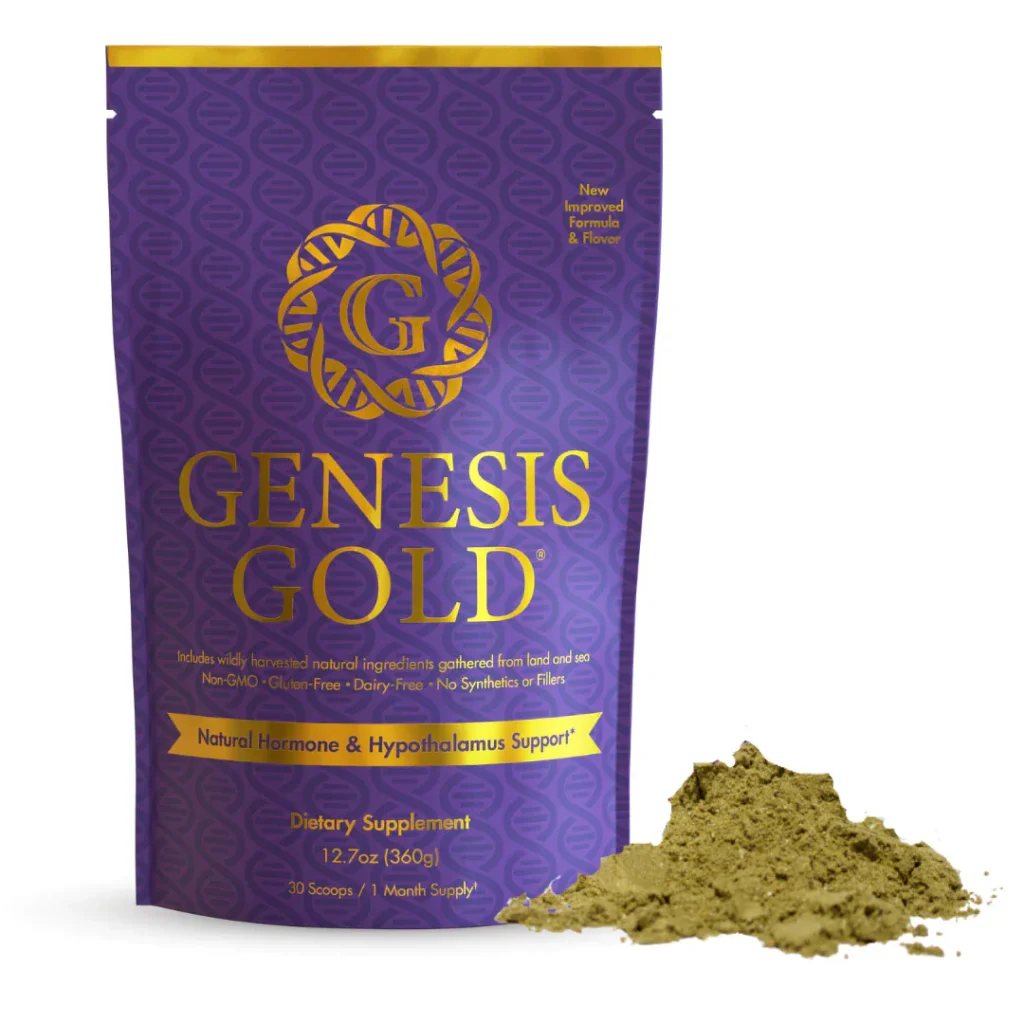
This is exactly why I created Genesis Gold® — foundational nutritional support for the neuro-immune-endocrine system, with specific emphasis on the hypothalamic inputs that coordinate metabolism, hormone signaling, and recovery. It's what I give my own patients when I want to make sure the control center has what it needs, whether they're on a GLP-1 or not.
→ Learn more about Genesis Gold® and how it supports hypothalamic function during metabolic transitions.
→ Or start with the free Hormone Reboot Training to understand the full framework first.

Frequently Asked Questions
Why do GLP-1 medications cause muscle loss?
The main mechanism is reduced food intake. When appetite is strongly suppressed, people eat less overall, and protein intake tends to fall disproportionately because protein takes more intention and planning to consume. When protein intake drops, muscle breakdown can accelerate regardless of what the scale shows. This is why protein and resistance training become especially important during GLP-1 weight loss.
Is muscle loss on a GLP-1 more dangerous for menopausal women?
Yes, the risk compounds in perimenopause and postmenopause. Estrogen is anabolic, meaning it helps maintain muscle, so its decline already accelerates the natural muscle loss of midlife (a process called sarcopenia). Layering strong appetite suppression on top of already-declining estrogen and muscle means women can lose lean tissue at a rate the scale won't reveal, making muscle protection a priority.
Why is preserving muscle so important during weight loss?
Muscle is tied to far more than appearance. It drives metabolic rate, since muscle burns more energy at rest than fat. It supports blood sugar regulation, because muscle is the primary site for glucose disposal. It helps maintain bone density through mechanical stress on bones, and it protects balance and prevents falls, which are a leading cause of injury in older adults. Losing weight while losing muscle is not a true win.
Do I need to stop my GLP-1 to protect my muscle?
No. Protecting muscle on a GLP-1 does not require stopping the medication. The goal is to add protective habits — prioritizing protein, doing resistance training, and supporting your body's metabolic foundation — while continuing treatment. Any changes to your medication should always be discussed with the healthcare provider who prescribed it.
Continue Reading This Series
• Part 1: Ozempic & Your Brain
• Part 2: GLP-1s & Hormone Therapy
• Part 3: Losing Muscle on Ozempic (this post)

0 Comments