
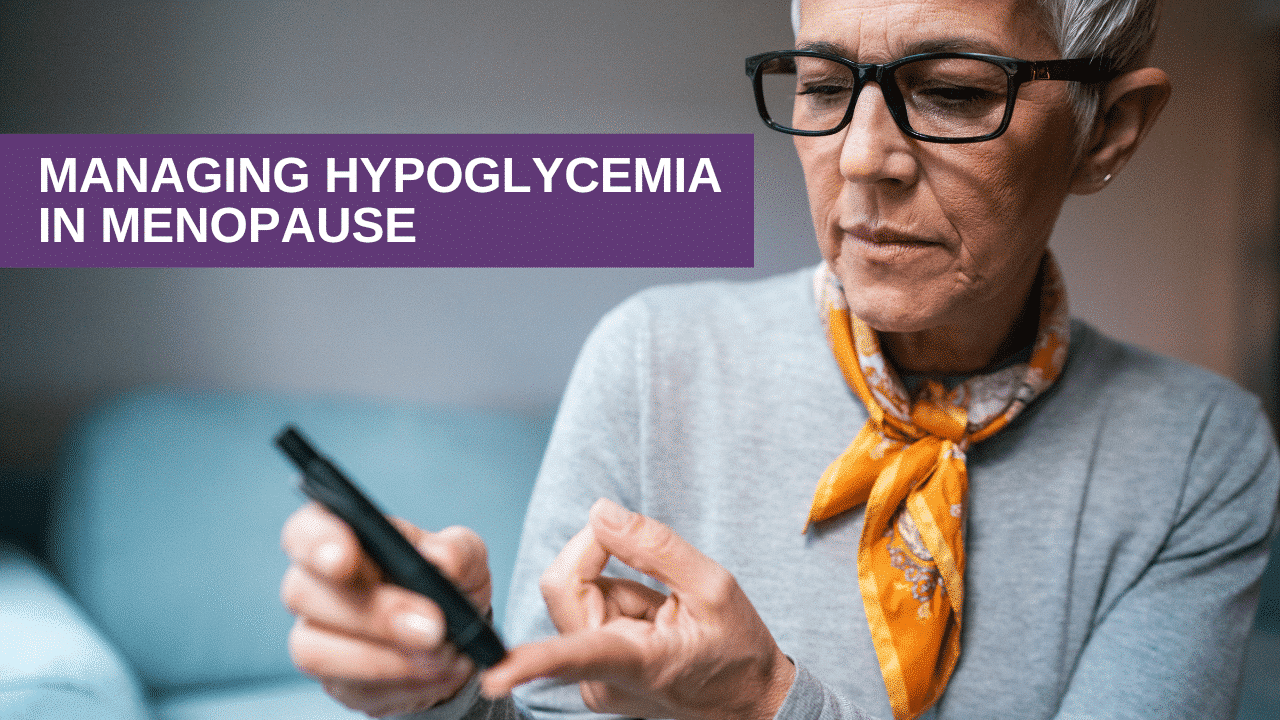
How do you manage hypoglycemia in menopause? Let’s talk about it.
Hypoglycemia means your blood sugar is too low. It’s quite common in young women, especially cyclically. The reason for that is estrogen helps to stimulate insulin receptors. When your estrogen levels are up and down during your menstrual cycle, you may not always be eating the foods that you need to keep your blood sugar stable and you might experience hypoglycemia.
If you had bouts of hypoglycemia when you were younger, it’s very common to have hypoglycemia in menopause. When your estrogen levels drop in menopause, your insulin receptors do not function as well which can aggravate hypoglycemia.
Hypoglycemia can be a precursor to insulin resistance, as your blood sugar rollercoasters between too high and too low.
The signs of hypoglycemia include feeling weak, tired, hangry or very emotional when you’re hungry, cold and clammy, sometimes sweaty. Eating sugar, or starchy carbohydrates seems to relieve the symptoms right away. But it’s not a good thing to do on a regular basis.
So how do you manage hypoglycemia in menopause?
#1 Supporting your hypothalamus helps regulate your blood sugar.
That’s because your hypothalamus produces a hormone called proopiomelanocortin which helps control glucose metabolism, including the liver’s storage of extra glycogen, pancreatic production of insulin and glucagon, as well as your fat cells’ storage of triglycerides.
It is very important that your hypothalamus is well supported, especially during menopause, so that hypoglycemia does not get activated.
I’ve seen patients with hypoglycemia reverse their symptoms by taking Genesis Gold® to support their hypothalamus. Personally, I had issues with hypoglycemia. When I started taking Genesis Gold® to support my hypothalamus, my hypoglycemia resolved itself within a couple of months. It takes some time to optimize hypothalamus function, so give it at least 90 days.
#2 Eat balanced meals to manage hypoglycemia in menopause.
Balanced meals mean being sure you’re eating protein, fat and complex carbohydrates at each meal and definitely not skipping meals. One-third of the calories coming from fats, one-third from protein, and one-third from complex carbohydrates. Avoid high glycemic index carbohydrates which turn into sugar quickly and can induce a hypoglycemic reaction.
If you’re having a hypoglycemic reaction, you do need to eat sugar right away but you need to follow it immediately with the protein, fat, and complex carbs so your blood sugar doesn’t bottom out again. One thing that I learned to keep on hand when I was having hypoglycemia was trail mix – for protein, fat, and a little bit of dried fruit for sugar. It usually helped to resolve my symptoms pretty quickly.
Knowing that you’re going to skip a meal, especially if you’re skipping meals and exercising and you’re prone to hypoglycemia, you may run out of sugar stores from your muscles and liver and might experience hypoglycemia. Eating balanced meals and supporting your hypothalamus helps manage hypoglycemia in menopause.
If you have any questions regarding hypoglycemia in menopause, please join us in our Hormone Reboot Training.
Frequently Asked Questions About Hypoglycemia in Menopause
What is hypoglycemia in menopause?
Hypoglycemia in menopause refers to episodes of low blood sugar caused by hormonal changes, particularly declining estrogen. These shifts affect insulin sensitivity and blood sugar regulation, making some women more prone to energy crashes and sugar cravings.
Why does menopause cause low blood sugar?
As estrogen levels drop during menopause, insulin receptors become less responsive. This can lead to blood sugar instability, causing levels to swing too high and too low, which may trigger hypoglycemic symptoms.
What are the symptoms of hypoglycemia in menopause?
Common symptoms include feeling weak, shaky, tired, irritable or “hangry,” cold or clammy skin, sweating, and emotional changes when hungry. Symptoms often improve quickly after eating sugar or carbohydrates.
Can hypoglycemia lead to insulin resistance?
Yes. Repeated blood sugar highs and lows can stress the insulin system over time, increasing the risk of insulin resistance. Stabilizing blood sugar early can help prevent long-term metabolic issues.
How does the hypothalamus affect blood sugar?
The hypothalamus regulates glucose metabolism through hormones that control insulin, glucagon, liver glycogen storage, and fat metabolism. When the hypothalamus is supported, blood sugar regulation becomes more stable.
How can hypoglycemia in menopause be managed naturally?
Natural management includes supporting hypothalamus function, eating balanced meals with protein, fat, and complex carbohydrates, avoiding high-glycemic foods, and not skipping meals—especially during exercise or high stress.
How long does it take to stabilize hypoglycemia in menopause?
Many women notice improvement within a few months when blood sugar support is consistent. Supporting hypothalamus health may take at least 90 days for optimal regulation.

0 Comments