
 Reviewed by our
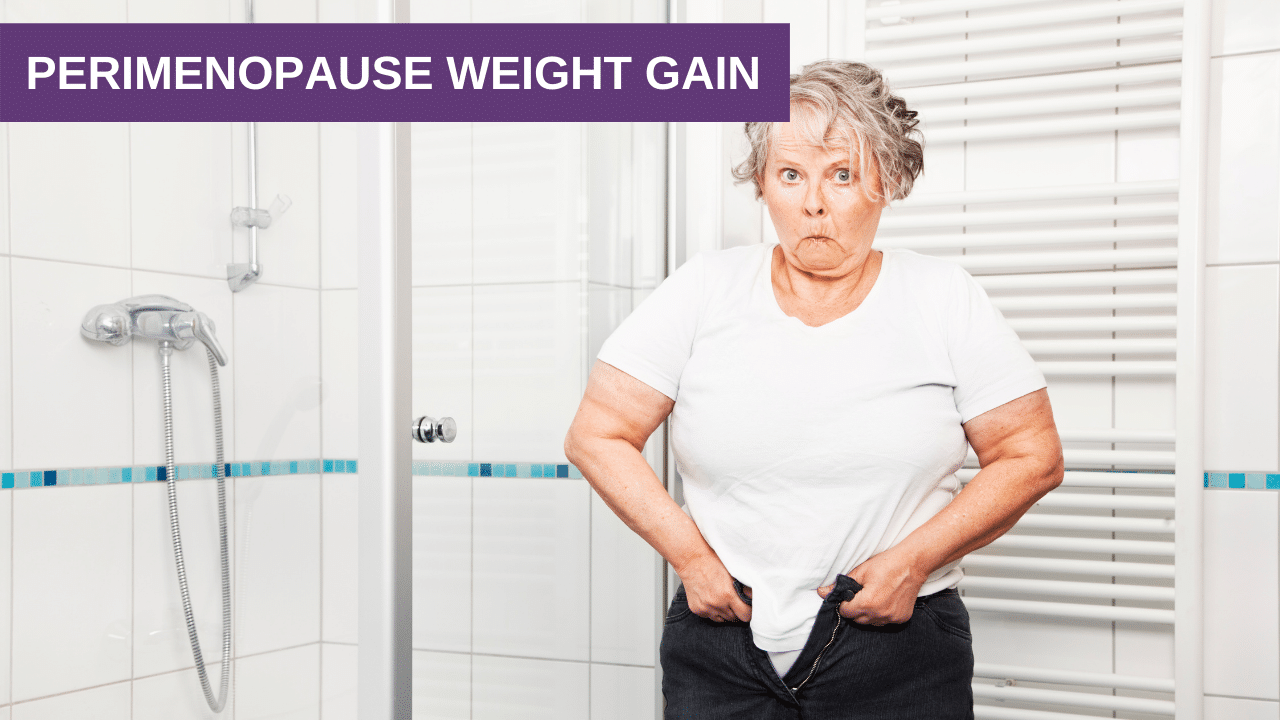
 Do you ever wonder if you are gaining weight due to perimenopause? Well, it is very, very common to see weight gain in perimenopause. I am going to explain why and what you can do about it.
Normally, you should be making ten to fifty times more progesterone than estrogen, and you only do that if you ovulate regularly. And perimenopause is when you stop ovulating regularly. So you do not have as much progesterone on board. That makes you go into what is called an estrogen dominance state. This is where estrogen is higher in ratio to progesterone.
Estrogen, being a growth promoter, will actually start to stimulate your fat cells to hold onto more fat. You will also see that you have much more water weight gain. In perimenopause it’s not uncommon to begin to develop some insulin resistance. When you have more blood sugar floating around than your body can use for energy, you make more insulin. Too much of any hormone can create desensitized receptor sites.
Perimenopause weight gain happens because of three overlapping shifts: changing estrogen and progesterone signaling, rising insulin resistance, and accelerating muscle loss. Your hypothalamus sits at the center of all three — it reads these signals and adjusts where your body stores fat and how much energy it burns.
Why Perimenopause Changes Where You Store Weight
If you're gaining weight around your middle despite eating the same way you always have, you're not imagining it, and it isn't a willpower problem. Your body is running on different hormonal instructions than it was five years ago.
Here's what's actually happening.
Phase one: progesterone falls first.
Progesterone is only made in meaningful amounts after you ovulate. Perimenopause is when ovulation becomes unpredictable — some cycles you ovulate, some you don't. Progesterone drops accordingly.
Estrogen, meanwhile, doesn't decline smoothly. It swings. As your ovaries become less responsive, your brain pushes harder to stimulate them, and that can produce estrogen surges higher than anything you saw in your thirties.
That combination — erratic estrogen, less progesterone to balance it — is what drives the early perimenopause symptoms you may recognize: breast tenderness, bloating, water retention, heavier periods, and weight that seems to arrive overnight and partly disappear again.
Phase two: estrogen declines, and your fat moves.
Later in the transition, estrogen falls for good. And this is where the weight pattern changes character.
Estrogen doesn't just influence how much fat you carry. It influences where. Through estrogen receptors in your hypothalamus, it helps direct fat toward your hips and thighs and away from your abdomen. When estrogen declines, that instruction weakens — and fat storage shifts toward your midsection and around your organs.
This is why women so often describe the same thing: the weight isn't necessarily much more, but it has relocated. Clothes fit differently through the waist even when the scale hasn't moved much.
It's also why what worked at 42 may stop working at 48. You're managing two different hormonal situations, and they need different things from you.
The Insulin Loop
Insulin resistance rises across the menopause transition, and it creates a cycle that reinforces itself.
When your cells respond less well to insulin, your pancreas makes more of it. Higher insulin promotes fat storage — particularly visceral fat, the kind that surrounds your organs. And visceral fat is metabolically active: it releases inflammatory signals that make your cells even less responsive to insulin.
More insulin resistance → more visceral fat → more insulin resistance.
This loop is the reason perimenopausal weight gain can feel like it accelerates on its own. It's not that your discipline slipped. It's that the system is now feeding itself. An Insulin Resistant Diet helps.
An insulin resistant diet includes a moderate amount of protein, some healthy fats, lots of colorful vegetables, a little bit of fruits, and absolutely avoiding starchy things like breads and pastas, sugars and baked goods. Trying to eat that way three times a day and drinking lots of water is the best way to actually start to break down that extra fat that you are storing.
The Piece Most Women Aren't Told About: Muscle
This one deserves more attention than it gets.
You begin losing muscle mass gradually from your thirties, and that loss accelerates during the menopause transition. It matters far more than most women realize, for two reasons.
Muscle is where your body puts glucose. The large majority of insulin-driven glucose uptake happens in skeletal muscle. Less muscle means less capacity to clear sugar from your bloodstream — which pushes you deeper into insulin resistance, regardless of what you eat.
Muscle sets your baseline burn. It's metabolically expensive tissue. Losing it lowers the energy you use at rest, all day, without you changing a thing.
So a woman can be eating exactly as she did at 40, moving exactly as much, and still gaining — because the tissue that used to handle her glucose and drive her metabolism has quietly diminished.
This is also the most changeable piece. You can rebuild muscle at any age.
Where Your Hypothalamus Fits
Your hypothalamus is the structure reading all of this.
It monitors estrogen, insulin, leptin, and cortisol, and it uses those readings to set your metabolic rate, your hunger signals, and your fat distribution. When the signals coming in shift — less estrogen, more insulin, less muscle, more stress — your hypothalamus recalibrates accordingly.
That recalibration is what you're feeling. Your set point has changed because the information your hypothalamus is working from has changed.
Which is why the approaches that work in perimenopause are the ones that change the signals: stabilizing blood sugar, rebuilding muscle, protecting sleep, and managing cortisol. Not restricting harder.
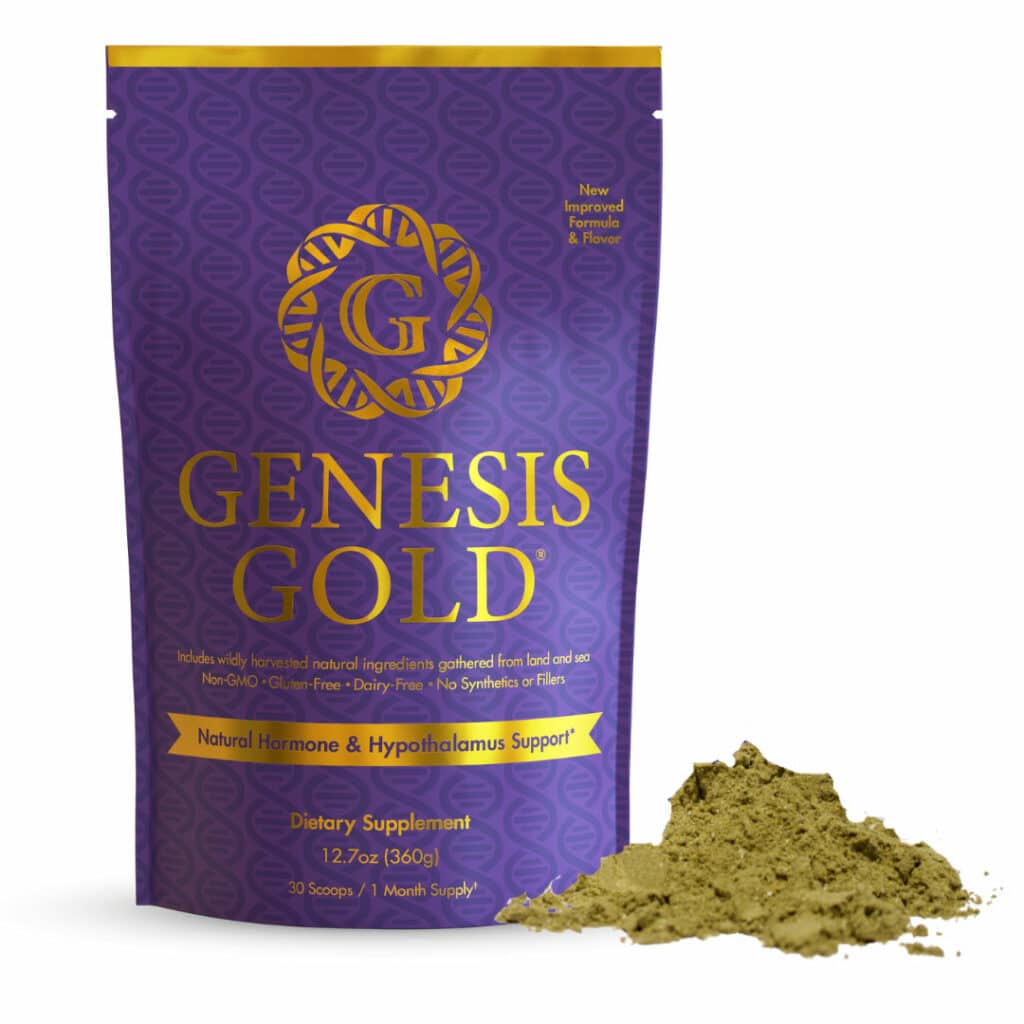
Use Genesis Gold® for Diet Supplementation
Supporting your hypothalamus with nutraceuticals will help increase your metabolism and reset your weight set point. I actually developed Genesis Gold® to help balance out your hormones, and that is going to make a huge difference with your weight gain. Try to make sure that you're getting enough chromium in your diet, but you can also take it as a supplement. It's a very safe mineral that helps to reduce insulin resistance and allow you to lose that mid-line fat that you gain in perimenopause.
Research provides new insights into menopause and weight gain

I have tried that diet and it hasn’t worked. My clothes don’t fit and my stomach is getting bigger. I eat right and exercise ( I also lift weights ) I can’t figure out what is going wrong. Help!!
If you’ve tried the insulin resistant diet, you’re exercising, getting enough sleep and still not losing weight, your hypothalamus needs support
Here’s what my patients use https://genesisgold.com/menopause-lp/
I started putting weight on on my mid area severàl months ago. It is so incomfortable because now am having acid reflux issues.
Please help.
Your hypothalamus probably needs support to breakthrough your insulin resistance https://genesisgold.com/balance-your-hormones/