
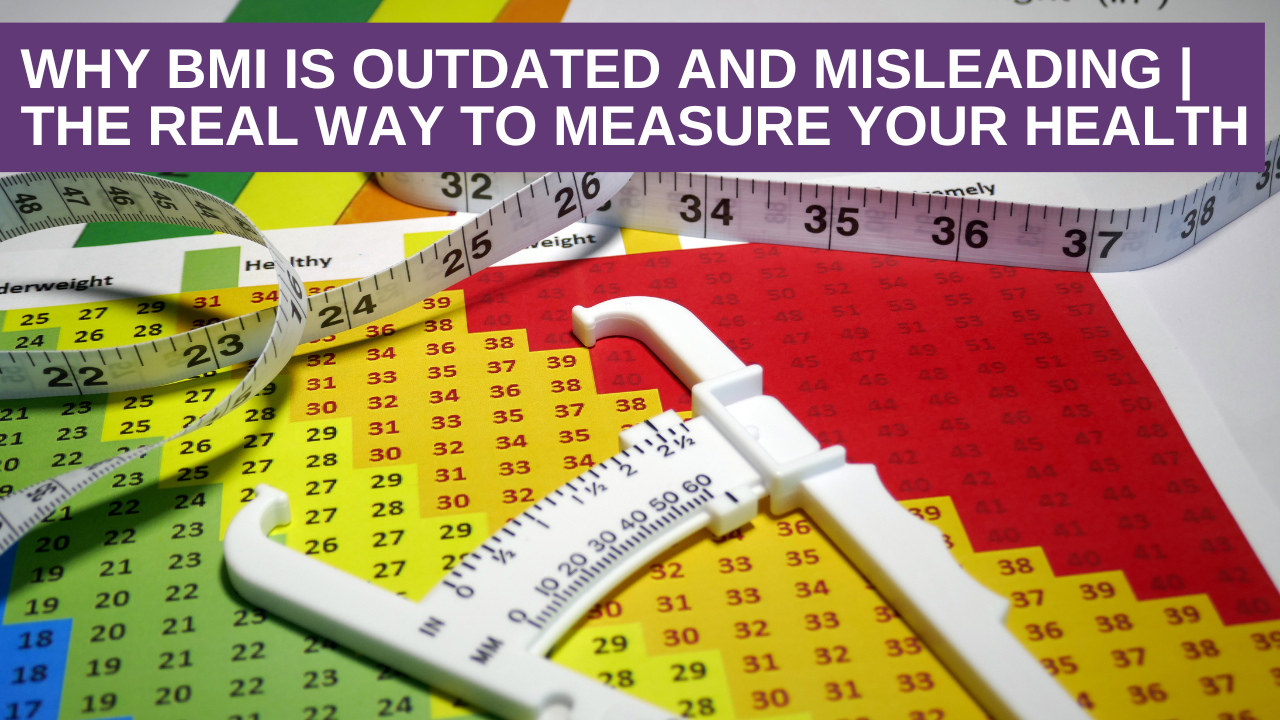
BMI is outdated. It does not measure your health, and in some cases, it is dangerously misleading. If you are still using BMI to understand your wellness, you may be missing what your body is actually telling you.
BMI, or Body Mass Index, was designed to assess trends in large populations, not individual health.
It is calculated by dividing weight by height.
However, it does not account for:
- Muscle mass
- Fat distribution
- Inflammation
- Or overall metabolic function
That is why a professional athlete and a sedentary person can share the same BMI while having very different health profiles.
What Really Matters?
Your body fat percentage, and more importantly, where that fat is stored.
Why? Because fat tissue is not just storage. It is hormonally active.
Body fat influences and is influenced by hormones such as:
- Estrogen
- Insulin
- Leptin (which controls hunger and satiety)
- Cortisol
Too much visceral fat, the kind that wraps around your organs, increases inflammation and disrupts hormonal signaling.
And that disruption is coordinated by, you guessed it, your hypothalamus.
The hypothalamus controls your weight set point, including your metabolism, hunger cues, and fat storage. When it is under stress or out of sync, your body may hold onto fat even if you are doing everything right.
Here’s What You Can Do:
1. Stop chasing a BMI number.
Look instead at your body composition, including body fat percentage, waist-to-hip ratio, and lean body mass.
2. Focus on rhythm and nourishment, not restriction.
A consistent routine supports your metabolism and resets your hypothalamus.
3. Support your hormones holistically.
When you nourish the hypothalamus, everything from appetite to fat storage starts working with you instead of against you.
So if your weight does not reflect how hard you have been working, or if you feel stuck despite doing “everything right,” it is time to stop blaming your willpower and start looking upstream.
In my free Hormone Reboot Training, I’ll show you how to support your hypothalamus, rebalance your hormones, and create sustainable change — no matter your age or BMI.
Lastly, you deserve a wellness plan that’s as smart and unique as you are.

What is BMI and how is it calculated?
BMI (Body Mass Index) is calculated by dividing weight by height. It was originally designed to assess health trends in large populations — not to evaluate individual health.
Why is BMI outdated?
BMI does not account for muscle mass, fat distribution, inflammation, or metabolic function. This makes it an inaccurate and often misleading measure of individual health.
Can two people have the same BMI but completely different health profiles?
Yes. A professional athlete and a sedentary person can share the same BMI while having vastly different body compositions, metabolic health, and disease risk. This is one of the clearest examples of why BMI is an unreliable individual health metric.
Is BMI accurate for women?
No. BMI is particularly misleading for women because it ignores hormonal influences on fat storage and distribution — factors that significantly impact health risk, especially during perimenopause and menopause.

0 Comments