
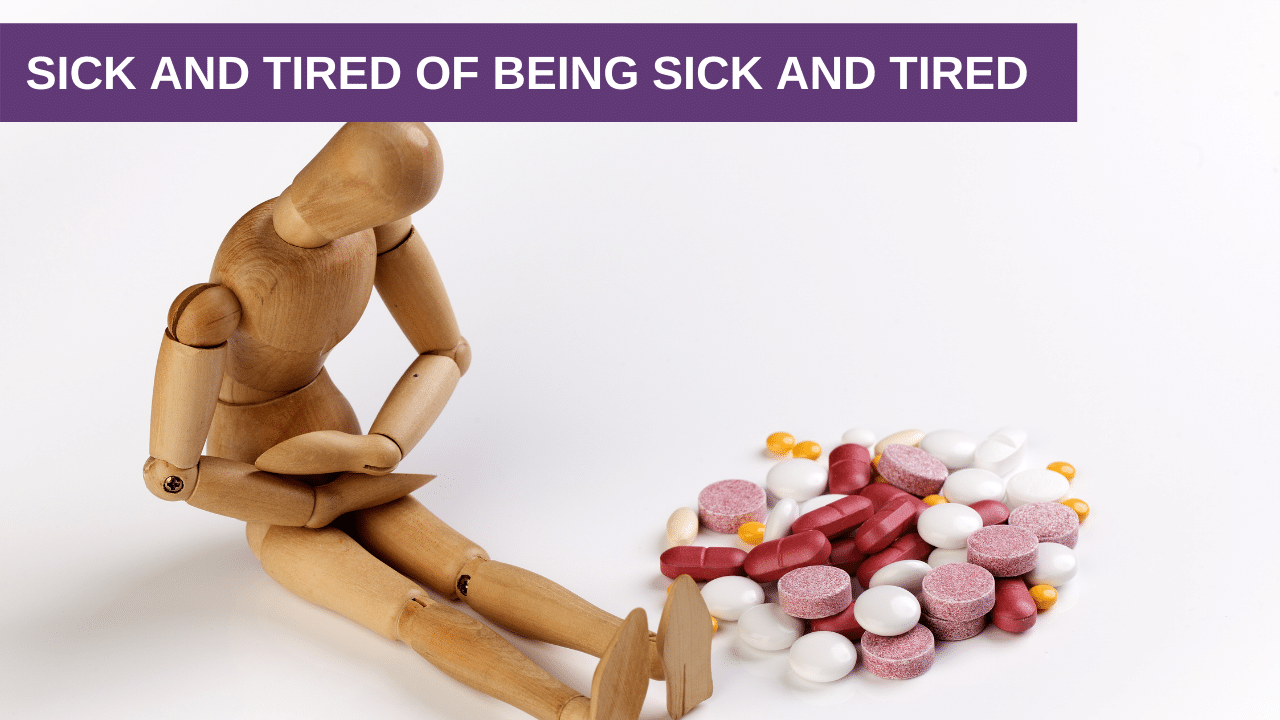
“I’m sick and tired of being sick and tired!”
My new patient looks sick and tired.
Dorothy has bags under her eyes. Her energy is sluggish and she looks at least ten years older than she claims to be. She came into my office carting a large satchel full of drugs and supplements, everything she had been prescribed or tried on her own over the past few years. Sometimes she gets a bit of relief, but nothing lasts. She has seen seven other specialists and no one has been able to help her.
I look at the list of symptoms she has checked off, with her comments, on my Hormonally Challenged intake form:
- Fatigue – “need caffeine throughout the day”
- Insomnia – “can’t fall asleep or stay asleep”
- No sex drive – “it’s ruining my relationship!”
- Irritable – “unreasonable anxiety”
- Depressed – “on meds but not working”
- Brain Fog – “YES! I can’t remember anything and it’s affecting my job!”
- Changes in Body Fat – “I’ve put on 20 pounds in the last few years”
- Exercise Intolerance – “I used to be an athlete, but now I’m too tired to exercise”
- Temperature Intolerance – “my feet and hands are cold, but I overheat easily and sweat at night”
- Stress Intolerance – “I can’t handle anything anymore”
On the last line, where I ask “What’s Your Main Concern?”, she writes:
“If I don’t get better, I’m going to lose my job, my husband, my life. Please help me!”
Dorothy comes to me diagnosed with fibromyalgia and chronic fatigue syndrome. She is on synthetic thyroid hormones, antidepressants, allergy meds. Her cholesterol is elevated, her blood pressure is low, her heart rate is high. Her skin is dry, her hair is thin and brittle, her eyesight is diminished. She complains of frequent bladder and vaginal infections. Her bowels are irregular and her body reacts to many foods she used to love. She has tried lots of diets but keeps gaining weight. She is taking so many supplements that it is a wonder she has an appetite for real food.
Dorothy is my typical patient. And Dorothy could be Don. Dorothy could be anyone, any age. Dorothy could be you.
Hormone Healing Tip: Dorothy could be you
You see, we are all on a healing path. We are all looking for the yellow brick road that will lead us to optimal health – in body, mind, and soul.
So let us continue with my new patient Dorothy, to be explored in further posts in this blog series.
Hormones affect everything:
Your moods, your memory, your metabolism.
Your appearance, your aging, your appetite.
Sleep patterns, your stress response, your sex drive.
Everything.
Think of hormones as the software program of the human computer. Many of us are so Hormonally Challenged – whether we are sick, aging, tired, or just plain stressed out – that we need a software update.
0 Comments