
If you want to know how your liver detoxification affects your hormones, then I wrote this for you. Welcome back to my blog. Today I am discussing how your liver is detoxifying hormones and how that affects your hormonal health. It is a super important topic and, so, liver detoxification is discussed a lot. We talk about detoxing our bodies, doing cleanses. but what exactly is it that are you doing? And why does your body not do this naturally? Well it does. But you must give your body the right stuff.
Let us talk about how hormones are metabolized and detoxified so you understand what is happening in your body. So, first of all, these toxins, pesticides, poisons, drugs, all things toxic go through the liver, all of them do. But so do your hormones and other biochemistry that you make that is still floating around in the bloodstream, that your body does not need anymore. So they go into the liver to be detoxified. In other words, to get rid of them.
All of these toxins, especially hormones, are fat-soluble.
This means that they need to be broken down so that they can be water-soluble. Fat-soluble toxins and hormones are difficult to get rid of. Water-soluble is easier. And so your liver uses enzymes, called P450 enzymes, that creates these water-soluble compounds, so the toxins are water-soluble. Unfortunately water-soluble toxins are much more toxic. So your liver immediately has to handcuff those toxins with what are called conjugates. These are chemicals, usually proteins that can be something as simple as the sulfur that handcuffs the toxins and the hormones to allow your body to them take them out through the colon or through the kidneys.
You have two ways out. Well, you actually have three, but the first two ways are out through the liver, and through urine released from the kidney. Or out through the liver and defecated out through the colon. Either in your urine or your bowel movement. That's how toxins get out. If your kidneys are doing their job okay, but the liver is kind of overwhelmed, your colon has to then take over and do more of the job. And it is not doing a good job. Or if you are constipated, then the third way out is through your skin. Therefore, often times when you are toxic and you are not using your normal detoxification pathways efficiently you are gonna see rashes, and acne on your skin. You are gonna see the effects of the toxins coming out on your skin. So it is super important to try to get this back into balance.
Hormone Healing Tip #1: Keep your Liver Healthy
Now one of the things that you can do is number one, you need to eat foods to actually help your body, your liver, do its jobs properly. You need to provide it with the foods that it needs to actually create the conjugates, the handcuffs to get those hormones and toxins out of the system. And some of the foods that are really, really important are your cruciferous vegetables. Those are the stinky vegetables that produce sulfur. Those vegetables are your broccoli, your cauliflower, your Brussels sprouts, your cabbage, your kale. Those vegetables provide nutrition, especially sulfur. But you can also get it from things like onions, and garlic, and leeks, that actually help your liver produce more conjugates so your body can get rid of your hormones and toxins when you are done using your hormones.
Now one of the things that are affected if your colon is out of balance is the normal conjugation.
Let us compare with what healthy conjugation looks like: You have an estrogen molecule, let us say, but this could be anything. It could be testosterone. Could be DHEA. It could be cortisol. And that hormone is bound up to a conjugate, in this case, glucuronidase. That conjugate actually will take that hormone out of the system through the colon and out through a bowel movement. Or out back through the liver and out through the kidneys. The conjugate handcuffs the chemical so it is not so toxic anymore. It is no longer water-soluble. That is actually really important.
But if your gut is out of balance and your friendly bacteria are not sufficient enough and there are any pathogens in there, or there are just not enough friendly bacteria, these bonds get broken by enzymes produced by the imbalanced gut bacteria and now you are releasing hormones to be recycled back into the bloodstream again. Creating a hormonal overload. Now, this is very, very common because often times we do not eat all the foods that we need to actually help our liver.
Hormone Healing Tip #2: Keep your Colon Clear
So what is the second thing that you can do to help your liver? You can do liver cleanses, and what does that look like? Well there are lots of supplements out there. Milk thistle is a really excellent herb to support the liver. But I really like to do a dietary liver cleanse. And the reason I like to do that is because it is easy and it is super effective. I have a great liver cleanse for you that I am going to make available here. But literally the kind of key ingredient here is lemon and olive oil. Lemon juice is so helpful, what it does is it stimulates your bile ducts, those little ducts that produce the bile from the liver, and goes out into the gallbladder, to actually clear. It helps to clear the bile ducts. So start adding some lemon to your water, drink some hot lemon water in the morning. It really helps to clear out your bile ducts. And helps your liver do its job more efficiently.
Olive oil and lemon juice combined are an excellent want to clear out the gallbladder, especially of sediment.
Even just to help clear those bile ducts, you can take these ingredients in a shot. Like you can actually take equal amounts up to a teaspoon of each, lemon juice and olive oil, in a shot glass if you are feeling any kind of indigestion. They can really make a difference if it is liver-related and you are not clearing those toxins. That shot will just clear that up and it is also useful for people who have issues with their gallbladder. You can take it before you go to bed.
So that is part of my liver cleanse, along with specific foods that really help to heal and clean out the liver. Artichokes for instance are excellent liver cleanse foods. And beets, I love beets as a liver cleanse. Beetroot, as well as the greens, are very helpful. The liver cleanse diet is the second way that you can really try to keep things moving.
Hormone Healing Tip #3: Keep Your Kidneys Healthy
Then the third thing you need to do, because one of the ways out is through your kidneys, is to keep your kidneys functioning well. To do that, you want to keep very well hydrated. And another thing to help flush the kidneys is something pretty simple, called marshmallow root tea. You can drink a quart of marshmallow root tea to actually help to flush your kidneys. You do not want to do this on a daily basis. But maybe once a month, or once every three months to kind of try to flush things out.
That can be really helpful. Remember, when you're making medicinal teas, you want to absolutely be sure that you are steaming it, or steeping the tea for at least 15 minutes to get all of the herbal extract out and make it the most effective as possible. I want to finish by pointing out that the detoxification pathways are super important to your hormonal health. If you can keep your liver clean, your kidney flushed out, and your colon running well with a lot of fiber and a lot of water. Then you are going to have much healthier hormone metabolism and healthier hormone levels.
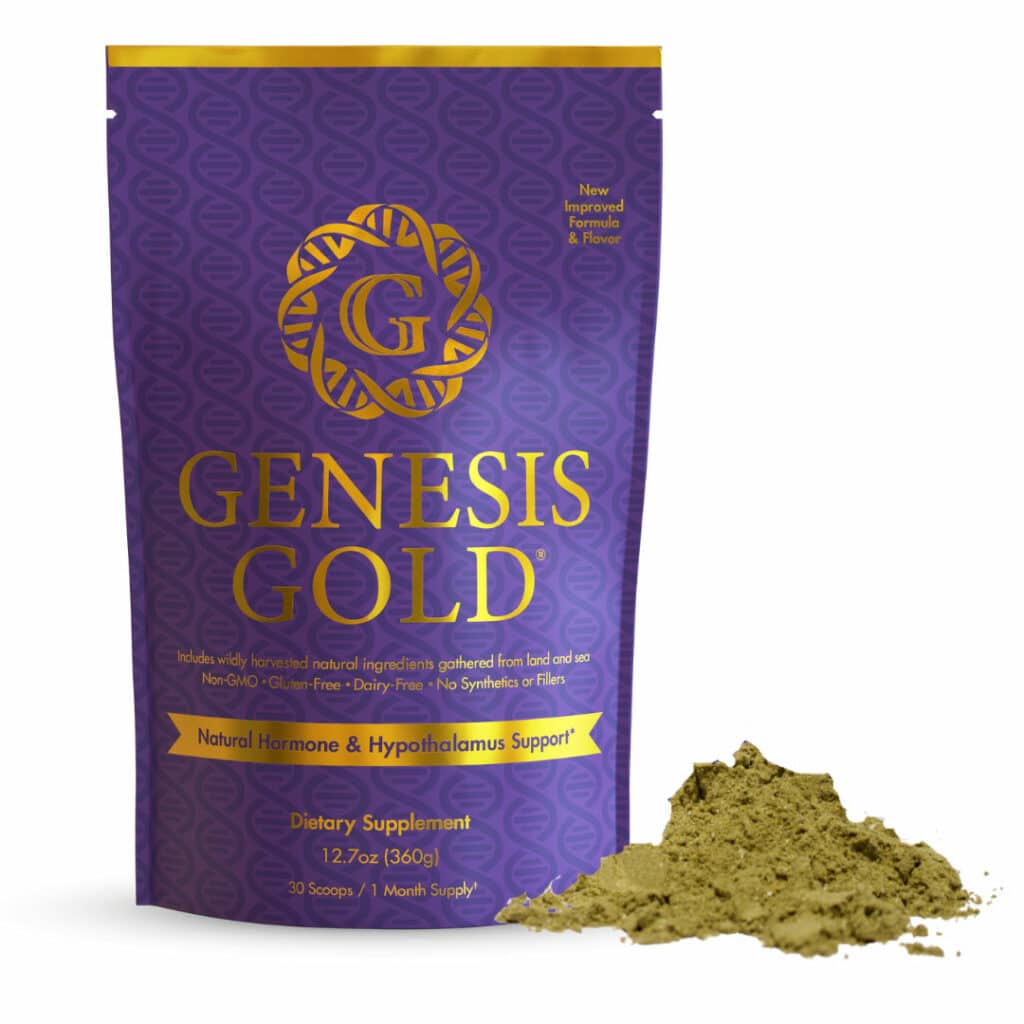
So now that you know what you need to do, to detoxify your liver to keep your hormones healthy, you see that it is just not easy if the rest of your hormones are out of balance. That is why I created Genesis Gold®.

0 Comments