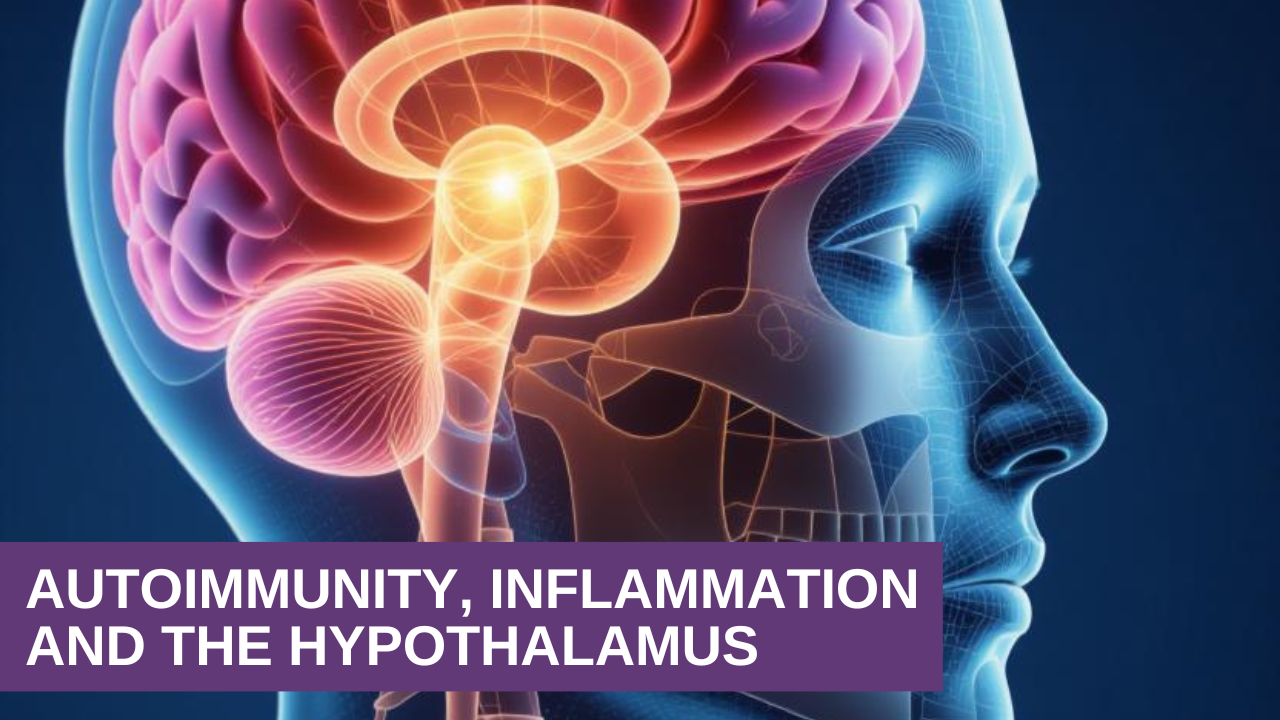
Autoimmunity is not your immune system attacking you. It’s your immune system receiving confused instructions.
I know that sounds different from what you’ve been told, but in over three decades of clinical work, I have never seen an immune system that woke up one morning and decided to self-destruct.
What I see instead is miscommunication, and at the center of the miscommunication is the hypothalamus.
The Real Question Is: Who’s Sending the Signals?
If you’ve been diagnosed with Hashimoto’s, lupus, rheumatoid arthritis, MS, psoriasis, inflammatory bowel disease, or any autoimmune condition, you’ve probably been told that your immune system is overreactive.
It’s responding to signals, and the real question is, who’s sending those signals?
What Most Autoimmune Patients Were Never Taught
This is the part that most autoimmune patients were never taught, and it reframes everything.
The hypothalamus regulates immune tone.
It sits at the top of the neuro-immune-endocrine axis.
It constantly evaluates:
stress levels
blood sugar stability
sleep quality
hormonal balance
inflammatory load
emotional safety
When the hypothalamus perceives threat, whether it’s chronic stress, trauma, environmental toxins, blood sugar swings, sleep disruption, or persistent inflammation, it shifts the body into defense mode.
Defense mode increases cortisol signaling, sympathetic nervous system activation, pro-inflammatory cytokines, and immune vigilance.
This is protective in short bursts, but when stress chemistry dominates for months or years, the immune system never fully powers down.
Immune cells begin reacting to signals that were never meant to be targets, not because the immune system is evil, but because it’s over-alert.
Why The Story Matters
When someone tells you your body is attacking itself, it creates fear, and fear reinforces stress, and stress reinforces hypothalamic activation, that reinforces inflammation.
So we have to reframe this.
The immune system is not broken. It’s dysregulated.
It’s operating in high surveillance mode, and calming surveillance begins at the top, at the hypothalamus.
Your immune system evolved to protect you.
If it’s overreacting, it believes something is wrong.
Instead of only suppressing it, we also need to ask, "Why does the body still feel under threat?"
Because calming the signal calms the response.
Why I Focus on Hypothalamic Regulation
This is why everything I do clinically begins with hypothalamic regulation, not just immune suppression, not just symptom management, but restoring communication.
Genesis Gold® was designed to support that communication network.
Targeted amino acids for hypothalamic neurotransmitter balance, micronutrients for thyroid and adrenal signaling, adaptogenic botanicals to regulate stress chemistry, and phytonutrients to reduce inflammatory load.
It doesn’t override the immune system. It helps stabilize the control center that sets immune tone.
True immune recalibration takes time, often closer to 90 days than 30, but the body is remarkably intelligent when it receives consistent stabilizing signals.
It is overprotection, and when protection no longer feels necessary, inflammation quiets.
Change the signal, and the system changes.

Frequently Asked Questions:
Can your hypothalamus cause weight gain?
Yes. The hypothalamus is the master regulator of metabolism, controlling how your body stores and burns energy through its signaling to the thyroid, adrenals, and pancreas. When the hypothalamus becomes dysregulated by chronic stress, poor sleep, inflammation, or blood sugar instability, it defends a higher weight "set point" — causing the body to hold onto fat regardless of diet or exercise. This makes hypothalamic dysfunction an upstream root cause of stubborn weight gain.
What is a weight set point and why won't mine move?
A weight set point is the body weight your hypothalamus works to defend, calibrated over time by stress, sleep, hormones, and inflammation. When you diet, the hypothalamus perceives scarcity and responds by slowing metabolism, increasing hunger hormones, and suppressing satiety signals to return you to that set point. This is why most people regain lost weight within two to five years of conventional dieting — the set point itself was never recalibrated, only temporarily overridden.
Why do I gain weight under stress even when I'm not eating more?
Chronic stress raises cortisol, which disrupts blood sugar regulation, promotes abdominal fat storage, and signals the hypothalamus that the body is under threat. In survival mode, the hypothalamus defends fat stores and slows metabolism — so weight can increase even without any change in calorie intake. The stress chemistry, not the food, is driving the weight gain, which is why stress reduction is essential to any lasting metabolic reset.
Why do I regain weight after stopping GLP-1 medications?
GLP-1 medications work peripherally on appetite and gastric signaling, but they do not address the underlying hypothalamic dysregulation that sets your defended weight. Because the hypothalamic set point is never recalibrated, the body resumes defending its original weight once the medication stops — leading to significant regain. Long-term success requires restoring hypothalamic regulation so the set point itself lowers, rather than relying on appetite suppression alone.
How long does it take to reset your metabolism?
Genuine metabolic recalibration takes a minimum of 90 days, because the hypothalamus needs consistent signals of safety and sufficiency before it will lower its defended set point. This differs from a diet, which produces temporary suppression the body quickly corrects. A 90-day reset typically moves through three phases: stabilizing stress chemistry (days 1–30), rebuilding metabolic efficiency (days 31–60), and lowering the weight set point (days 61–90).
Why does my thyroid feel slow even though my labs are "normal"?
Under chronic stress, the body converts thyroid hormone into reverse T3, which blocks active thyroid receptors and slows metabolism at the cellular level — even when standard lab values appear normal. This means you can experience genuine symptoms of slow metabolism, such as fatigue, cold intolerance, and brain fog, while your thyroid panel looks unremarkable. Addressing the upstream hypothalamic and stress signaling often improves thyroid conversion and symptoms.
Is stubborn weight gain a willpower problem?
No. Stubborn weight gain is a signaling problem, not a willpower problem. The hypothalamus governs weight through survival mechanisms that operate below conscious control — defending its set point by slowing metabolism and increasing hunger when it perceives threat. No amount of discipline can override this system; lasting change comes from restoring hypothalamic regulation through reduced stress, balanced blood sugar, restorative sleep, and targeted nutritional support.
Known as the Hormone Queen®️, I’ve made it my mission to help everyone - no matter their age - balance their hormones, and live the energy and joy their DNA and true destiny desires. See more about me my story here...
0 Comments