
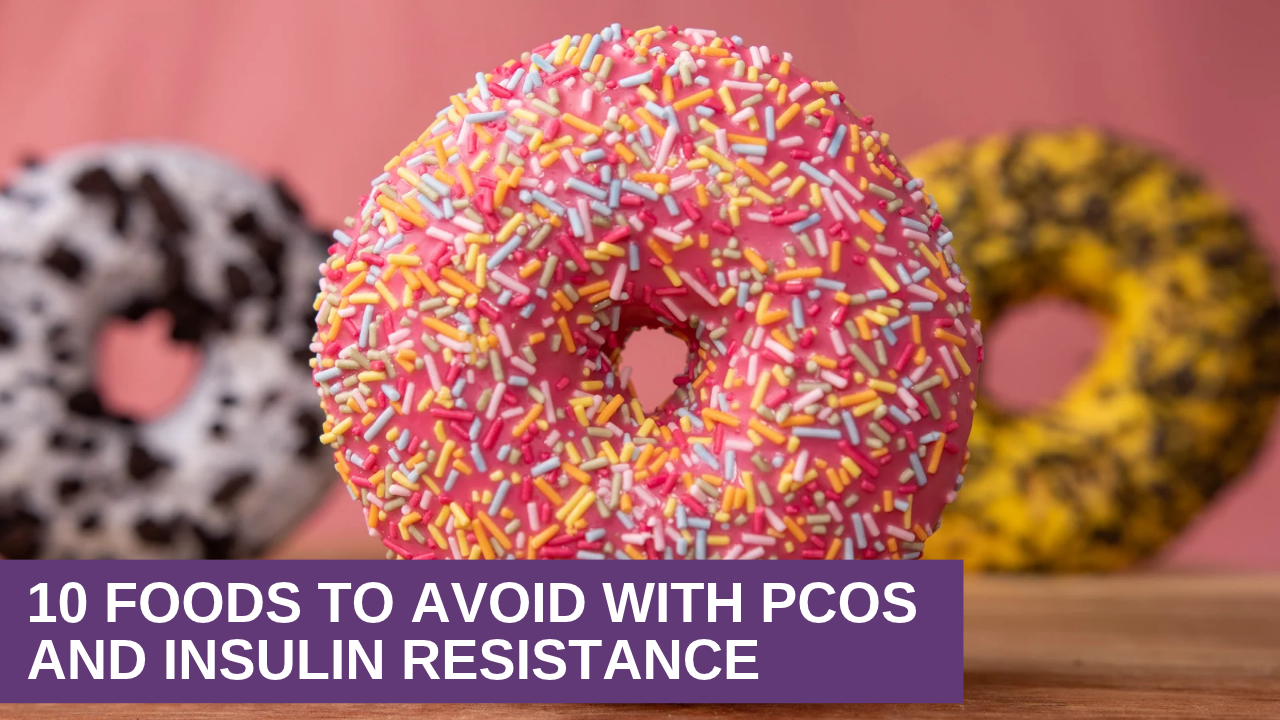
If you have PCOS and you’re not sure what foods could be making your insulin resistance harder to manage, this is for you. I’m going to show you 10 foods to avoid with PCOS — but first, I want you to understand something most people never hear about PCOS: it’s not just a reproductive condition. It’s a metabolic disorder that originates in your hypothalamus.
Your hypothalamus is one of the places insulin signals to when it’s telling your body to stop being hungry and start using stored energy. In PCOS, that central insulin signaling becomes resistant — the same way it does in your muscle and fat cells, but upstream in your hypothalamus. When your hypothalamus stops responding to insulin properly, it disrupts the GnRH pulse pattern that controls ovulation, which is why insulin resistance and irregular cycles show up together so consistently in PCOS. It’s the same root problem showing up in two different systems.
And foods that spike glucose quickly make this central resistance worse, not just your blood sugar numbers.
When I say “avoid,” I don’t mean never eating bread, rice, or potatoes again. The goal is eating less of what raises blood sugar quickly and being thoughtful about portions and pairings.
Here Are 10 Foods to Avoid with PCOS
#1: Added Sugar
The more added sugar you eat, the more glucose your body — and your hypothalamus — has to manage.
Read your labels.
#2: Candy
Sugar without protein, fat, or fiber to slow it down.
#3: Baked Goods
Added sugar combined with refined flour — a double load of fast glucose.
#4: Sweetened Drinks
Easy to consume more sugar than you realize because you’re drinking it.
#5: Bread
Mostly starch. Watch portions and pair with protein, fat, or fiber.
#6: Pasta
A concentrated source of starch — portion and pairing really matter.
#7: Rice
Not forbidden, but build the rest of the meal around protein, vegetables, and healthy fat.
#8: Potatoes
Understand your portion and how the whole meal is balanced.
#9: Refined Flour Foods
Crackers, pretzels, and tortillas offer a lot of starch with little protein or fiber, and are easy to overeat.
#10: Alcohol
Adds sugar and calories, often with sweet mixers — limit, especially later in the day.
What Should You Eat More Often?
Keep it simple — build meals around protein, healthy fats, fiber, and vegetables. Breakfast could be eggs with vegetables and avocado, or plain yogurt with nuts. Lunch and dinner can follow the same pattern.
Here’s the part that changes the trajectory, though.
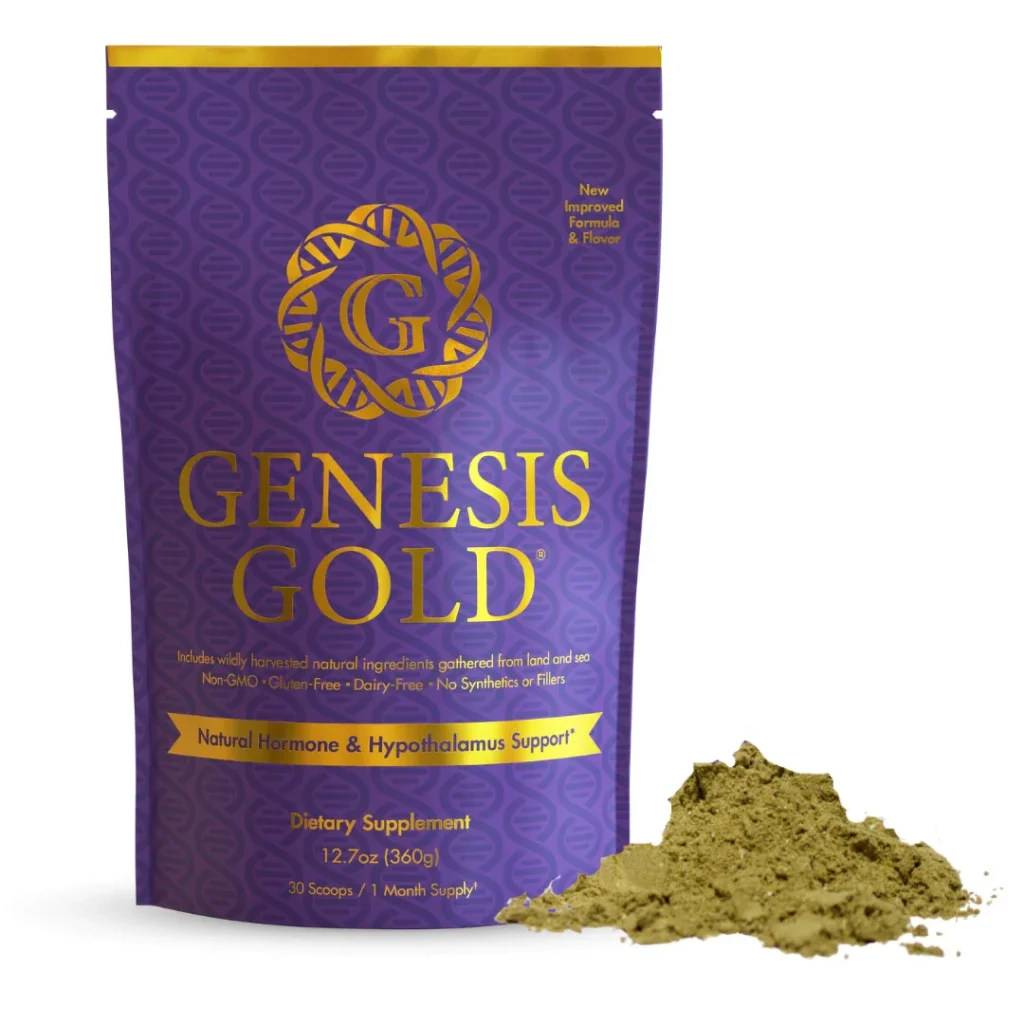
Diet alone manages the downstream symptoms, but it doesn’t reverse the central insulin resistance happening in your hypothalamus. That’s what I designed Genesis Gold® to address — restoring optimal hypothalamic function so that central insulin resistance actually reverses, which then signals the rest of your body - your muscles, your liver, your ovaries - to become more insulin sensitive too. It’s addressing the root instead of only managing what shows up downstream.
If you want to understand how insulin resistance, your hypothalamus, and how your reproductive hormones are all connected in PCOS, that’s what I teach in my Free Hormone Reboot Training.
Genesis Gold® is formulated to help sensitize your hypothalamus to insulin and reverse insulin resistance.
0 Comments