
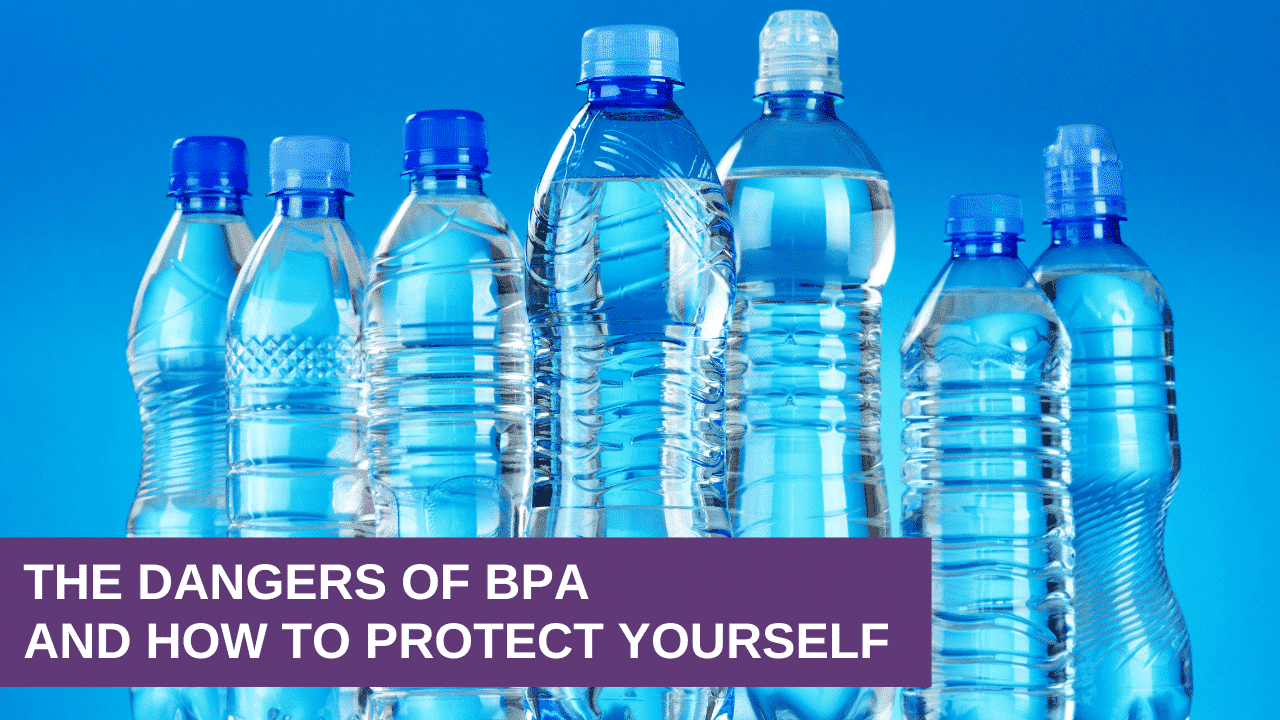
How does BPA affect your hormones?
Let's talk about it.
BPA – Bisphenol A – is an endocrine-disrupting chemical found in everyday products you may use without a second thought: plastic water bottles, food can linings, receipt paper, and even some dental sealants. Once inside your body, BPA doesn't just pass through — it mimics estrogen, interferes with hormone signaling, and has been detected in 92% of urine specimens tested in the U.S.
What makes BPA particularly concerning isn't just its prevalence. It's the fact that your body's most important hormonal control center — your hypothalamus — is especially vulnerable to its effects.
Your hypothalamus regulates nearly every hormonal process in your body: sleep, appetite, body temperature, mood, fertility, and stress response. When BPA exposure disrupts hypothalamic function, the ripple effects are far-reaching. Research has linked BPA to cardiovascular disease, hormone-related cancers, metabolic dysfunction, infertility, low birth weight, and obesity.
BPA also affects the hippocampus — the brain's memory and learning hub — which the hypothalamus directly gates. Early life exposure to BPA has been associated with increased anxiety and depression in girls, and attention deficit disorder in boys. In adults, the consequences show up as hormonal imbalances, mood disruption, and reproductive issues.
The good news? Awareness is the first step. And there are practical, science-backed ways to dramatically reduce your exposure — and support your body's ability to detoxify what it's already absorbed.
So how do you protect yourself from BPA?
Stop using plastic water bottles. Plastic bottles that have been frozen or overheated are even more likely to leach BPA into your fluids.
Avoid plastics unless they're BPA-free.
Utilize glass or metal to consume your fluids, especially in water bottles.
And your hypothalamus and hippocampus are particularly vulnerable to BPA. The hypothalamus is the gatekeeper to the hippocampus, and when exposed to BPA affects emotional and social behaviors, as well as reproduction, learning, and memory.
Early life exposure to BPA can lead to increased anxiety and depression in girls and attention deficit disorder in boys.
BPA affects neurodevelopment, hormone function, and immunity. Exposure to BPA has been associated with cardiovascular disease, hormone-related cancers, low birth weight, obesity, metabolic disease, and infertility.
Supporting your hypothalamus with Genesis Gold® will help to protect your endocrine receptors and optimize detoxification. So even if you have been exposed to endocrine disruptors like BPA, you are less likely to manifest hormonal imbalances and endocrine issues.
If you have any questions please join me in our Hormone Reboot Training.

Resources:
https://www.ncbi.nlm.nih.gov/pmc/articles/PMC7246794/
What is BPA and why is it dangerous?
BPA, or Bisphenol A, is a synthetic chemical used in the production of polycarbonate plastics and epoxy resins — materials found in water bottles, food storage containers, canned food linings, thermal receipt paper, and some medical devices. It's dangerous because it behaves as an endocrine disruptor: it mimics estrogen in the body, binds to hormone receptors, and interferes with the normal signaling of estrogen, testosterone, and thyroid hormones. Because BPA can leach out of products — especially when heated, frozen, or scratched — exposure is nearly universal. It has been detected in the urine of 92% of people tested, meaning most adults and children carry measurable levels of this compound at any given time.
How does BPA affect hormones?
BPA disrupts hormone function by binding to estrogen receptors (ERα and ERβ) and triggering estrogenic activity at doses far below what was once considered harmful. It also antagonizes testosterone receptors, effectively lowering androgenic activity in both men and women. This dual action — acting like estrogen while blocking testosterone — creates a hormonal imbalance that can manifest as irregular menstrual cycles, low libido, reduced fertility, weight gain, mood instability, and fatigue. In men, BPA exposure has been associated with feminizing effects, reduced sperm quality, and erectile dysfunction. In women, it has been linked to estrogen dominance, PCOS, endometriosis, and early puberty onset in daughters exposed in utero.
What does BPA do to the hypothalamus?
The hypothalamus is one of the most BPA-sensitive regions of the brain. It contains a high concentration of estrogen receptors, which makes it particularly susceptible to BPA's estrogen-mimicking activity. When BPA binds to these receptors in the hypothalamus, it disrupts the hormonal feedback loops that regulate reproduction, appetite, sleep, stress response, body temperature, and emotional regulation. Research has shown that BPA exposure alters gene expression in the hypothalamus, changes the release of key signaling hormones like GnRH (gonadotropin-releasing hormone) and oxytocin, and impairs the hypothalamic-pituitary-adrenal (HPA) axis — the central stress-regulation pathway. Over time, these disruptions can contribute to adrenal fatigue, thyroid dysfunction, and reproductive failure.
What are the symptoms of BPA exposure?
BPA exposure doesn't always produce obvious, immediate symptoms — which is part of what makes it so insidious. Over time, chronic low-level exposure can contribute to a wide range of symptoms, including:
Hormonal imbalances such as irregular periods, estrogen dominance, or low testosterone
Difficulty losing weight or unexplained weight gain
Brain fog, memory problems, and difficulty concentrating
Increased anxiety, depression, or mood instability
Fatigue and disrupted sleep
Reduced fertility or difficulty conceiving
Early puberty in girls or feminizing effects in boys
Elevated risk of metabolic conditions including insulin resistance and type 2 diabetes
Because these symptoms overlap with many other health conditions, BPA-related hormonal disruption is frequently missed or misattributed.
Who is most vulnerable to BPA's harmful effects?
Those at highest risk include fetuses and infants (whose developing endocrine systems are most sensitive to hormonal disruption), young children, pregnant women, and women in perimenopause or menopause — a time when the hormonal system is already under significant stress. Early life BPA exposure has been specifically linked to increased anxiety and depression in girls, and attention deficit disorder in boys. Women with pre-existing hormonal conditions such as PCOS, endometriosis, thyroid dysfunction, or adrenal imbalance may also be more susceptible to the compounding effects of BPA on an already-stressed endocrine system.

0 Comments