
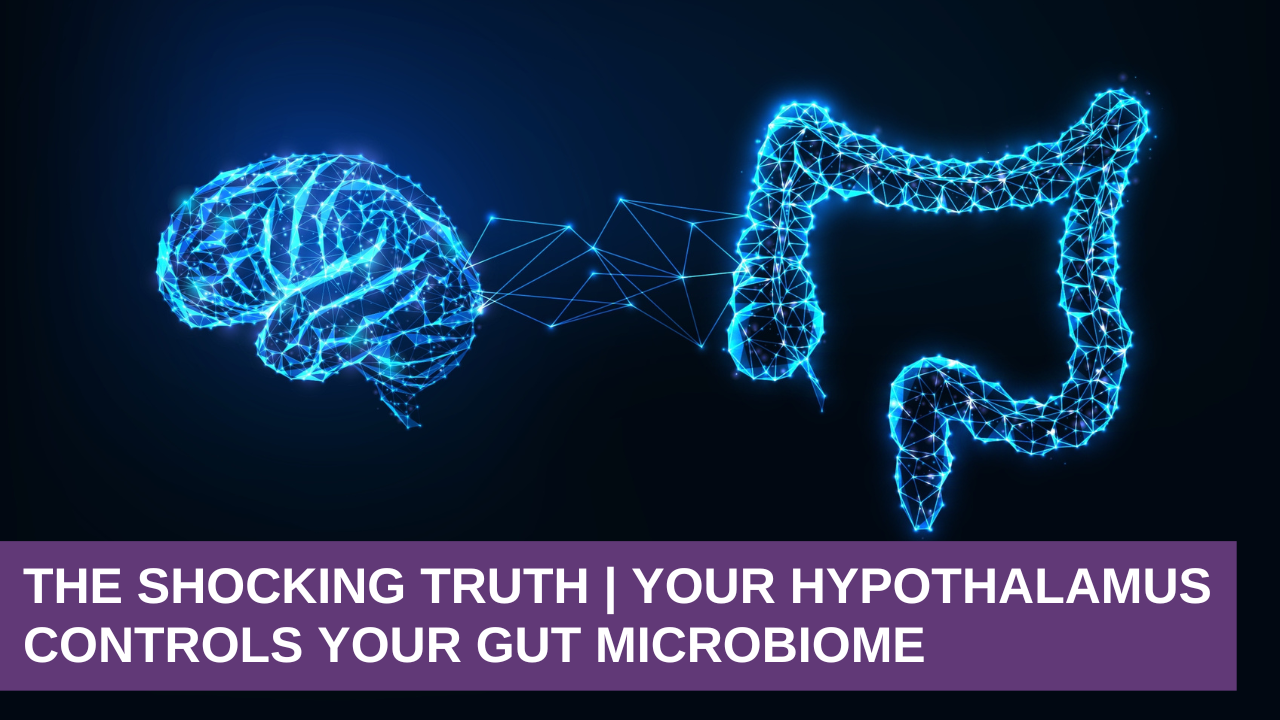
I am super excited to share with you some brand new research that has been proven. Something I’ve been seeing in my clinical practice for over 20 years regarding the gut microbiome link to the hypothalamus. Your hypothalamus controls your gut microbiome.
Your Hypothalamus Directs Your Gut Microbiome
Yes, it’s true. Everyone is so excited about all the discoveries regarding the microbiome, that bacteria that live in your gut that are beneficial for you, as well as those commensal microbes. How the gut microbiome affects your moods, your weight, your metabolism, how they affect your hormones.
And there’s lots of information out there about the different species of the gut microbiome and lots of products, probiotics and prebiotics, that are promoted to feel better, lose weight, et cetera. Except taking probiotics or prebiotics will not provide a long-term solution. It’s like planting more seeds in your garden without an effective gardener to weed and direct the growth.
Your hypothalamus is the gardener.
It directs your gut microbiome, both its function and its composition. I have always suspected that the hypothalamus directed the gut, not just the gut neuroendocrine pathways, but the gut microbiome. And the reason I suspected that is because when I’ve had patients who’ve had irritable bowel syndrome with either constipation or diarrhea, giving them hypothalamic nutraceutical support, corrected both conditions by correcting the imbalance of the gut microbiome that we were able to read on stool analysis tests.
Supporting the hypothalamus nutraceutically helped those having emotional eating issues, anxiety, depression, feel better fairly quickly.
A Brand New Study Proves What I’ve Seen In My Clinical Practice
Researchers figured out the hypothalamic pathways that direct gut microbiome.
In mice, they were able to isolate which aspect of the hypothalamus is directing the gut microbiome. Using chemicals to either activate or inhibit hypothalamic POMC, that’s proopiomelanocortin, and hypothalamic agouti-related peptide neurons.
The researchers saw a rapid modulation of the gut microbiome.
We’re not talking weeks, we’re talking hours.
This is a very unanticipated brain-gut axis. It is not the gut microbiome that controls your brain. It is not the brain that controls your gut microbiome.
The Hypothalamus Controls Your Gut Microbiome
It attunes the microbiome composition in very quick timescales, literally adjusting meal to meal, event to event, stressor to stressor, mood to mood. The hypothalamus is talking to the gut microbiome. It’s receiving information from the gut microbiome.
Short-chain fatty acids are produced by a healthy, balanced gut microbiome. And if your hypothalamus perceives a shortage of those short-chain fatty acids, it will direct the proper colonies of gut microbiome, adjusting the lactobacillus species, the bifida species, and other commensal species. The gut microbiome responds immediately.
Your hypothalamus perceives macro and micronutrients. Both amino acids, fatty acids, glucose, activated vitamins and minerals, and directs the gut microbiome accordingly for the next meal. For the next day. Immediately telling it to make adjustments in its metabolic processing.
Your hypothalamus directs the microbial colonies to increase or decrease, or even change the composition of your gut microbiome completely. So, in order to heal your gut, you have to heal your hypothalamus.
In order to control your weight, you have to heal your hypothalamus.
Your hypothalamus communicates with your fat cells via leptin, and then directs your gut microbiome, and your metabolism is then adjusted accordingly. If you don’t focus on your hypothalamus, you will not be able to maintain an ideal healthy weight.
In order to balance your mood, you have to heal your hypothalamus.
If you don’t focus on your hypothalamus, you will not be able to produce optimal level of neurotransmitters from mood stabilization, concentration in memory. The gut microbiome does influence those neurotransmitters, but it’s because the hypothalamus is directing it.
A dysregulated hypothalamus will not be able to direct the microbiome to influence the neurotransmitters in a healthy way. Thus, you will have depression or anxiety. An increased stress response hyperstimulates the hypothalamic-pituitary adrenal axis, which then forces the gut microbiome to produce more inflammatory metabolites.
Regulate Your Hypothalamus
When the hypothalamus is regulated, calm, and functioning optimally, it can direct the gut microbiome accordingly, so major stressors do not eradicate the healthy microbiome. For systemic energy, hormone and neurotransmitter balance, weight control, your hypothalamus must be functioning optimally to direct healthy gut microbiome function.
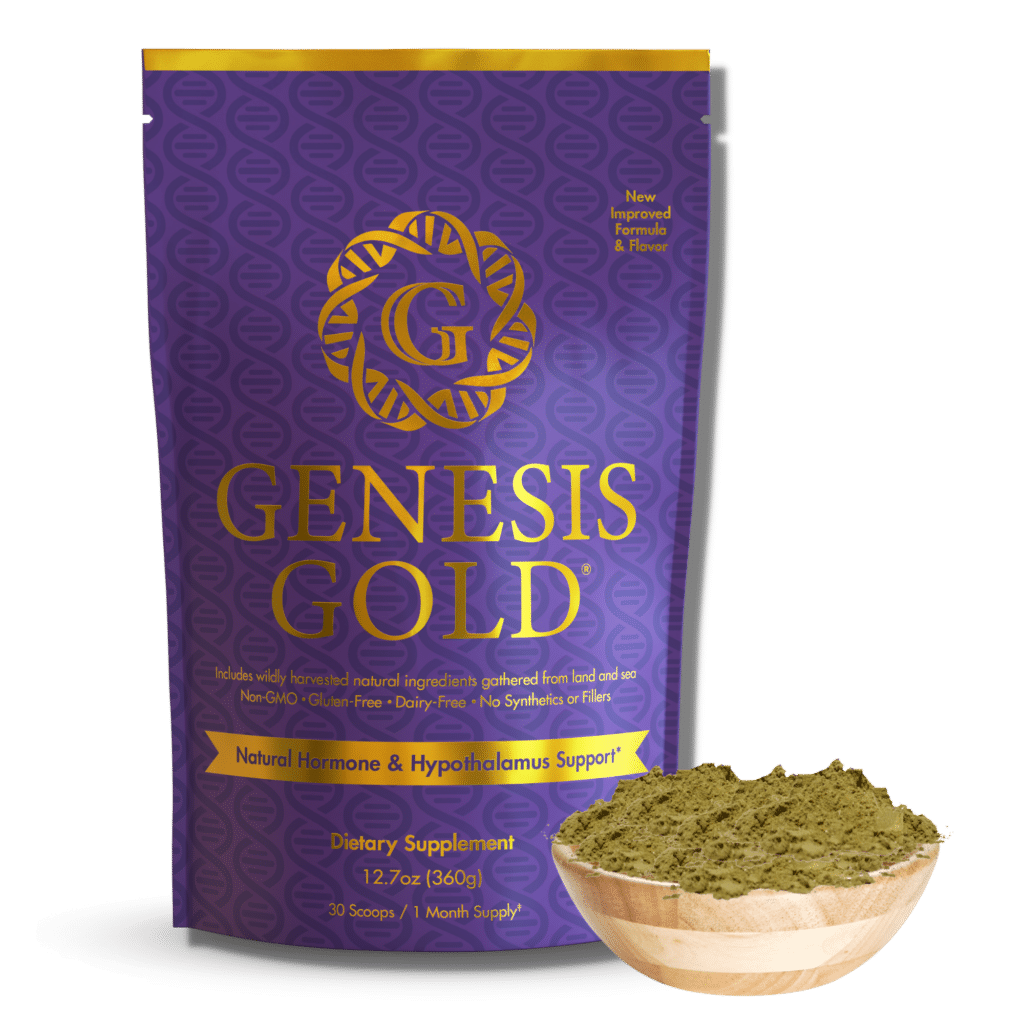
Thankfully, we have Genesis Gold®, the only plant-based nutraceutical designed for optimal hypothalamic functioning that can help to:
- Optimize your gut microbiome
- Stabilize your moods
- Balance your hormones
- Optimize your immune function
- Balance your brain chemistry
The exciting findings of this recent study supports the important role of the hypothalamus in modulating the gut microbiome.
Help your hypothalamus help you by taking Genesis Gold® regularly.
Check out the Genesis Gold®, subscribe to my YouTube channel, and join us in our FREE Hormone Reboot Training.

Does the hypothalamus control the gut microbiome?
Yes — and this is one of the most significant recent findings in neuroendocrine research. The hypothalamus controls gut microbiome composition and function through specific neural pathways, including neurons that express proopiomelanocortin (POMC) and agouti-related peptide (AgRP), two signaling molecules that play central roles in appetite regulation, metabolism, and energy balance. Research has demonstrated that activating or inhibiting these hypothalamic neuron populations produces rapid, measurable changes in gut microbiome composition — not over weeks, but within hours. This means the hypothalamus is continuously adjusting the microbial environment of the gut in response to meals, stress, hormonal shifts, and metabolic signals, making it the true upstream director of gut microbiome health rather than a passive recipient of signals coming up from the gut.
What is the connection between the hypothalamus and the gut-brain axis?
The gut-brain axis is typically described as a bidirectional communication network between the gut and the brain, mediated by the vagus nerve, immune signaling, and microbial metabolites. However, emerging research reveals that the hypothalamus plays a more active and directive role in this relationship than previously understood. Rather than simply receiving signals from the gut, the hypothalamus actively modulates the composition and metabolic activity of the gut microbiome through neuroendocrine pathways — adjusting which microbial species thrive, how much short-chain fatty acids are produced, and how the gut responds to nutritional and hormonal changes in real time. This positions the hypothalamus not merely as a participant in the gut-brain axis but as its primary orchestrator, with the gut microbiome responding to hypothalamic signals rather than independently directing them.
Why don’t probiotics fix gut health long-term?
Probiotics introduce beneficial bacterial strains into the gut, but they do not address the upstream signaling environment that determines which organisms survive, thrive, and maintain a balanced microbiome over time. The gut microbiome is not a static population — it is a dynamic ecosystem that is continuously shaped by hypothalamic signals responding to stress, hormonal status, nutrient availability, and circadian rhythms. Without a well-functioning hypothalamus directing this ecosystem, beneficial bacteria introduced through probiotics are not reliably maintained, and the underlying imbalances that created dysbiosis in the first place continue to operate. This is why many women experience temporary improvement from probiotics followed by a return of symptoms — the gardener, not the seeds, is the limiting factor. Addressing hypothalamic function alongside or instead of isolated probiotic supplementation produces more durable gut health outcomes because it corrects the root regulatory dysfunction.

0 Comments