
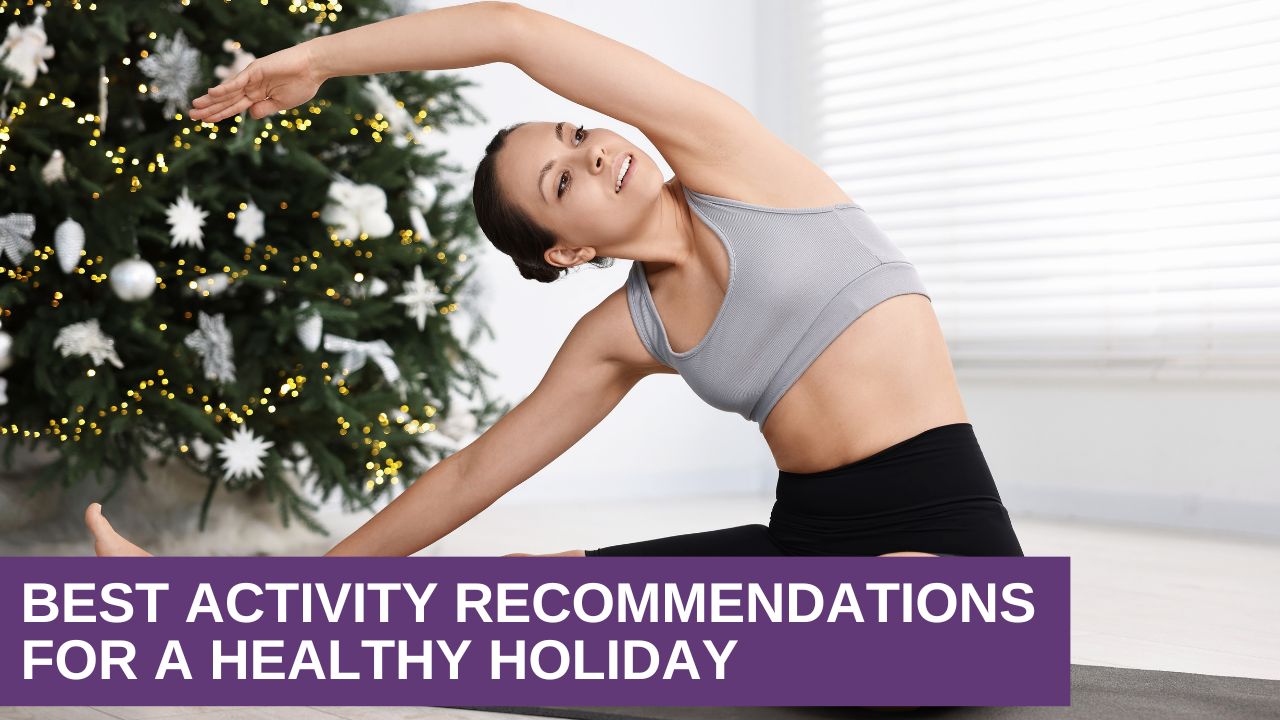
Did you know that people who stay active during the holidays – maintain their exercise regimes, maintain their physical labor, move their bodies – are less likely to get sick when the actual holiday hits, are more likely to maintain their weight, and definitely sleep better?
Movement is critical to your health. It is absolutely true that being sedentary is the new smoking. So if you’re not moving, you’re shortening your life.
If you’re not already active, you do need to move at least every hour – whether that’s walking, dancing, doing jumping jacks, some yoga, just do something if you can. And I suggest you try some weight resistance exercise – it’s important to maintain your muscle mass. Muscle is the most metabolically active organ besides your brain. Active muscles require glucose for energy, which means indulging during the holidays is less likely to thicken your waist. Your lean body mass signals your hypothalamus to raise your whole body’s metabolism.
Before 2014, I never had to do any kind of weight resistance exercise. That’s because I took care of our menagerie of horses, goats, chickens, and dogs. Moving bales of hay, picking up bags of grain, and pushing wheelbarrows full of manure kept me strong. After my last horse died, I was no longer utilizing those same muscles. So I started doing conditioning, first at home with weights and bands. The past few years, I have been taking conditioning classes three to four times a week. The nice thing about the classes is that I’m doing them with other people, so there’s this little bit of competition, and when people expect you to show up, you do.
Even if you can’t get to a gym or class, or it’s too cold to go outside, you can turn on your computer, get on YouTube, and find a workout, a dance routine, or yoga to follow along. Just get moving every day, and your holidays will be much less stressful.
The Benefits of Regular Exercise
Exercise reduces levels of the body’s stress hormones, such as adrenaline and cortisol. It also stimulates the production of endorphins – feel-good neurotransmitters. Exercise tells your hypothalamus you are well.
Regular physical activity has a positive effect on the central nervous system, contributes to an improvement in mood, memory, and learning. Evidence from animal studies is that a sedentary lifestyle is associated with stress vulnerability, whereas a physically active lifestyle is associated with stress resilience. A study of college students found that light physical activity during the day was associated with a smaller increase/higher decrease in feeling stressed from morning to evening. (1)
This is a good time to start taking care of yourself. Yes, we always like to wait until January, but why wait? Movement can be a way to reduce your stress and help you sleep better, too. When you exercise during the day, your metabolism raises, and you burn off stress hormones.
Exercise improves sleep quality. Exercise during the day and then settling down after dusk helps signal your hypothalamus to better control circadian messages. Your hypothalamus signals your pineal gland to produce melatonin and induce sleep. If you’re too active at night, you’re still producing cortisol, which suppresses melatonin production. Studies show that people with insomnia who exercised for 30 minutes three times per week for eight weeks experienced improved sleep quality. (2)
Exercise boosts your immune system. You don’t want to catch all the germs that are coming from visiting family, friends, and even strangers during your holiday travel. So get active, because studies show that exercise induces an anti-inflammatory immune response, which will help you fight off those holiday germs. Habitual exercise improves immune regulation, delaying the onset of age-related dysfunction. (3)
Just Keep Your Body Moving, No Matter What Stage You Are In Life
If you’re at midlife, regular exercise has been proven to lower your risk of cardiovascular disease. You just have to stay consistent because as we get older, we lose ground pretty fast. When you’re younger, because you’re making a lot of growth hormone, you’re able to bounce back quickly. So you really can’t afford to take a break.
Being sedentary at this time of year sets you up for being weaker and perhaps sicker in the new year. So move your body. If you haven’t formally exercised before, now is a great time to start.
Make a Commitment to Getting Up and Moving Every Hour
Start there for one week, just move every hour. The next week, add a 20 to 30 minute brisk walk three times a week. The third week, you can start adding weight resistance. You can use your own body weight, bands, or hand weights.
This is a great resource that I pass on to my elderly patients to start doing weight resistance exercises, especially strengthening their core, which will help them with their balance.
Then, of course, you need to stretch. If you’re not stretching on a regular basis and you start weight resistance exercise or some new aerobic exercise, then you might get injured. So move and stretch. You should be stretching every day.
Aerobic exercise, three times a week. Just find something that you love to do – swimming, rowing, walking, hiking, biking, dancing, Anything. Just move you. And move a bit more if you’ve already been walking your dog every day.
If you’re having trouble sleeping, your stress is out of control, and you’re unable to manage your weight, then the activity that you’re doing isn’t quite enough to challenge your body. That’s the thing with activity, your muscles get used to it. The way I avoid this metabolic plateau is every six to eight weeks, I do something different, I add a different activity, I change things up. I may challenge myself to do more reps with lighter weights versus heavier weights and less reps.
Cross training keeps exercise fun. I was a runner for years, cross country and track in high school and college. After my kids were born, I began training for a marathon. In a 20k cross country race, I ruptured my calf muscle. I couldn’t run, couldn’t even walk for six weeks. So, I got in a hot therapy pool and kept up my conditioning by swimming and doing the physical therapy needed to heal my calf muscle. I wasn’t able to get back to marathon level running, but I could eventually run up to thirteen miles. And frankly, I was impressed that swimming had kept me fit.
So I decided to start cross training – I ran a few times a week, swam a couple times a week, and biked pulling my kids in a bike trailer a few times a week. I started competing in triathlons and loved it. By biking, swimming and running, doing different activities with my body, instead of just running, I was able to avoid injury.
Now thirty years later, I still bike, swim, but no more running. I walk and hike instead. And I take conditioning classes that incorporate cross training using complex weight resistance moves while keeping my heart rate up.
What Do You Like to Do? How Do You Like to Move Your Body?
Even if you’re chair-bound or bed-bound, you can still move. Even isometric type exercises will help you maintain your lean body mass. That’s your muscles and bones, which are important to keep your metabolism up. Below are links to the different exercises that I recommend for my patients who are older or don’t have full mobility. If you’re fully mobile, I challenge you to just start getting up every hour and moving for 10 minutes an hour. See how much better you feel, how much better you sleep, how your appetite is in better control with less cravings.
This will start off your new year so you don’t have to wait till mid January to get things started. You’ll already be on your way to fitness, then maybe you can do something different in the new year – spice things up.
Activity Recommendations for a Healthy Holiday
| Activity/Level | Sedentary | Active, Not Fit |
| Aerobic | Move 10 minutes every hour | Regular. Activity plus HIT 2x/wk |
| Weight Resistance | Chair exercises | Upper, lower, core 2x/wk |
| Stretching | Daily for 15 minutes | Daily for 15 minutes |
If You’re Sedentary:
Aerobic Activity
If you’re just getting started, haven’t been active at all, the first thing I would recommend is for you to set your set a timer for every waking hour and get up and move. You can do jumping jacks, or you can walk. Walk up and down stairs. You can dance, you can jog in place. You just need to move for 10 minutes every hour. Now this may seem a little bit much, so start with five minutes if you’ve been completely sedentary. Just getting started.
Weight Resistance
There are a lot of things you can do with your own body weight. I love chair exercises, just getting up and down out of the chair. First, use your hands, and then try it with one hand, and then try it with no hands. This is a great way to start your lower body weight resistance, and even just do a few tricep dips as you lower yourself into a chair with arms. Using small hand weights, you can even lift cans of food over your head, do bicep curls, just be creative with what you have.
Below are lists of activities to help you utilize your body, upper body, and lower body. Some require equipment. Bands are fairly inexpensive and can be adapted to different resistance levels.
Stretching
The key to stretching is going slow and not forcing your body. Gently move into your stretch positions, trying to hold for 15 seconds. Over time, you may be able to hold each stretch for over a minute. It’s best to stretch after you’ve warmed up your muscles and your joints, so after you’ve walked. Even after a hot shower or bath, it can be enough warmth to start your stretching activity every day. Spend 10 to 15 minutes stretching daily.
If You’re Active But Not Yet Fit
Can you use this pre-holiday time to get fit? You sure can!
Aerobic
You’re already active. You’re already walking, biking, and taking classes. I would challenge you to add a HIT activity, high-intensity training. Utilizing whatever type of aerobics you like to do. Let’s say you’ve been walking, either outside or even on a treadmill. Walk on a flat surface for five to 10 minutes, just warming up, not your top pace. Then, using an incline to challenge yourself, you’re going to go as fast as you can uphill (or if on a treadmill at an incline).
If you’re on a bicycle, then you’re going to make it a little harder by going up a hill. Or on a stationary bike, you’re going to put some resistance on it. The HIT intervals are only 20 seconds against resistance or uphill, as fast as you can. Then go back to your original pace for a minute, repeat another two 20-second speed intervals. Then cool down at your warm-up pace for 5-10 minutes. Do HIT a two times per week.
This particular HIT activity has been incredibly successful for my patients. I had quite a few middle-aged women who wanted to lose weight and lower their HGBA1C (a blood marker that indicates insulin resistance and diabetes). So I challenged them, and took the challenge myself to do this HIT exercise twice a week, on top of what we were already doing. Studies show that there’s an increase in cardiovascular fitness with HIT exercise, but it doesn’t happen overnight. We’re talking a minimum of three months. But every one of my patients who participated in this exercise was able to lose weight and lower their blood sugar.
Now, if you are already an athlete, this isn’t going to be enough. It’ll take longer to warm up and cool down, and you will need to do HIT speed intervals for at least one minute. If you’re not fit already, this will get you fit pretty fast. By January, you’re going to see a whole new level of fitness if you do this at least twice a week. HIT doesn’t take long, only about 15 to 17 minutes total, and that’s with the warm-up and the cool down.
Weight Resistance
If you’ve been active but are not yet fit, you can use your body weight as resistance, like push-ups, pull-ups, tricep chair dips, and sit-ups. You can use resistance bands. We can use hand weights. You need to do weight resistance exercises twice a week, and you want to work all your body parts. You want to do upper body, lower body, and core.
Below are exercises that seem to work well for my patients.
Stretching
Whether you’re fit or not, you should be stretching every day. At least five minutes, but 15 minutes would be better. And you want to warm up first, so take that walk. Stretch after your HIT exercise. Just get your circulation going so you’re not trying to overstretch cold muscles and joints. That’s how you hurt yourself. Go slowly and stretch your entire body – your neck, your back, your hips, your shoulders, your triceps, your quads, your hamstrings, your calves, every part of your body.
The Best Time to Exercise
Moving during the holidays is going to make life so much better for you. Your stress is going to be under better control. Exercise itself helps to reduce stress, and you’ll feel better about yourself. It’ll be easier for you to maintain your weight while you’re indulging during the holidays. You’ll stay more metabolically active, and if you exercise early in the day and not after dusk, you will sleep much better.
Why wouldn’t you exercise after dusk? Because when you exercise after dark, stretching is fine, but vigorous exercise after dark actually raises cortisol levels. High cortisol after dark will suppress your ability to produce melatonin, and you’re not going to sleep as deeply. You’ll most likely have trouble falling asleep. So be careful about the timing of your exercise. You are most metabolically active if you exercise early in the morning.
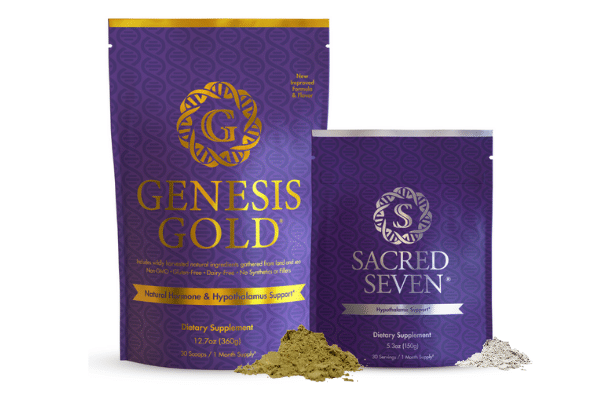
What I like to do is get up, take my Genesis Gold® and Sacred Seven®, have my cup of coffee, and after about 30 minutes, I might have a little something to eat, like a piece of fruit. And then I do my conditioning classes early, or my HIIT exercise. Morning exercise raises your metabolism for the entire day.
Now, once a week, I suggest a long, slow distance for over 45 minutes, gradually increasing to 90 – 120 minutes, at a slower pace, not your aerobic pace, but a much slower heart rate. So this is a hike, a long bike ride, your heart rate is up, but not so high that you can’t continue to talk. Long, slow distances will help to increase your endurance and your cardiovascular fitness, but they will also help you to burn fat. After doing a long, slow distance, you’ll be burning fat for up to 48 hours.
So those are my best holiday movement tips. Move every hour. Start doing HIT exercises if you’re already active but not fit, add weight resistance twice a week, and stretch every day.
When you’re active, you tell your hypothalamus that the world is good so it can keep your hormones in harmony, your immune system protecting you, and your brain functioning optimally. Exercise helps to reduce your stress and keeps your metabolism high. When you’re sedentary, you’re telling your hypothalamus that you’re either hunkering down, hiding from danger, or awaiting some kind of tragedy, and your hypothalamus slows everything down. It also puts you on high alert, with stress hormones rising. You’re not burning those extra calories that cortisol is releasing, so you store them as fat.
Move Your Body All Through the Holidays
Your hypothalamus will thank you. And if you take Genesis Gold® and or Sacred Seven® on a daily basis, I guarantee you’re going to be much more motivated to move, because your hypothalamus will be making a little more dopamine, which will help to motivate you and act as your reward neurotransmitter for the activity that you do.
May you have a happy, healthy holiday and start the New Year a bit more fit!
Resources:
(2) Exercise improves sleep quality
(3) Exercise improves immune function
Dumbbell & Resistance Band Exercises for Seniors
8 Best Core Exercises for Seniors
Full Body Daily Stretching Routine
Why is exercise during the holidays important?
Exercise during the holidays helps reduce stress, prevent weight gain, improve sleep quality, and strengthen your immune system. Staying active keeps your metabolism elevated and helps regulate stress hormones like cortisol, which often rise during busy holiday schedules.
Can exercise during the holidays prevent weight gain?
Yes. Regular movement increases metabolic activity and helps your muscles use glucose for energy. Strength training and aerobic exercise support lean muscle mass, which helps maintain your metabolism and reduce fat storage during times of indulgence.
Does exercise help prevent getting sick during the holidays?
Moderate, consistent exercise supports immune regulation and reduces inflammation. Studies show that habitual physical activity strengthens immune response, helping your body fight off common seasonal illnesses.
What is the best type of exercise during the holidays?
A combination of aerobic activity, strength training, and stretching works best. High-intensity interval training (HIIT) twice per week can improve cardiovascular fitness, while weight resistance exercises help maintain muscle mass and metabolism.
How often should I exercise during the holidays?
Aim to move every hour if you are sedentary. Ideally, include:
Aerobic exercise 3 times per week
Strength training 2 times per week
Daily stretching
Even short, consistent movement sessions can make a significant difference.

0 Comments