
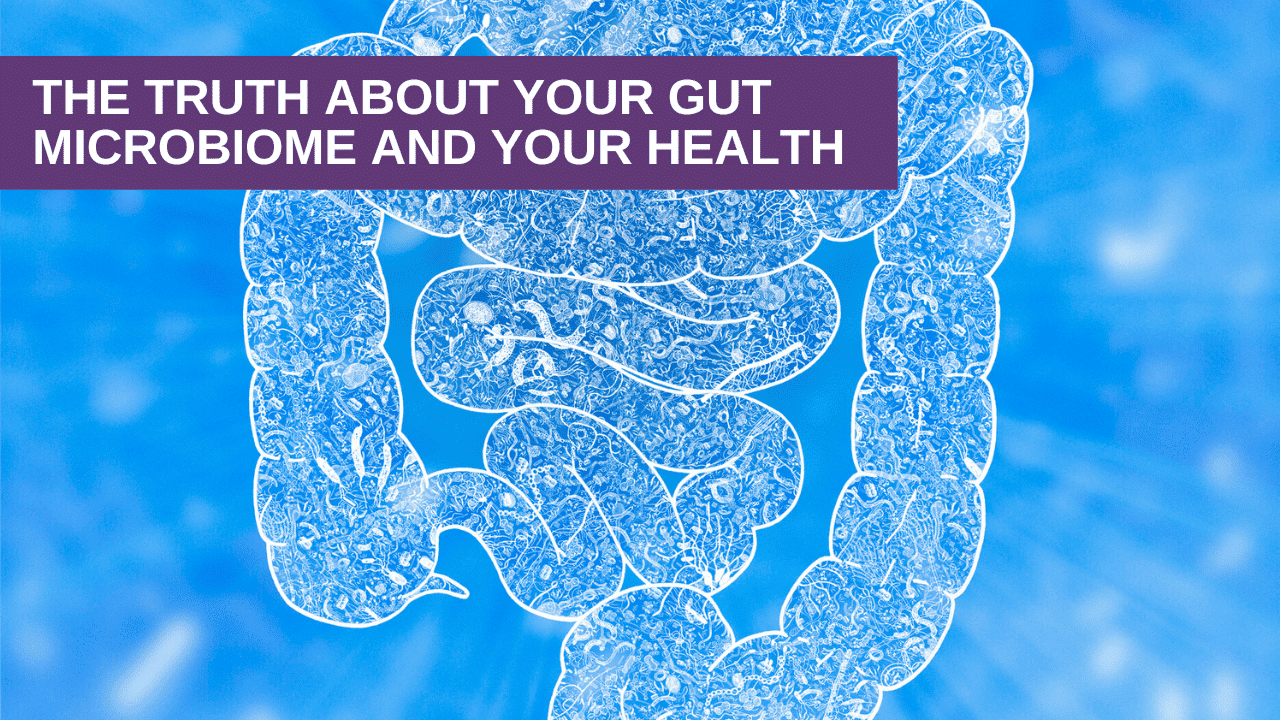
What’s the truth about your gut microbiome? And what does it have to do with your health? Let’s talk about it
The beneficial bacteria and other microbes of your gut, known as your microbiome, affect many areas of your health. Your gut microbiome influences your innate immunity, your appetite, and your energy metabolism.
Your gut microbiome affects the health of your heart and your immune response. It plays a role in the development of metabolic syndrome particularly- insulin resistance and fatty liver gut microbiome disease. Your gut microbiome influences your moods, as well as cognition.
Throughout your life, your gut microbiome changes dramatically
Pregnancy, stress, diet, and medications affect your microbiome. Your gut microbiome functions like an endocrine organ by generating bioactive metabolites that can, directly and indirectly, impact your physiology. For instance, your microbiome uses the indigestible fiber from the carbohydrates you eat to create short-chain fatty acids, which have protective properties reducing inflammation and improving vascular tone.
While a healthy microbiome benefits you, some metabolites produced by imbalanced gut microbes from dietary metabolism have also been linked to pathologies such as atherosclerosis, hypertension, heart failure, chronic kidney disease, obesity, and type 2 diabetes mellitus.
Your gut microbiome affects your cellular metabolism
There have been case studies that have shown that if the microbiome of obese patients are transplanted into normal weight patients, the recipients will experience a change in their appetite and metabolism and become obese. That’s how influential the microorganisms in your gut are on your entire health and your metabolism.
Your gut microbiome consists of beneficial bacteria and commensal bacteria and fungi. Beneficial bacteria work for you, commensal microorganisms help beneficial bacteria survive and do their job properly. Dysbiosis is when your gut microbiome is out of balance. You don’t have enough beneficial bacteria or enough variety of commensal microorganisms in your gut. You may even have an overgrowth of pathogens.
It’s vitally important to keep your microbiome healthy
Eating a healthy plant-based diet including fermented foods to balance commensal microorganisms and fiber to feed beneficial bacteria is vital to the health of your microbiome. Keeping your hormones in balance and your hypothalamus functioning properly helps to keep your microbiome healthy and working for you not against you.
Research shows that prebiotics and probiotics can help alter the gut microbiome. Prebiotics are non-digestible food products that can alter the microbiome composition and function. Probiotics are live microorganisms. Prebiotics and probiotics supplements are thought to be able to improve the intestinal microbiome balance by altering the microbial composition and community structure. These supplements can help treat different conditions like irritable bowel syndrome, constipation, and immune issues like allergic reactions and infections in infancy. Fecal microbiota transplant is highly effective at treating recurrent infections from Clostridium difficile.
Your gut microbiome affects all aspects of your health which is why it’s so important to keep it in balance.
One way you can keep it in balance is to support your hypothalamus. Your hypothalamus controls the signaling between the brain and the gut and your metabolism. Your hypothalamus is incredibly sensitive to what’s going on in the gut. A healthy gut actually helps your hypothalamus function and a healthy hypothalamus helps your gut to maintain a healthy microbiome.
If you have any questions about your gut microbiome and your health, please join me in my Hormone Support Group. You can access it by signing up for my free Hormone Reboot Training.
Supporting your hypothalamus with Genesis Gold® helps optimize communication between the gut and the brain. And Genesis Gold® is rich in a variety of beneficial gut microbes.
The role of the microbiome for human health – NCBIhttps://www.ncbi.nlm.nih.gov › articles › PMC5962619.
The microbiome: stress, health and disease Role of the gut microbiota in nutrition and health – The BMJhttps://www.bmj.com › content › bmj
Dietary metabolism, the gut microbiome, and heart failure: W. H. Wilson Tang, MD,1,2,3,4,5 Daniel Y. Li, MD,5 and Stanley L. Hazen, MD PhD; Nat Rev Cardiol. 2019 Mar; 16(3): 137–154.

0 Comments