
Now more than ever, we are experiencing the growing pains of change. Yet we hang onto the old like a worn-out lifeline.
It is human nature to fear change, yet change is part of life. What makes us sick oftentimes are old habits, old paradigms, old storylines that no longer serve us.
How many of us have lived personal storylines of conflict, abandonment, anger, unworthiness, sadness, apathy, poverty consciousness, victim consciousness, and more? The energy of our story often precedes us setting a path for our future. We manifest what we believe.
The time is ripe to release our old story.
The challenge is that many of us are still hanging on to those old storylines as if they were attached like an arm or a leg. What if you let your old storylines go?
Every challenge you may be having right now stems from a long-held storyline that has turned into a conflict that you struggle with to be whole and healthy.
Setting our old storylines free with an appreciation for the lessons learned can be difficult if we are unaware of our higher purpose.
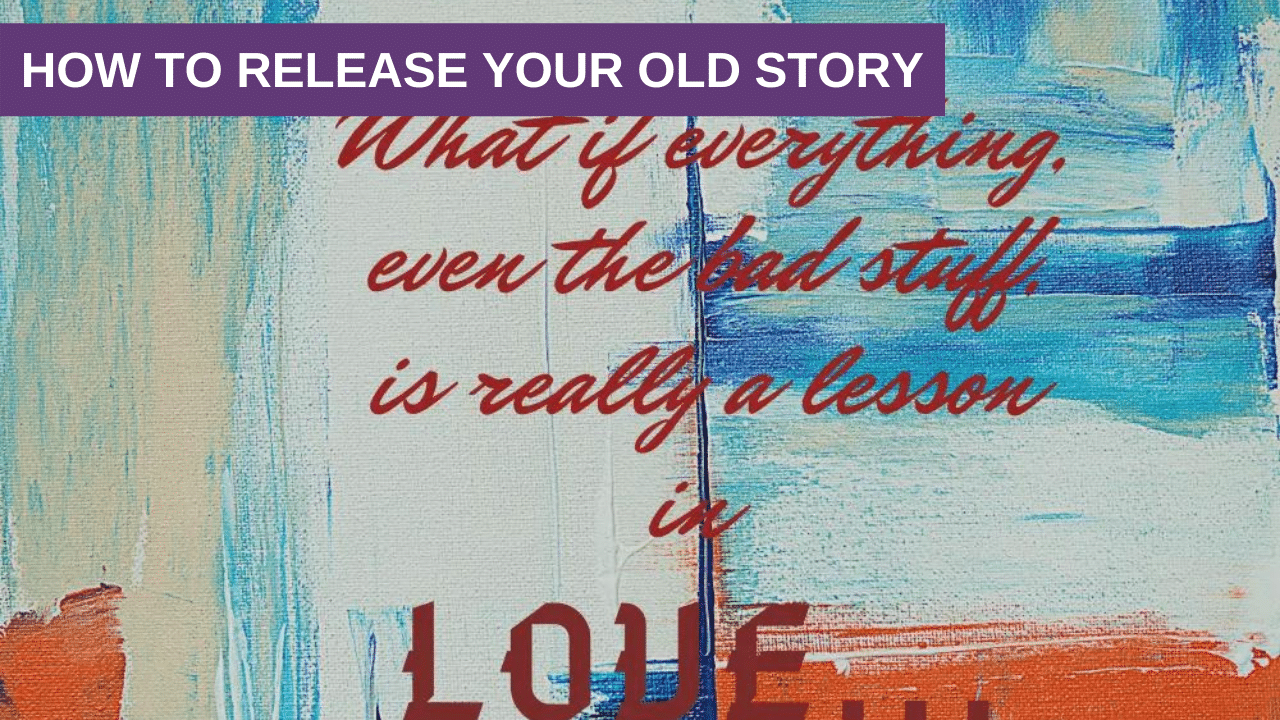
What if everything, even the “bad” stuff, is really a lesson in love? Learning to love others, love the earth, but most of all—love ourselves.
Some of you might have read Don Miguel Ruiz’s book, The Four Agreements.
Be impeccable with your word.
What you think and especially what you say—becomes your reality.
Don’t make assumptions.
There is ALWAYS a deeper meaning, a lesson to be learned, a reason for everything that happens. Learn to perceive with an open mind and generous heart.
Always do your best.
Your best is being your truth, being true to your Self, and choosing Love over Fear.
Don’t take anything personally.
Some of our old storylines are like family heirlooms. We’ve been carrying the energy of our ancestors, our family stories — the good, the bad, and the ugly.
Time to let go of all that does not serve us.
Your body holds onto the energy of these storylines and manifests dis-ease, aging, injury, fatigue, insomnia.
Time to clear the temple of your being.
Learning to Love yourself erases all that no longer serves
You have to be willing to love yourself so much that you are willing to love and appreciate all even the despair, anguish, shame, blame, guilt, sadness, feeling of betrayal, victim consciousness, poverty consciousness and feeling of unworthiness — everything and release it to the Light of Love.
Here’s an exercise that may help:
1) Write down every story that you keep repeating in your life. Then place it under a heading such as self-sabotage, grief, sadness, poverty-consciousness, apathy, unworthiness, etc.
2) In stillness and with love, find in your heart appreciation for the story and the part you played. Release each story, one at a time, with heartfelt love, back to the Divine Light. Say out loud: “I end this story. It is complete.”
3) Then take a deep cleansing breath and say out loud and with absolute belief — I Am Love - Say it at least 12 times! See inside of yourself how the release of the old stories are making space in your being for something new and abundantly joyous to be played out in your life.
4) When you are ready, simply choose Love and another storyline one that is abundantly rich in passion, love, light, and joy!
May you be blessed with love and joy,
May your Hormones be in Harmony,
Deborah Maragopoulos MN FNP
Intuitive Integrative Health
*Statements not evaluated by the FDA

Frequently Asked Questions:
Can your hypothalamus cause weight gain?
Yes. The hypothalamus is the master regulator of metabolism, controlling how your body stores and burns energy through its signaling to the thyroid, adrenals, and pancreas. When the hypothalamus becomes dysregulated by chronic stress, poor sleep, inflammation, or blood sugar instability, it defends a higher weight "set point" — causing the body to hold onto fat regardless of diet or exercise. This makes hypothalamic dysfunction an upstream root cause of stubborn weight gain.
What is a weight set point and why won't mine move?
A weight set point is the body weight your hypothalamus works to defend, calibrated over time by stress, sleep, hormones, and inflammation. When you diet, the hypothalamus perceives scarcity and responds by slowing metabolism, increasing hunger hormones, and suppressing satiety signals to return you to that set point. This is why most people regain lost weight within two to five years of conventional dieting — the set point itself was never recalibrated, only temporarily overridden.
Why do I gain weight under stress even when I'm not eating more?
Chronic stress raises cortisol, which disrupts blood sugar regulation, promotes abdominal fat storage, and signals the hypothalamus that the body is under threat. In survival mode, the hypothalamus defends fat stores and slows metabolism — so weight can increase even without any change in calorie intake. The stress chemistry, not the food, is driving the weight gain, which is why stress reduction is essential to any lasting metabolic reset.
Why do I regain weight after stopping GLP-1 medications?
GLP-1 medications work peripherally on appetite and gastric signaling, but they do not address the underlying hypothalamic dysregulation that sets your defended weight. Because the hypothalamic set point is never recalibrated, the body resumes defending its original weight once the medication stops — leading to significant regain. Long-term success requires restoring hypothalamic regulation so the set point itself lowers, rather than relying on appetite suppression alone.
How long does it take to reset your metabolism?
Genuine metabolic recalibration takes a minimum of 90 days, because the hypothalamus needs consistent signals of safety and sufficiency before it will lower its defended set point. This differs from a diet, which produces temporary suppression the body quickly corrects. A 90-day reset typically moves through three phases: stabilizing stress chemistry (days 1–30), rebuilding metabolic efficiency (days 31–60), and lowering the weight set point (days 61–90).
Why does my thyroid feel slow even though my labs are "normal"?
Under chronic stress, the body converts thyroid hormone into reverse T3, which blocks active thyroid receptors and slows metabolism at the cellular level — even when standard lab values appear normal. This means you can experience genuine symptoms of slow metabolism, such as fatigue, cold intolerance, and brain fog, while your thyroid panel looks unremarkable. Addressing the upstream hypothalamic and stress signaling often improves thyroid conversion and symptoms.
Is stubborn weight gain a willpower problem?
No. Stubborn weight gain is a signaling problem, not a willpower problem. The hypothalamus governs weight through survival mechanisms that operate below conscious control — defending its set point by slowing metabolism and increasing hunger when it perceives threat. No amount of discipline can override this system; lasting change comes from restoring hypothalamic regulation through reduced stress, balanced blood sugar, restorative sleep, and targeted nutritional support.
This is perfect! I’m starting my day with this. Thanks Deb!