
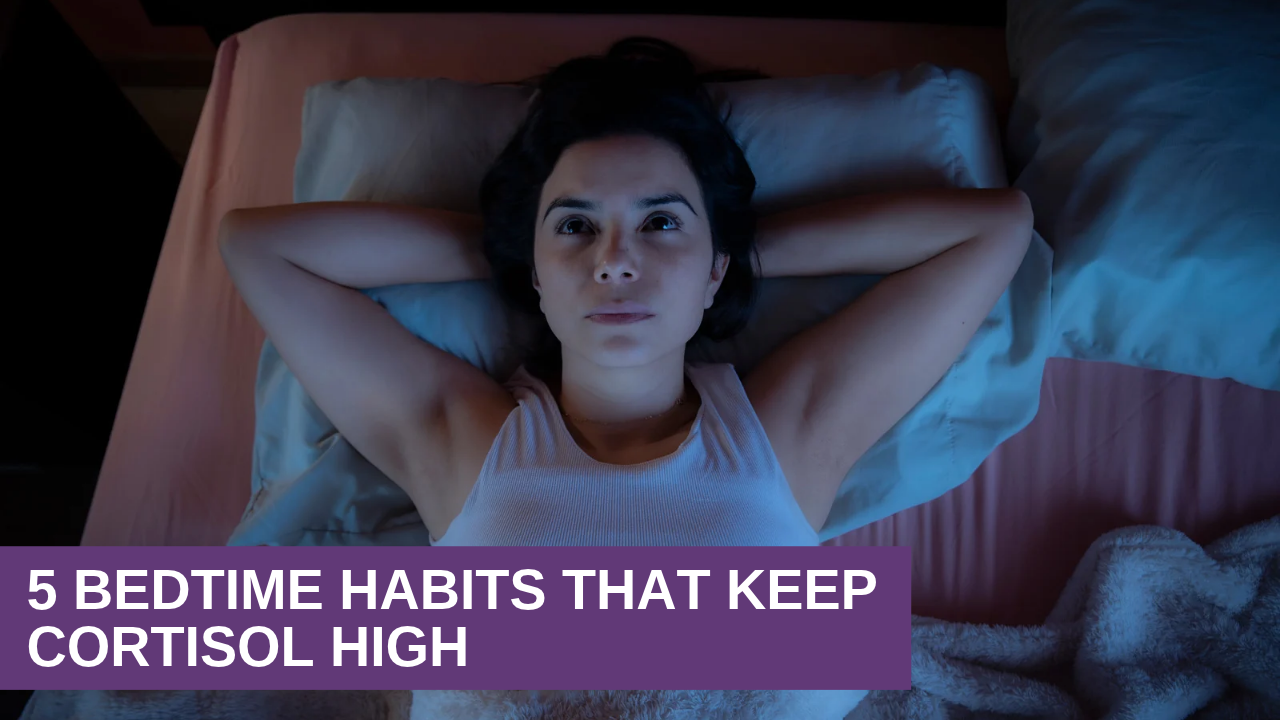
If you're exhausted at night, but your body still feels wide awake, this is for you. I'm going to show you five things to avoid before bed that can keep cortisol higher when it should be coming down.
How Your HPA Axis Controls Cortisol
Cortisol is controlled by what's called the HPA axis. Your hypothalamus, pituitary, and adrenal gland is working as one communication chain.
Your hypothalamus releases CRH, which tells your pituitary to release ACTH, which then tells your adrenal glands to make cortisol.
And this whole axis is designed to run in a circadian rhythm.
How Cortisol Should Change Before Bed
Cortisol should be highest shortly after you wake up, giving you energy and alertness, then gradually tapering down through the day, so it's lowest at night, right as melatonin is rising to prepare you for sleep.
When that rhythm is intact, you wake up alert and wind down naturally at night.
When it's disrupted, the pattern flips or flattens. Cortisol stays elevated into the evening. Melatonin cannot do its job as effectively, and you end up exhausted but wired.
So pay attention to what's disrupting that rhythm in the hours before bed.
5 Things to Avoid Before Bed That Can Keep You Wired
1. Drinking Coffee Too Late
Caffeine can keep the HPA axis stimulated well past when it should be tapering, even if you don't feel jittery.
2. Using Screens Right Before Bed
Light and mental stimulation both signal daytime to your hypothalamus, working directly against the evening cortisol drop it's trying to create.
3. Eating a Big Meal Too Close to Bedtime
Digestion, blood sugar shifts, and body temperature changes all add signals that your hypothalamus has to process instead of winding down.
4. Having Stressful Conversations Right Before Bed
Emotional activation triggers the same CRH, ACTH, cortisol chain as any other stressor, right when that chain should be quiet.
5. Going to Bed Without a Routine
Repetition trains your hypothalamus. A consistent wind-down gives it a reliable cue that the day is ending and cortisol should be dropping.
Chronic Stress, Perimenopause, and Your Cortisol Rhythm
The truth is, once the HPA axis and circadian clock have been disrupted for a while, which happens easily during chronic stress or perimenopause and menopause, these evening habits help, but they're not always enough to fully recalibrate the system on their own.
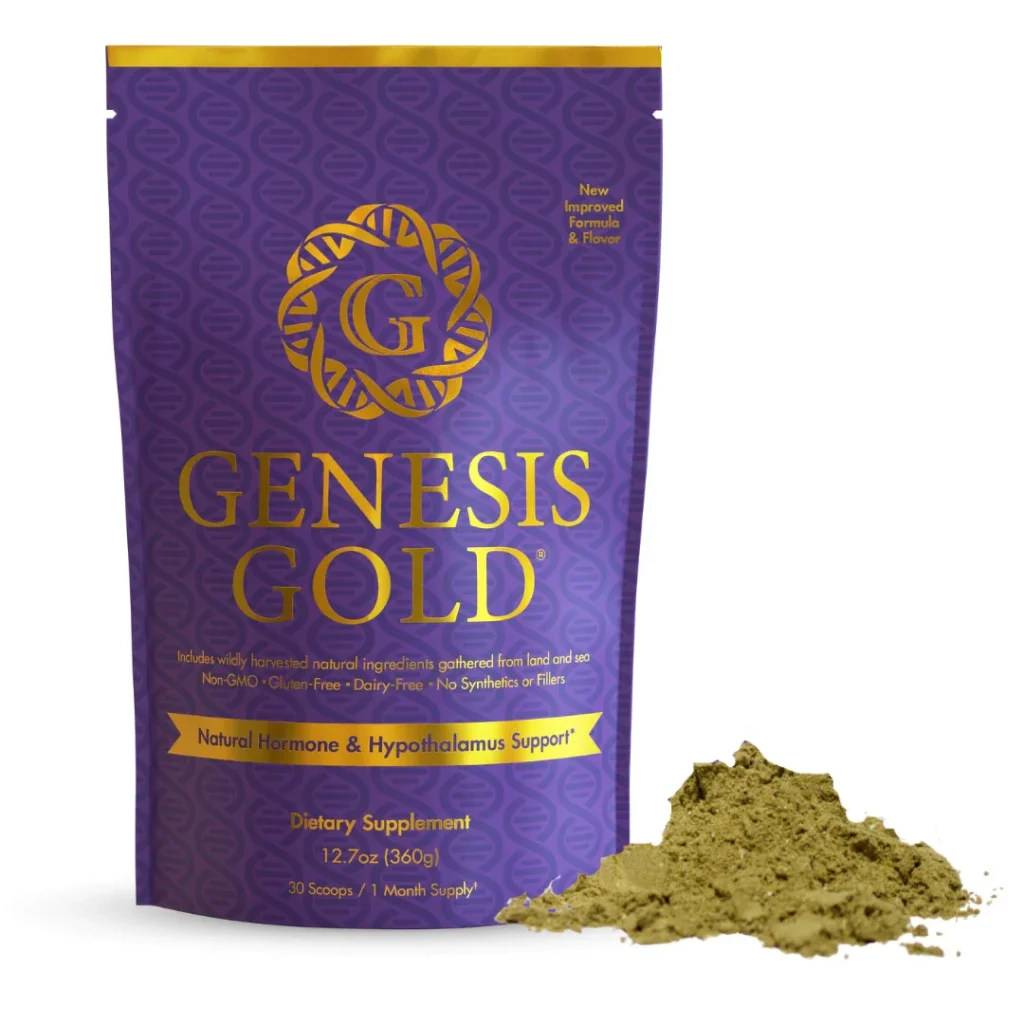
And that's why I created Genesis Gold® to help support and optimize your hypothalamus' circadian clock and calm an overactive HPA axis. So you're making enough cortisol during the day when you need it and not too much at night when you don't.
Supporting a Healthier HPA Axis
Now, if you want to understand how your HPA axis, cortisol, and the rest of your hormones work together, that's what I teach in my free Hormone Reboot Training.


0 Comments