
What is the perimenopause flu?
The hormonal flu is a pattern of flu-like symptoms that occurs in perimenopause in the one to two days immediately before menstruation begins — characterized by muscle and joint aches, profound fatigue, a low-grade fever, and swollen lymph nodes in the neck and armpits. Despite feeling identical to the onset of a viral illness, it is not caused by a virus or infection. It is caused by a sudden inflammatory surge triggered by the sharp drop in estrogen and progesterone that signals the uterus to begin shedding its lining. The defining feature that distinguishes it from actual illness is timing — symptoms vanish within hours to a day of menstruation starting, as the body adjusts to the new hormonal baseline of the cycle.
It feels like you're getting the flu. You're achy, feverish, exhausted. Your glands feel swollen. You feel like you're coming down with something. But then your period starts, and suddenly you're fine. This isn't the flu. This is what I call the 'hormonal flu,' and it's a sign that your hypothalamus is struggling during perimenopause. A perimenopause symptom that no one talks about.
Let me explain what's happening.
I'm Deborah Maragopoulos, FNP, an integrative nurse practitioner, and I've been helping women through perimenopause for over 30 years. The hormonal flu is something I see all the time, but most doctors don't even know about it. Today I'm going to explain what it is and why it happens.
What Does the Hormonal Flu Feel Like?
Let me describe the symptoms so you know if this is what you're experiencing.
The hormonal flu typically happens 1-2 days before your period starts. You suddenly feel achy - your muscles and joints hurt, feverish - you might even have a low-grade fever, and exhausted - profound fatigue. Your lymph nodes might feel swollen - especially in your neck and armpits- it feels like you're getting sick. You think, "I'm catching something". But then your period starts, and within hours to a day, all these symptoms disappear.
This is almost exclusively a Perimenopause phenomenon.
You didn't have this in your 20s and 30s. It starts happening in your 40s as you approach menopause. Why? It's all about inflammation. In perimenopause, progesterone and estrogen levels are both declining, but they’re fluctuating wildly. One month, you might have decent levels. Next month, they crash. Right before your period, both hormones drop dramatically. This is what triggers menstruation.
Both Progesterone and Estrogen Are Anti-Inflammatory Hormones
They help keep your immune system balanced and keep inflammation in check.
When these hormones suddenly drop right before your period, you lose that anti-inflammatory protection. Your immune system becomes more active. Inflammation surges throughout your body.
This inflammatory surge creates the flu-like symptoms - muscle aches (from inflammatory cytokines), fatigue (your body is mounting an immune response), swollen glands (your lymph nodes are reacting), and low-grade fever (from inflammatory mediators like IL-6).
You're not actually sick.
You don't have a virus or infection.
You have a sudden surge of inflammation triggered by the hormonal drop.
Why Is This Specifically a Perimenopause Issue?
When you were younger, you had more stable hormone levels. You had a reserve of estrogen stored in your brown fat. You ovulated regularly, so you made much more progesterone. Your adrenals use your ovarian production of progesterone, and now you don’t have enough to spare. So you didn't get this severe inflammatory reaction.
In Perimenopause, hormone levels are more volatile. You don’t ovulate regularly, so you make less progesterone, which is anti-inflammatory. Your body doesn't regulate inflammation as well because your hypothalamus is struggling to keep up with all these changes.
Your hypothalamus regulates both your hormones and your immune system. It's the command center that keeps everything balanced. In perimenopause, your hypothalamus is under stress. It's trying to compensate for declining ovarian function, regulate wildly fluctuating hormone levels, maintain immune balance, control inflammation, keep your metabolism, sleep, and stress response functioning.
When your hypothalamus is being asked to do too much with inadequate resources, it becomes overwhelmed and can't properly regulate your immune response. When hormones drop right before your period, instead of your immune system staying calm, it overreacts.
You get this inflammatory surge. You feel like you have the flu.
Support Your Hypothalamus
This is actually a sign that your hypothalamus needs support.
If you experience the hormonal flu, it's telling you several things. You're in perimenopause or approaching menopause. Your hormones are fluctuating significantly. Your hypothalamus is struggling to regulate inflammation. Your immune system is hypersensitive.
The good news is that hormonal flu typically resolves once you're fully through menopause. Your hormones stabilize at lower levels. Your body adjusts. But in the meantime, it's a sign that you need to support your hypothalamus so it can better regulate your immune response and inflammation.
How Genesis Gold® Can Help
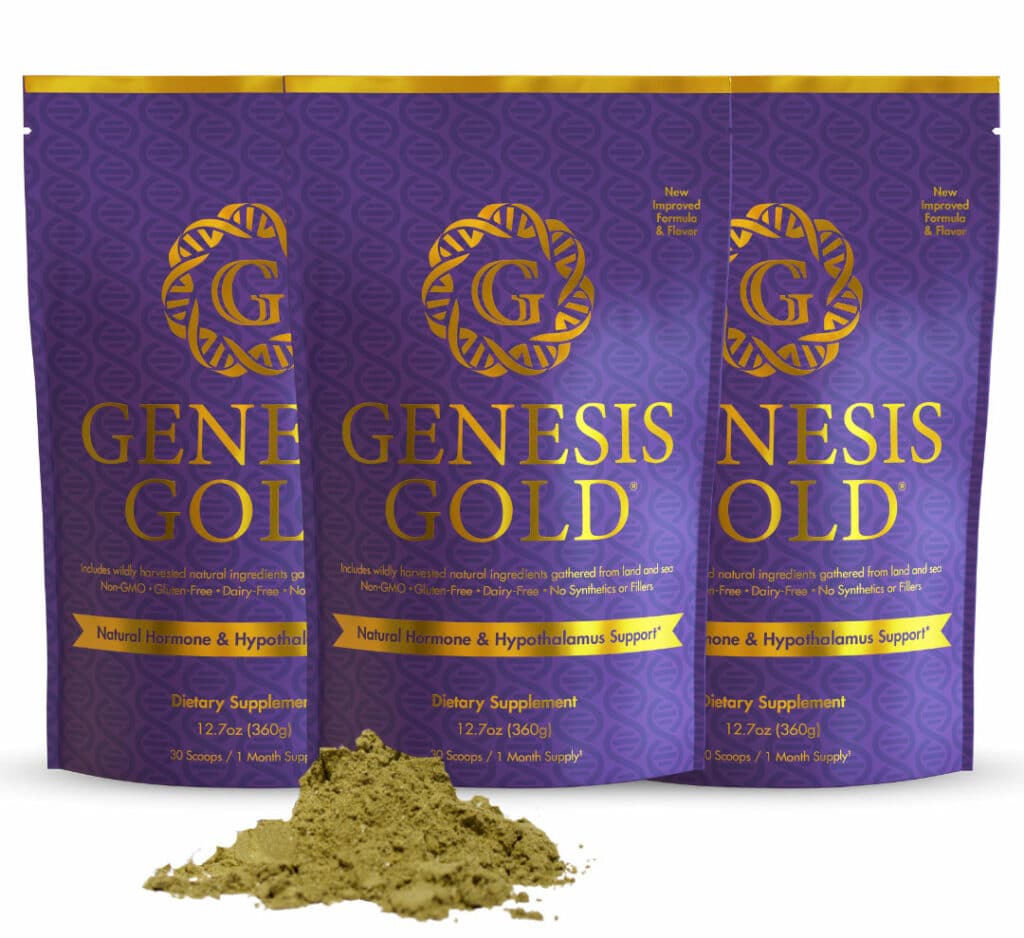
If you're experiencing the hormonal flu - or any perimenopausal symptoms - supporting your hypothalamus can make a huge difference. I created Genesis Gold® specifically for this transition.
It contains:
- Anti-inflammatory compounds to help reduce those inflammatory surges
- Adaptogenic herbs to support your hypothalamus during this stressful transition
- Nutrients to help regulate immune function
- Amino acids to support hormone production
Many women tell me that once they start taking Genesis Gold®, the hormonal flu episodes become much milder or disappear entirely. That's because we're supporting the root cause - the hypothalamus.
If you want to learn more, join my FREE Hormone Reboot Training.
You're not getting sick.
Your body is just struggling to adapt to changing hormone levels.
And there is support available.
What causes perimenopause flu like symptoms before a period?
The flu-like symptoms many perimenopausal women experience before their period are caused by an inflammatory immune response triggered by rapidly falling hormone levels. Both estrogen and progesterone are anti-inflammatory hormones — they actively modulate the immune system's Th1/Th2 balance and suppress the production of pro-inflammatory cytokines including IL-6 and TNF-alpha. When both hormones drop sharply in the days before menstruation — as they do every cycle, but more dramatically in perimenopause when reserves are lower — the immune system loses its anti-inflammatory buffering. Inflammatory cytokines surge, producing the same symptoms as an actual infection: muscle and joint aches (from cytokine-driven tissue inflammation), fatigue (from immune system activation), swollen lymph nodes (from lymphatic immune activity), and low-grade fever (from inflammatory mediators acting on the hypothalamic thermostat).
Why does the hormonal flu happen in perimenopause and not earlier in life?
The hormonal flu is almost exclusively a perimenopause phenomenon because it requires a combination of conditions that only develop as ovarian reserve declines. In the reproductive years, estrogen reserves stored in brown fat, regular ovulation producing adequate progesterone, and stable hypothalamic-pituitary-ovarian axis communication all provide sufficient anti-inflammatory hormonal buffering to prevent the immune system from overreacting to the premenstrual hormone drop. In perimenopause, ovulation becomes irregular and progesterone production decreases significantly — the adrenal glands also compete for the progesterone the ovaries do produce, using it as a precursor for cortisol under chronic stress. With lower reserves of both hormones, the premenstrual drop becomes proportionally more severe, and the hypothalamus — which is simultaneously trying to compensate for declining ovarian function, regulate volatile hormone fluctuations, and maintain immune balance — becomes overwhelmed and loses its ability to buffer the inflammatory response appropriately.
How can I tell if I have the hormonal flu or am actually getting sick?
The most reliable distinguishing feature is timing relative to the menstrual cycle. If flu-like symptoms appear consistently in the one to two days before menstruation and resolve within hours of the period starting — often dramatically and reliably — they are almost certainly the hormonal flu rather than a viral illness. A true viral infection does not resolve within hours of menstruation beginning. Other distinguishing features include the absence of contagion (no one around you gets sick despite close contact), the absence of upper respiratory symptoms like a runny nose or sore throat, and the cyclical predictability — the same pattern repeating each cycle. If symptoms persist beyond the onset of menstruation, worsen significantly, include respiratory symptoms, or occur without correlation to the cycle, evaluation for actual illness is appropriate.
What helps during an active hormonal flu episode?
During an active episode, the most effective immediate relief strategies target inflammation directly. Anti-inflammatory nutrition — emphasizing omega-3-rich foods like fatty fish, walnuts, and flaxseed, and reducing sugar and processed foods that amplify the inflammatory response — can reduce symptom severity. Curcumin (from turmeric) and magnesium glycinate have direct anti-inflammatory effects and are generally well-tolerated during symptomatic periods. Rest is important — the immune system is genuinely activated during a hormonal flu episode, and fighting fatigue with stimulants worsens the inflammatory load. Gentle heat — warm baths, heating pads on aching joints — addresses the musculoskeletal discomfort without suppressing the immune response entirely. These strategies address the symptoms; supporting the hypothalamus with Genesis Gold® addresses the underlying cause, and many women find that consistent use significantly reduces the frequency and severity of hormonal flu episodes over the following cycles.
Does the hormonal flu go away after menopause?
Yes — the hormonal flu typically resolves once the menstrual cycle has stopped and hormone levels have stabilized at their postmenopausal baseline. The phenomenon depends on the sharp cyclical drop in estrogen and progesterone that triggers menstruation — once that cycle ends, the premenstrual inflammatory surge that causes the hormonal flu no longer occurs. In the meantime, the hormonal flu can be significantly reduced by supporting hypothalamic function to improve immune regulation, by supporting progesterone levels in the second half of the cycle through bioidentical progesterone supplementation, and by reducing the systemic inflammatory load through anti-inflammatory nutrition and stress management. Women with more hypothalamic support during perimenopause generally report milder hormonal flu episodes that diminish more quickly as the transition progresses.

0 Comments