
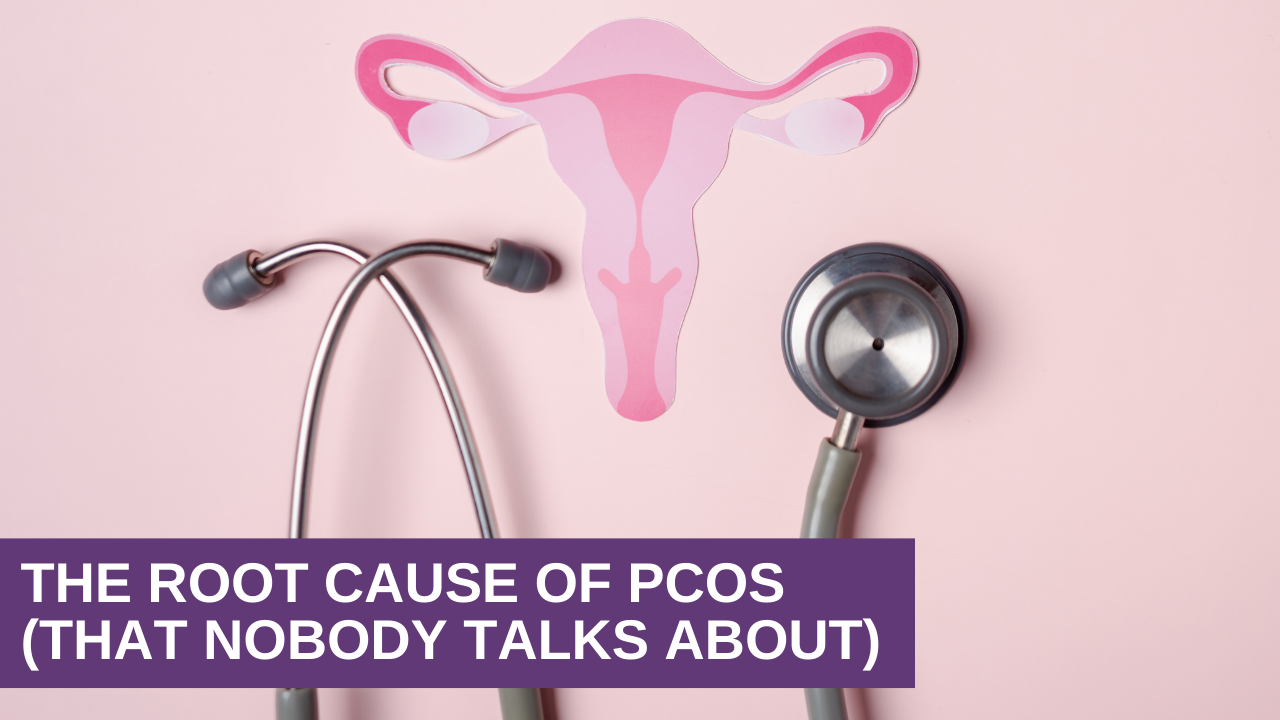
If you’ve been diagnosed with PCOS, you’ve probably been told it’s an ovarian problem. Your ovaries are making too much testosterone. They’re forming cysts. They’re not ovulating properly. But here’s what nobody’s telling you: PCOS doesn’t start in your ovaries. It starts in your brain. Specifically, in your hypothalamus. And when you understand the root cause of PCOS, everything makes sense.
I’m Deborah Maragopoulos, a family nurse practitioner who’s spent decades helping women with PCOS. And I’m going to show you why PCOS is actually a hypothalamus problem, not an ovary problem. This perspective changes everything about how we treat it.
Polycystic Ovarian Syndrome (PCOS)
Polycystic ovarian syndrome is diagnosed in 10% of women of reproductive age. A diagnosis of PCOS requires 2 out of 3 of these Criteria: irregular or absent periods, high androgens (testosterone, DHEA) or signs of high androgens (acne, excess hair growth, hair loss), and polycystic-appearing ovaries on ultrasound.
But these are all symptoms – downstream effects of the real problem. The real problem is that the hypothalamus is not properly regulating your blood sugar and insulin, stress hormones, reproductive hormone signaling, and inflammation levels. When your hypothalamus is dysfunctional, it creates the perfect storm for PCOS.
Here’s how: Your hypothalamus is exquisitely sensitive to blood sugar: it’s constantly monitoring glucose levels and pancreatic function. When the hypothalamus is out of balance (from chronic stress, inflammation, or hormone changes), it becomes insulin and glucose-resistant. This disrupts insulin signaling, and you develop peripheral insulin resistance.
Insulin Resistance
Insulin resistance means your cells aren’t responding to insulin properly, not letting insulin lock into its receptor site, so glucose can’t get into the cells. Blood sugar levels rise, signaling the pancreas to make more insulin. High insulin levels are disruptive to glucose metabolism and highly inflammatory.
High insulin does two things. First, it tells your ovaries to make more testosterone. Second, it reduces the production of sex hormone binding globulin, which normally binds up excess testosterone.
The result is hyperandrogenism – high testosterone because of high insulin. That’s the PCOS picture. But it started with hypothalamus dysfunction affecting blood sugar regulation.
And there’s a stress hormone connection. Your hypothalamus controls your stress response through the HPA axis. When dysfunctional, you produce too much cortisol or produce it at the wrong times. Cortisol’s job is to release stored sugar to fuel the fight or flight response. That means your pancreas must release more insulin to deal with all that sugar.
Eventually, your cells become resistant to all that insulin. Chronic high cortisol makes insulin resistance worse. And triggers the adrenal glands to make more DHEA, which converts into testosterone. High levels of androgens disrupt hypothalamic gonadotropin-releasing factor (GnRH), which suppresses ovulation. The result is irregular periods, anovulation, and infertility. All from hypothalamus dysfunction.
Ovulation
For you to ovulate, your hypothalamus needs to release GnRH in pulses, which tells your pituitary to release follicle-stimulating hormone (FSH) and luteinizing hormone (LH). FSH tells your ovaries to ripen follicles. LH then stimulates ovulation. When your hypothalamus is dysfunctional, these GnRH pulses get disrupted, and you might not ovulate at all, or only occasionally.
No ovulation means no progesterone production. Progesterone is produced by the corpus luteum after ovulation. No progesterone leads to irregular, heavy, or absent periods and infertility. When you don’t ovulate regularly, follicles in the ovaries don’t mature and release. They remain in the ovaries as small cysts. That’s where the ‘polycystic’ appearance comes from.
Conventional Treatments Don’t Address the Root Cause of PCOS
Birth Control Pills
Birth Control Pills are typically prescribed to suppress your ovaries with synthetic hormones. Periods become regular, and androgen levels may drop. But the underlying hypothalamus dysfunction is still there.
Insulin resistance is still there when you come off the pill. PCOS symptoms often return (sometimes worse).
Metformin
Metformin improves insulin sensitivity yet doesn’t address why the hypothalamus was dysregulating blood sugar in the first place.
Spironolactone
Spironolactone blocks androgens, which reduces acne and excess hair, yet again, does not address the root cause of why those androgens are high.
These treatments may manage symptoms, but they don’t heal the hypothalamus dysfunction that’s creating PCOS, which reduces metabolic inflammation, restores normal hormone production, and fertility.
Support the Hypothalamus to Address the Root Cause of PCOS
What actually helps is supporting your hypothalamus. With the right nutraceutical support, your hypothalamus can properly regulate blood sugar and insulin signaling.
With support:
- Your hypothalamus can regulate stress hormone production.
- Your hypothalamus can properly regulate reproductive hormone signaling.
- Your hypothalamus can reduce systemic inflammation, which is important because PCOS is a risk factor for metabolic diseases.
When you support the hypothalamus, you’re addressing the root cause of PCOS. I’ve witnessed women start ovulating regularly, normalize their testosterone levels, lose their stubborn weight, clear their acne, and get pregnant naturally even after being told they’d needed IVF.
All from supporting their hypothalamus.
If this perspective on PCOS is new to you – if you’re realizing that maybe the problem isn’t your ovaries, it’s your hypothalamus – I want to invite you to dive deeper.
Free Hormone Reboot Training
I’ve created a free training called Hormone Reboot where I explain exactly how your hypothalamus controls your blood sugar, insulin, stress hormones, and reproductive hormones. I’ll show you what lab tests to ask for, what lifestyle changes help, and how to support your hypothalamus naturally.
It’s completely free, and it could give you a whole new approach to managing PCOS.
You don’t have faulty ovaries. You have a hypothalamus that needs support. And there is hope.
0 Comments