
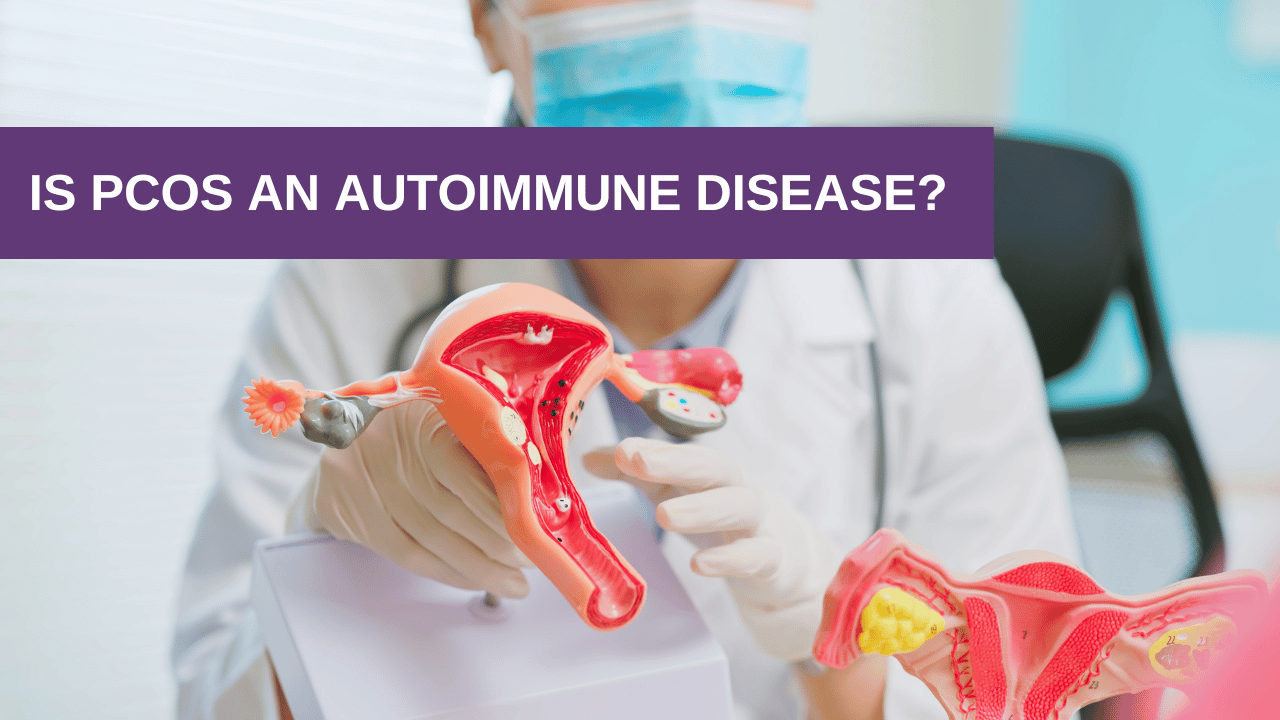
Polycystic ovary syndrome, or PCOS, is a condition in women characterized by chronic high testosterone levels and an anovulatory state, meaning not ovulating regularly. The imbalance of estrogen to progesterone in people with PCOS seems to stimulate the hyper-reaction of the immune system, and may contribute to autoimmune conditions.
In women with PCOS, low levels of progesterone overstimulate the immune system. Which may lead to the production of auto-antibodies, which attack your tissues. An autoimmune disease is any condition in which your immune system produces antibodies against you.
Currently, the medical field does not consider PCOS an autoimmune disorder, but it is associated with many autoimmune diseases.
PCOS causes inflammation and hyperstimulation of your immune system. This can cause tissue destruction. When cells are destroyed, ANA (anti-nuclear antibodies) are produced. The presence of ANA is the hallmark of autoimmune diseases, and often we see ANA in patients with PCOS. We also see high levels of other autoimmune antibodies in people with PCOS. Including autoimmune thyroid antibodies, thyroid peroxidase antibodies, anti-sperm antibodies, and anti-thyroid globulin, which are anti-islet cell antibodies that attack the beta cells of the pancreas.
The most classic autoimmune condition that is associated with PCOS is thyroiditis or low thyroid function with autoimmune antibodies.
However, hyperthyroidism, which means high thyroid function with autoimmune antibodies, can also occur.
Since it's a metabolic syndrome with high inflammatory markers, PCOS can contribute to metabolic issues leading to insulin resistance. As well as central obesity, high blood pressure, and high cholesterol. These inflammatory, metabolic reactions can interfere with normal immune functioning.
Most of the issues associated with polycystic ovary syndrome can be linked to the hypothalamus.
The hypothalamus controls your reproductive hormones. So the miscommunication between the hypothalamus, pituitary gland, and ovaries is part of the issue for people with PCOS.
Your hypothalamus controls your immune system as well. And in patients with autoimmune conditions, their hypothalamus is often dysregulated. Supporting your hypothalamus with Genesis Gold, especially if you have PCOS, can help to reverse polycystic ovary syndrome and reduce autoimmune tendencies.
It is not easy living with polycystic ovary syndrome or autoimmune disorders, but thankfully, there are many ways you can reduce the painful or burdensome symptoms that are associated with these conditions. If you have any questions about polycystic ovary syndrome or autoimmunity, join me in our Hormone Support Group, where you'll get access to our free Hormone Reboot Training.
Frequently Asked Questions
Is PCOS an autoimmune disease?
No, PCOS is not currently classified as an autoimmune disease by the medical community. However, PCOS is strongly associated with autoimmune conditions. The hormonal imbalance in PCOS — particularly low progesterone relative to estrogen — can overstimulate the immune system, which may trigger the production of autoantibodies that attack the body's own tissues.
What autoimmune diseases are linked to PCOS?
PCOS is most commonly linked to autoimmune thyroiditis (Hashimoto's), a condition where the immune system attacks the thyroid gland. Other associations include autoimmune hyperthyroidism, and the presence of anti-nuclear antibodies (ANA), thyroid peroxidase antibodies, and anti-sperm antibodies. Many women with PCOS show elevated levels of these autoimmune markers even without a formal autoimmune diagnosis.
Why does PCOS trigger an immune response?
In women with PCOS, low progesterone levels can overstimulate the immune system. This chronic immune activation, combined with the inflammation that characterizes PCOS, can lead to tissue stress and the production of autoantibodies. When cells are damaged, the body may produce anti-nuclear antibodies (ANA), which are a hallmark marker of autoimmune activity.
What are anti-nuclear antibodies (ANA) and why do they matter in PCOS?
Anti-nuclear antibodies, or ANA, are antibodies that mistakenly target the nucleus of the body's own cells. Their presence is a classic marker used to identify autoimmune diseases. ANA are frequently detected in women with PCOS, which is one reason researchers continue to study the overlap between PCOS and autoimmune conditions.
Is there a connection between PCOS and thyroid problems?
Yes, the thyroid connection is one of the strongest links in PCOS. Autoimmune thyroiditis — low thyroid function with autoimmune antibodies — is the most classic autoimmune condition associated with PCOS. Less commonly, autoimmune hyperthyroidism can also occur. Because thyroid health directly affects metabolism and hormone balance, thyroid testing is often recommended for women with PCOS.
How does inflammation connect PCOS to autoimmunity?
PCOS is a metabolic syndrome marked by high inflammatory markers. This chronic inflammation can contribute to insulin resistance, central weight gain, high blood pressure, and elevated cholesterol. These same inflammatory and metabolic disruptions can interfere with normal immune function, creating an environment where autoimmune reactions are more likely to develop.

0 Comments