
Are you unable to fall asleep—or stay asleep through the night?
Do you wake feeling unrefreshed, wired, anxious, or exhausted no matter how early you go to bed?
If so, the issue may not be your melatonin…
and it’s not primarily your pineal gland either.
Your hypothalamus controls your sleep–wake cycles.
It orchestrates circadian rhythm, signals melatonin production, regulates cortisol release, and determines whether you reach deep, restorative sleep. When it’s dysregulated, sleep disorders persist—no matter how many supplements, medications, or sleep hacks you try.
Until the late 1990s, this was news to me as well.
Like millions of adults, I suffered from a severe sleep disorder. For over 20 years, I experienced somnambulism—sleepwalking through my house and even outdoors. I was a danger to myself and my family.
I tried everything:
- SSRIs
- Sedatives
- Hypnotherapy
- Botanicals
- Behavioral approaches
Nothing worked.
It wasn’t until I began supporting my hypothalamus nutraceutically that my sleepwalking stopped—and for the first time, I slept a full night instead of my usual 3–5 fragmented hours.
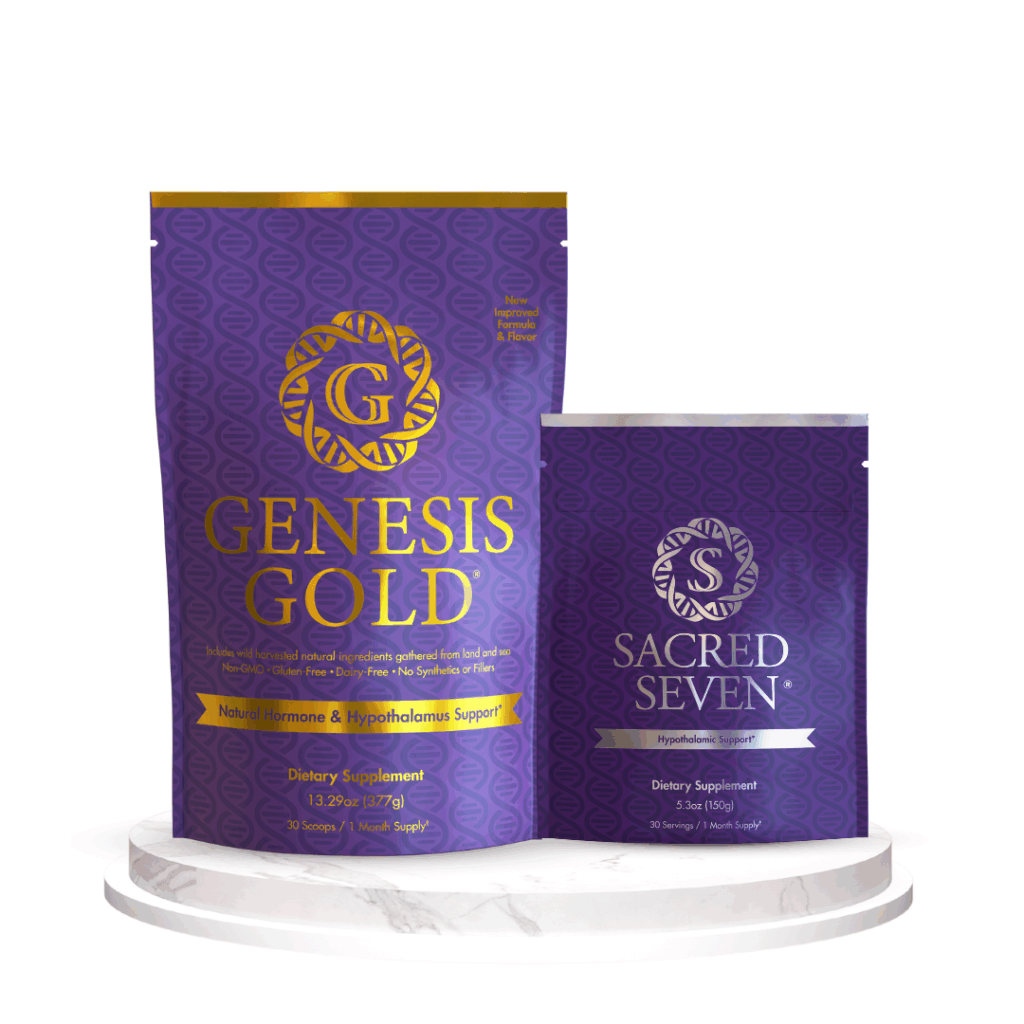
That experience reshaped my clinical focus and ultimately led to the formulation of Genesis Gold®.
Your hypothalamus is the master controller of your hormones, metabolism, rate of aging, immune system, brain chemistry, gut function, and it regulates your day-night cycles. Your hypothalamus receives information about the light you’re being exposed to through your eyes as well as through your skin. So it doesn’t matter if you’re wearing a sleep mask; if light is shining on your skin, you will not make enough melatonin to reach deep REM sleep and be fully rested.
Many people don’t realize how poorly they sleep until they wear a device that monitors their heart rate variability, which suggests when you’re in deep REM sleep or lighter levels of sleep.
Are you getting enough deep sleep?
Well, do you remember your dream? If not, your hypothalamus may be dysfunctional. Remembering your dreams requires that your hypothalamus produces enough dopamine first thing in the morning. Dopamine is your learning and memory neurotransmitter, so you’re able to recall what you’ve dreamt. Once my patients start supporting their hypothalamus, they begin having amazing dream recall.
How Your Hypothalamus Controls Your Sleep Cycles
Once the sun goes down, your hypothalamus is no longer being stimulated by the blue waves of daylight. It then signals your pineal gland to start producing melatonin. If you’re not continually exposed to blue light like digital screens, melatonin doesn’t fall until the sun rises in the morning. A few hours after melatonin starts rising, your hypothalamus stimulates the release of stored prolactin by the pituitary gland. Prolactin is an important nocturnal hormone that triggers your thymus – a small endocrine gland just above your heart – to activate your white blood cells to protect you from any germs you’ve been exposed to, as well as destroy any mutant cells that could turn into cancer.
When the sun comes up, your hypothalamus wakes up needing blood sugar to do its job. So it triggers your adrenals to release cortisol to release stored sugar for fuel. Then your hypothalamus releases dopamine to wake up your brain and, more importantly, turn off prolactin. This is critical if you’re going to function properly.
If you need caffeine to wake up, don’t pop out of bed with lots of energy, have difficulty remembering your dreams, your hypothalamus is not making enough dopamine. If you were my patient, I would check your early morning prolactin to determine if your hypothalamus is dysfunctional.
What the Hypothalamus Actually Controls
Your hypothalamus is the master regulator of:
- Circadian rhythm
- Hormones
- Metabolism
- Immune function
- Rate of aging
- Brain chemistry
- Gut function
- Stress response
It receives light information through both your eyes and your skin—which is why sleep masks alone don’t solve insomnia if your skin is still exposed to light.
If light reaches your body at night, your hypothalamus suppresses melatonin production—preventing deep REM sleep.
Why You Don’t Realize How Poorly You’re Sleeping
Many people don’t realize how fragmented their sleep is until they track it.
Devices that measure heart rate variability (HRV) reveal whether you’re reaching deep, restorative stages of sleep—or hovering in lighter, non-repairing phases.
A Key Clinical Clue:
Do you remember your dreams?
If not, your hypothalamus may not be producing enough dopamine in the morning. Dopamine is essential for memory, learning, and dream recall.
Once my patients begin supporting hypothalamic function, dream recall often returns within weeks—a powerful sign that sleep architecture is improving.
How the Hypothalamus Regulates Sleep (Step-by-Step)
At night:
- Blue light fades → hypothalamus signals pineal gland
- Melatonin rises
- Stored prolactin is released
- Prolactin activates the thymus → immune repair and surveillance
In the morning:
- Hypothalamus triggers cortisol → releases stored glucose
- Dopamine rises → turns off prolactin
- Brain wakes, energy returns
Clinical Red Flags:
- Needing caffeine to function
- Difficulty waking
- No dream recall
- Mid-night awakenings
These point to hypothalamic dysregulation—not “just aging.”
Let’s Talk About Sleep Aids (Clinically)
Sleep aids can be helpful temporarily, but they don’t repair the root cause.
1. GABA
Fast-acting, calming, helpful during acute anxiety. Works similarly to benzodiazepines but without dependency.
2. Melatonin
Useful short-term (≈3 weeks) to reset rhythm. Long-term use can suppress your body’s own production.
3. Botanicals (Valerian Root)
Helpful for sleep initiation. I prefer homeopathic formulations. Of course, all of these are our rescue remedies for insomnia. My patients who have had long-standing insomnia have found that while these measures can work temporarily, they don’t work forever. They have to keep taking more and more or keep switching around to different products.
The Pattern I See Clinically
Rescue remedies work briefly, then lose effectiveness. Patients cycle through products—never resolving the underlying dysfunction.
The Missing Piece: Hypothalamic Nutraceutical Support
When patients support their hypothalamus consistently, sleep normalizes—often within 6–12 weeks.
Before 2003, there were no plant-based supplements designed to optimize hypothalamic function.
That’s why I created Genesis Gold®.
Genesis Gold® provides:
- Sea vegetation for mineral density
- Sprouted whole foods for bioavailability
- Adaptogenic herbs
- Digestive and detoxification support
- Sacred Seven® amino acids, formulated specifically to balance hypothalamic signaling
For thousands of patients, Genesis Gold® has become the foundational support for long-term hormonal balance and deep, restorative sleep.
Learn more about Genesis Gold® here
Deborah’s Best Sleep Tips
Evidence-Based Sleep Support for the Hypothalamus
- Avoid screens after dusk
- Establish a nightly ritual
- Keep bedroom temperature 60–67°F
- Sleep in complete darkness
- Use contraction/relaxation waves if you wake at night
- Wake with daylight
- Get 20 minutes of morning light
- Support hypothalamus nutraceutically for at least 90 days
- For severe cases, temporarily fortify with Sacred Seven®
Genesis Gold® and Sacred Seven®
Yet until 2003, there weren’t any plant-based supplements that actually help optimize hypothalamic functioning. That’s why I created Genesis Gold®, a foundational green formula, rich in sea vegetation, sprouted whole foods, herbal extracts, including adaptogens, detoxification support, digestive aids, and at the heart of it, a healthy dose of Sacred Seven® amino acids that were designed specifically to balance the hypothalamus and optimize its function.
Taking Genesis Gold® every day has been the foundational support for thousands of my patients and customers. They’ve been able to stay hormonally balanced for years, and more importantly, they get deep, restful sleep. Learn more about Genesis Gold® here.
If you want my best sleep tips, including a special exercise that has been proven to help relax you even when you wake up in the middle of the night, here they are.

0 Comments