
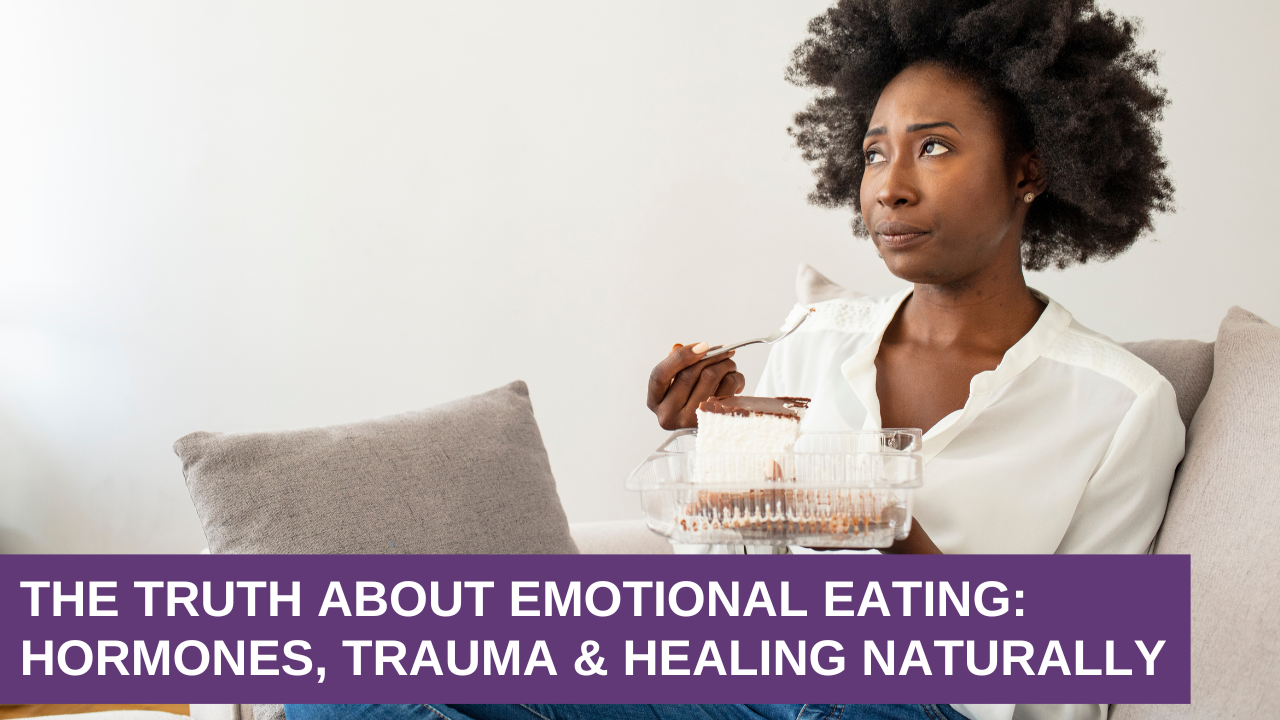
If you’ve ever reached for food when you’re not hungry, but cope with stress, you’re not alone, and you’re not broken. Emotional eating isn’t just willpower. It can be hormonal.
Let’s talk about it.
Today, I’m going to share a personal story with you about food and emotions, and hormones.
My Personal Story
When I was 14 years old, I developed an eating disorder, anorexia. I did not have the typical precursors to anorexia, and I was not molested. I had a pretty healthy childhood. Yet as I was entering puberty, I tried to stop maturing by not eating. It was before they even knew what anorexia was. Karen Carpenter hadn’t died yet.
My pediatrician kept telling my parents that they should just make me eat, and as soon as they started doing that, I started vomiting. So my anorexia went to bulimarexia, and my eating disorder lasted over two decades.
My parents sent me to a psychologist. I was hypnotized, and I had group therapy. Nothing seemed to work.
Because my body fat was so low, I had hypothalamic amenorrhea and no periods. My skin was a mess. I had to take bioidentical hormones just to get balanced, and especially calm my moods. With such low body fat, I didn’t have enough estrogen to make serotonin, so I couldn’t produce enough melatonin. I suffered from insomnia.
I didn’t ovulate, so I didn’t make enough progesterone to produce GABA to calm down my overstimulated nervous system. And not until I started focusing on balancing my hypothalamus did I become aware of why I had an eating disorder.
My bulimia was always triggered by stress, my own internal stress of trying to get everything done, stress with dealing with my family of origin, that was always a big one. Meeting at family holidays, listening to the family arguments, I would feel like I needed to vomit. Purging flushed away my fear.
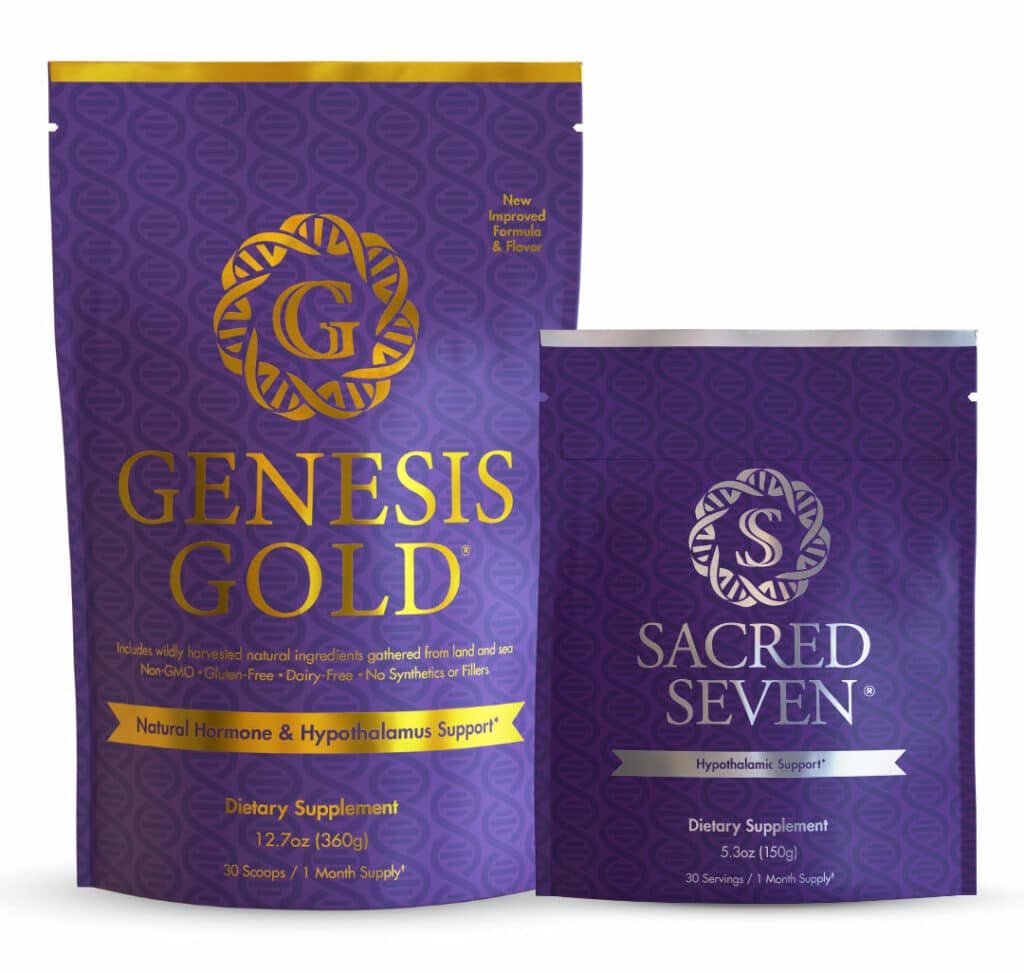
At 38, I started taking the Sacred Seven® amino acids. I couldn’t get Genesis Gold® manufactured for a few years.
Within six weeks:
* I started sleeping better.
* I started feeling more energy.
* I felt calmer.
* I gained five pounds, which I needed to make sex hormones.
* And I started having periods again without taking bioidentical hormones. I hadn’t had periods for decades.
Supporting my hypothalamus with Sacred Seven®, it became very clear to me, through my dreams, my writing, and my enhanced body awareness, that my bulimia had nothing to do with body image issues.
My bulimia was emotional eating, a way of dealing with my fear.
During a meditation, I realized that I had suppressed my own development at age 14 because I wasn’t ready to fulfill what I felt was my mission. Both my mother and grandmother were very afraid of their own power, and so I just stopped becoming a woman. And it worked.
Anorexia dropped 20 pounds off my already lean frame, and my periods went away, and my breasts went away – I reversed puberty at the age of 14. I had to do a lot of work to really heal my patterns of emotional eating, but truly it was worth it, and my self-awareness helped me help my patients. I finally understood with a profound body knowing, what they were going through.
Your hormones affect your brain chemistry, and your hypothalamus orchestrates your hormones and your neurotransmitters. The hypothalamus controls your weight set point and your metabolism. It controls your subconscious. It’s the portal between your unconscious and conscious mind.
About six to eight weeks after starting Sacred Seven®, I became very aware of all the donut shops in town. Honestly, I ignored them for years because donuts were my college binge food. Now here they were like neon signs calling to me like I had been in remission but not cured.
It was time to do the deeper soul work.
Journaling, therapy, and regression. Each took me further down the path to understanding the roots of my emotional eating disorder, but my awareness was the first step. I’ve had patients tell me that Genesis Gold® was like therapy in a bag. They became much more aware of their deeper psychospiritual issues.
By supporting your hypothalamus, Genesis Gold® will help your hormones balance control, your appetite, your mood, and your reward response. Emotional eating may be triggered by a stressor. Emotional eating bumps up your dopamine, makes you feel better instantaneously, and becomes a habit. Even in addiction. Food addictions are very common. They’re instigated by old trauma and childhood conditioning. Just the way you survived in your family can set a pattern of emotional eating. Awareness is the first step to healing.
When patients wanna use Genesis Gold® to help lose weight, they can sometimes get a little bit disappointed that they don’t lose weight right away, and that’s because until your hypothalamus is functioning optimally, can it optimally orchestrate your hormones and your neurotransmitters before it increases your metabolism and reset your weight set point to allow you to lose that weight.
Then, if you have some underlying psychospiritual issues that has to be dealt with first. Otherwise, you’re going to just gain the weight back again. Your body will stay in survival mode, and you won’t be able to stop the pattern of emotional eating.
I didn’t develop my eating disorder because I hated my body.
It was my way of staying safe, dealing with my fear, and then it became an unhealthy habit.
As my patients start supporting their hypothalamus and their awareness increases, they become more in tune with their body. They start realizing what their body needs and craving what their body needs, and eating those foods instead of the foods that help to trigger their emotional eating.
For the deepest level of support, I recommend mixing Genesis Gold® and Sacred Seven® together to really support your neurotransmitters and hasten your healing.
So what are some actual steps you can do to start healing your emotional eating?
Practice mindful eating.
Pay attention to what you’re eating. Sit down with your food. Set a nice table. Use the good plates, the good utensils, and a cloth napkin. Make it an experience. Slow down. Really pay attention to how your food tastes, the texture of your food, and how it feels in your body.
I know. Certain foods can be triggers. Chocolate was a trigger for me. I could not just have one piece.
The first feast brought my stuffed-down emotions to the surface, and I would binge on all of it and purge my feelings. So I decided to establish a different relationship with chocolate. I purchased my favorite luscious dark chocolate, covered a TV tray with lace, filled a crystal goblet with expensive red wine, placed the unwrapped chocolate on my best China dessert plate, and I sat down alone to watch a feel-good movie and eat my chocolate. Really savor it. Let sweet feelings become associated with the rich, dark chocolate.
A year later, I discovered chocolate chips I had left over from my holiday baking in my pantry. I’d forgotten about them. My fear hadn’t drawn me to them to drown it out. I was surprisingly free!
Keep your biochemistry stable by trying to keep your blood sugar stable.
Eat a balanced diet, making sure you’re getting enough protein and fiber, and healthy fats. Be sure you’re getting enough sleep. When you’re tired, you crave sugar to make more serotonin to convert into melatonin, so be sure you’re getting enough sleep in the dark.
Exercise
Moving your body every day. Be active, not just for weight loss, but to really deal with stress.
What feels good for me is being in nature. Now I love taking exercise classes, but being in nature is really stress-reducing for me. So, just taking a walk or gardening can really help reduce my stress.
Journaling
Journal your feelings instead of eating them. I journal every day, and I keep a journal in which I communicate with my higher self. Really tapping into that deeper wisdom to try to find out what’s really going on beneath what I think is at the surface. Oftentimes, there’s a deep divine wisdom within that you won’t even realize until you try to tap into it.
Therapy
Therapy can also be incredibly helpful, especially if you’re struggling with some of these coping mechanisms.
Support Your Hypothalamus
And of course, supporting your hypothalamus daily with Genesis Gold® andextra Sacred Seven® can help balance your hormones and your neuroendocrine system. It’ll make a huge difference in your recovery.
You don’t need to white knuckle your way through emotional eating. Your hypothalamus can be your ally.
Please subscribe, share this video, and comment on your experiences. Join us in our free Hormone Reboot Training to learn more about how to support your hypothalamus, and check out Genesis Gold® and Sacred Seven®.
What is emotional eating and how is it different from physical hunger?
Emotional eating is the use of food to manage or suppress emotional states — stress, fear, anxiety, loneliness, boredom, or overwhelm — rather than to satisfy physical hunger. Physical hunger builds gradually, responds to a variety of foods, and resolves with eating. Emotional hunger tends to come on suddenly, craves specific foods (typically high-sugar or high-fat comfort foods), and persists even after eating because the underlying emotional driver hasn’t been addressed. The distinction matters clinically because emotional eating is not a behavioral failure or a willpower deficit — it is frequently a neurochemical and hormonal response rooted in imbalances in the hypothalamus, the brain structure that governs appetite, reward, mood, and the stress response simultaneously.
Is emotional eating hormonal?
Yes — to a significant degree. The hypothalamus regulates both hormonal output and the neurotransmitters that govern mood, appetite, and the reward response. When hormones fall out of balance, the neurotransmitter systems the hypothalamus depends on become dysregulated in predictable ways that drive emotional eating. Low estrogen reduces serotonin production — serotonin is the neurotransmitter most associated with feelings of calm, satiety, and contentment, and its deficiency creates a biochemical pull toward sugar and refined carbohydrates, which temporarily spike serotonin. Low progesterone reduces GABA, the calming neurotransmitter that dampens the nervous system’s stress response — without adequate GABA, anxiety and overwhelm intensify, and food becomes one of the fastest available tools for relief. Chronic stress depletes dopamine, which the brain attempts to restore through the reward hit of comfort food. These are not character flaws — they are neurochemical deficiencies driving behavior from below the level of conscious control.
What role does the hypothalamus play in emotional eating?
The hypothalamus is the central coordinator of appetite, metabolism, emotional regulation, and the stress response — making it the neurological hub where emotional eating originates. It sets the body’s weight set point, controls hunger and satiety signals, and regulates the mesolimbic reward pathway through which food produces feelings of pleasure and relief. When the hypothalamus is dysregulated — whether from chronic stress, hormonal decline, trauma, poor nutrition, or sleep disruption — it loses the ability to accurately interpret hunger and satiety cues, maintain a stable reward threshold, and modulate the emotional states that drive compensatory eating. The hypothalamus also acts as the portal between the unconscious and conscious mind, processing emotional and somatic signals that influence behavior before they ever reach conscious awareness — which is why emotional eating often feels automatic and compulsive rather than chosen.
How does stress cause emotional eating?
Chronic stress activates the hypothalamic-pituitary-adrenal (HPA) axis, triggering the repeated release of cortisol and adrenaline. Over time, this chronic activation depletes dopamine — the neurotransmitter associated with motivation, pleasure, and reward — and dysregulates the hypothalamic stress response threshold, making the nervous system increasingly reactive to ordinary stressors. The brain compensates by seeking fast dopamine restoration through the most accessible reward available, which for many people is food — particularly sugar and fat, which produce a rapid dopamine spike in the mesolimbic reward pathway. This creates a learned association between stress and eating that eventually becomes habitual and, in some cases, compulsive. The pattern is reinforced each time eating successfully reduces emotional discomfort, wiring it more deeply into the brain’s stress-response repertoire.

0 Comments