
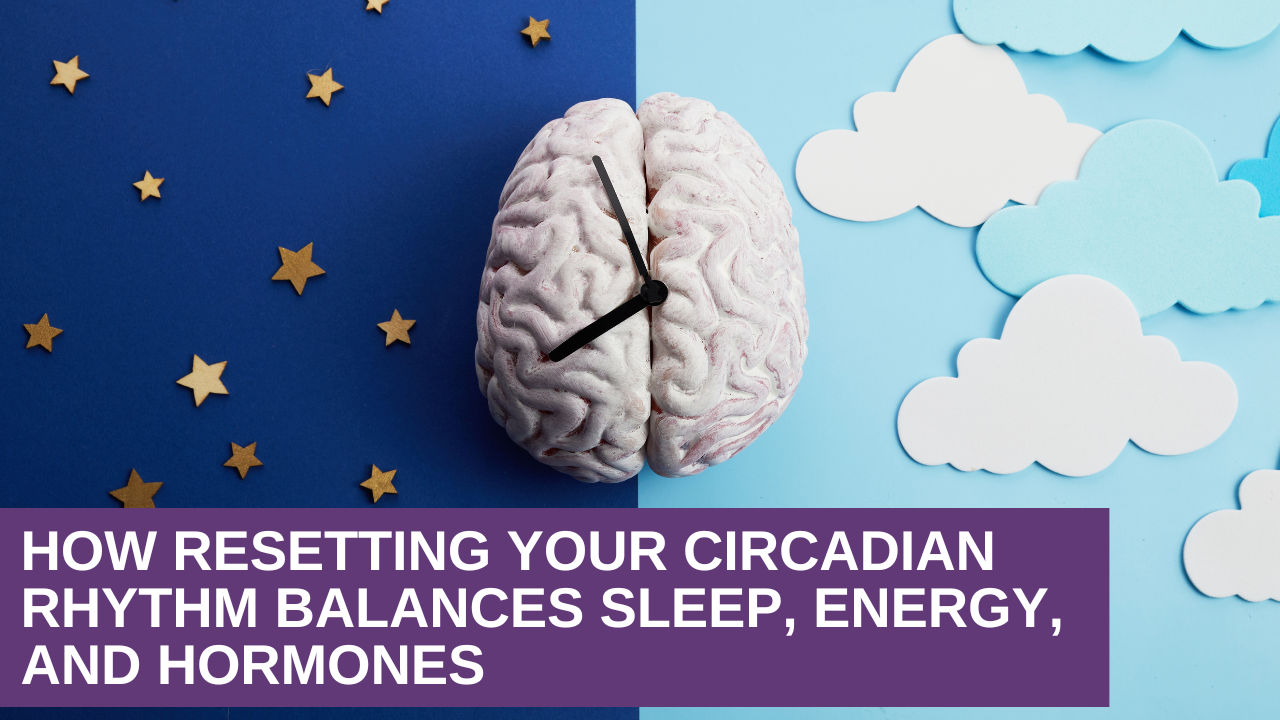
If you want to improve your sleep, stabilize your energy, and balance your hormones, the first step is to reset your circadian rhythm. Your circadian rhythm is your body’s internal 24-hour clock — and when it’s out of sync, everything from cortisol to melatonin to blood sugar regulation can become disrupted.
What Is Your Circadian Rhythm?
It’s your body’s 24-hour biological cycle — controlling everything from sleep and hunger to hormone release and immune function.
And the master controller of that rhythm?
Your hypothalamus — specifically, a cluster of neurons called the suprachiasmatic nucleus.
When Your Circadian Rhythm Is In Sync, Your Body:
- Produces cortisol in the morning to help you wake up
- Produces melatonin at night to help you wind down
- Regulates blood sugar, appetite, and repair processes throughout the day
But when your rhythm is off — because of travel, screen time, stress, or irregular routines — everything gets thrown out of balance.
You Might Notice:
- Fatigue, even after a full night’s sleep
- Afternoon crashes or brain fog
- Nighttime restlessness
- Irregular hunger or cravings
- Hormone imbalances that don’t respond to standard treatments
And here’s the part most people miss:
You can’t truly balance your hormones without first aligning your circadian rhythm.
How Do You Reset Your Circadian Rhythm?
1. Get Morning Light Exposure — Consistently
Natural sunlight in the first 30–60 minutes of your day sends a clear signal to your hypothalamus: “It’s daytime. Let’s go.”
This helps anchor your cortisol rhythm and stabilize energy and focus.
2. Eat and Move at Regular Times
Your hypothalamus thrives on rhythm. When meals and movement are unpredictable, hormone production becomes chaotic.
3. Avoid Bright Light and Screens at Night
Blue light blocks melatonin production. So dim the lights, reduce digital stimulation, and give your body permission to shift into rest.
4. Support Your Hypothalamus Nutritionally
The hypothalamus thrives when it’s nourished — not just with food, but with consistent sleep, stable blood sugar, and micronutrients designed to support its function.
If your sleep is off, your energy is unpredictable, or your hormones feel out of sync — don’t overlook your circadian rhythm.
That’s exactly what we reset in my free Hormone Reboot Training. I’ll walk you through how to support your hypothalamus, restore your hormonal balance, and finally feel like yourself again.

How long does it take to reset circadian rhythm?
Most people begin to reset circadian rhythm within 7–14 days of consistent morning light exposure and regular sleep timing. Full hormone stabilization may take several weeks.
Can resetting circadian rhythm balance hormones?
Yes. When you reset circadian rhythm, cortisol, melatonin, insulin, and reproductive hormones begin to regulate more efficiently.
What is the fastest way to reset circadian rhythm?
The fastest way to reset circadian rhythm is daily morning sunlight exposure, consistent wake and sleep times, regular meals, and limiting blue light at night.
Does blue light prevent you from resetting circadian rhythm?
Yes. Blue light suppresses melatonin production, which delays sleep and makes it harder to reset circadian rhythm.
Why is the hypothalamus important to reset circadian rhythm?
The hypothalamus contains the suprachiasmatic nucleus, the master clock that controls your circadian rhythm and coordinates hormone release.

0 Comments