
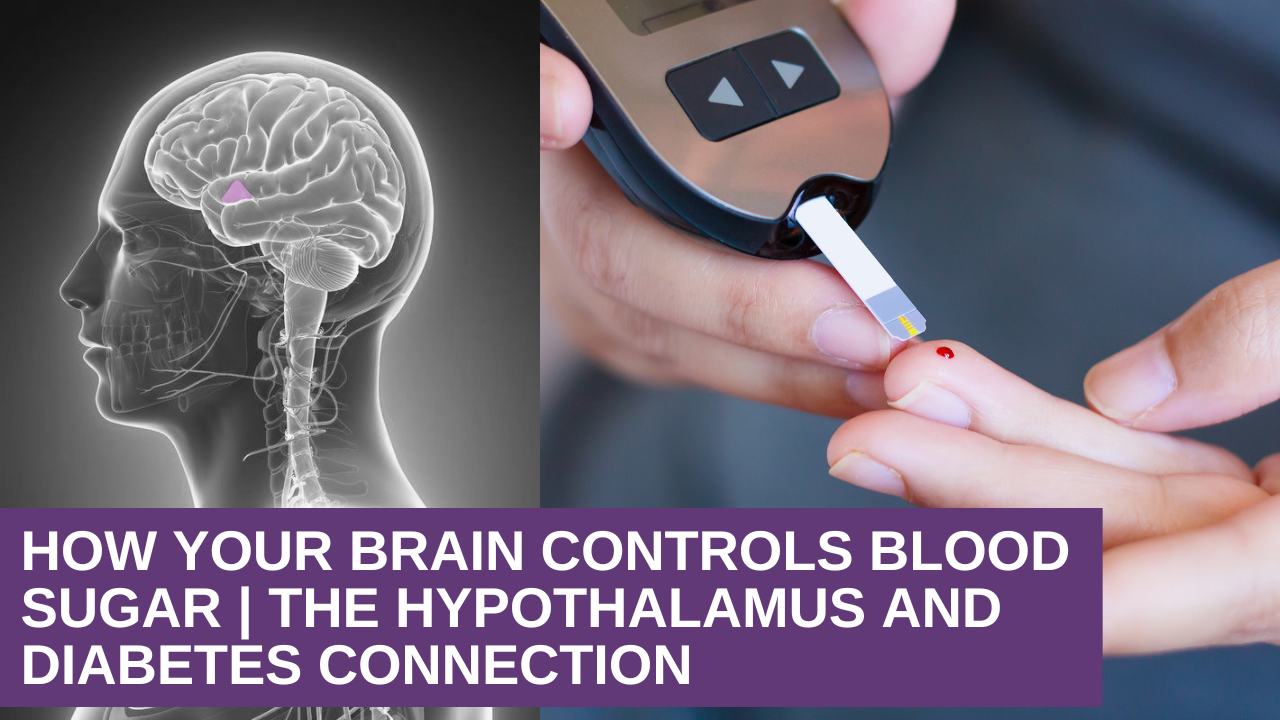
We’ve been told diabetes starts in the pancreas. But new research is revealing something even more powerful: Blood sugar regulation may begin — or break down — in your brain. And the hypothalamus is at the center of it all.
Let’s break this down.
The pancreas gets most of the attention in diabetes — it produces insulin, the hormone that helps your cells absorb glucose from your blood.
But the pancreas doesn’t act on its own.
It takes its cues from your hypothalamus — the command center in your brain that regulates hunger, metabolism, energy usage, and hormonal balance.
New Research Reveals That Diabetes Begins In An Inflamed Hypothalamus
When your hypothalamus senses danger — from stress, poor sleep, inflammation, or even emotional trauma — it can disrupt the entire HPA axis and signal your body to store more fat, raise cortisol, and slow metabolism.
It also directly influences insulin sensitivity and glucose uptake — meaning how well your body uses blood sugar for energy.
If the hypothalamus is inflamed, it becomes dysregulated.
Which Can Lead To:
- Insulin resistance
- Constant hunger or never feeling full
- Fat storage, especially in the belly
- Energy crashes after eating
- Difficulty managing weight despite diet or exercise
And here’s the big takeaway:
This can all happen before your blood sugar levels ever show up as abnormal on lab tests.
Early Signs of Hypothalamic Dysfunction May Look Like:
- Cravings
- Mood swings
- Sleep disruption
- Brain fog
- That “wired but tired” feeling
Most treatments for blood sugar issues focus on managing symptoms:
Restrict carbs. Add meds. Exercise more.
But if we don’t address the central regulation system — the hypothalamus — we’re just patching the problem.
So What Can You Do?
1. Support your circadian rhythm
Blood sugar is tightly linked to your internal clock. Better sleep and regular mealtimes help regulate insulin naturally.
2. Nourish the hypothalamus to reduce inflammation
This includes quality fats, micronutrients, hydration, and emotional safety — because the hypothalamus responds to how you live, not just what you eat.
3. Reset your hormonal signals
When the hypothalamus is back in rhythm, your metabolism can finally stabilize — without constant micromanagement.
If you’re dealing with blood sugar issues, prediabetes, or metabolic slowdown… and you’re tired of chasing symptoms, let’s go deeper.
Inside my free Hormone Reboot Training, I’ll show you how to support your hypothalamus, restore hormonal balance, and reset your metabolism from the top down.
Because real healing isn’t just about what’s happening in your pancreas — it’s about what your brain is telling your body to do.
Let’s get those signals working for you again.

How does the hypothalamus control blood sugar?
The hypothalamus plays a central but often overlooked role in blood sugar regulation. It contains specialized glucose-sensing neurons that monitor circulating glucose levels and respond by adjusting hunger signals, energy expenditure, and the output of hormones that affect insulin sensitivity. The hypothalamus communicates directly with the pancreas via the autonomic nervous system, influencing both insulin and glucagon secretion. It also regulates cortisol and growth hormone — both of which have significant effects on glucose metabolism. When the hypothalamus is functioning well, it coordinates these signals to keep blood sugar stable. When it becomes inflamed or dysregulated, that coordination breaks down, and the downstream metabolic consequences can precede measurable changes in standard blood glucose labs by years.
What is the connection between hypothalamic inflammation and insulin resistance?
Hypothalamic inflammation — triggered by chronic stress, poor diet, sleep deprivation, and inflammatory signaling from excess body fat — impairs the hypothalamus’s ability to respond appropriately to insulin and leptin signals. When hypothalamic neurons become resistant to these hormones, the brain effectively loses accurate information about the body’s energy and glucose status. It then sends signals that promote fat storage, increase hunger, raise cortisol, and reduce insulin sensitivity throughout the body. This creates a self-reinforcing cycle: metabolic dysfunction in the periphery feeds back as more inflammatory signaling to the hypothalamus, which deepens the dysregulation. Addressing hypothalamic inflammation is therefore a root-level intervention for insulin resistance, not just a downstream one.
Can the hypothalamus cause prediabetes or type 2 diabetes?
Hypothalamic dysfunction is increasingly recognized as a contributor to the development of prediabetes and type 2 diabetes, rather than simply a consequence of them. When the hypothalamus loses its ability to accurately sense and respond to insulin and leptin, it promotes metabolic patterns — increased gluconeogenesis, impaired glucose uptake, elevated cortisol, disrupted sleep — that together create the conditions for insulin resistance to develop and progress. This helps explain why some people develop metabolic dysfunction despite relatively modest dietary indiscretions, and why blood sugar management strategies focused solely on diet and the pancreas often produce incomplete results. Supporting hypothalamic function addresses the regulatory problem at its source.
How does stress affect blood sugar through the hypothalamus?
Stress activates the hypothalamic-pituitary-adrenal (HPA) axis, triggering the release of cortisol from the adrenal glands. Cortisol is a counter-regulatory hormone that raises blood glucose by stimulating the liver to produce and release sugar into the bloodstream — a survival mechanism designed to fuel a rapid physical response. Under chronic stress, this process runs persistently rather than acutely, keeping blood sugar and insulin demand elevated over time. The hypothalamus, which is the axis’s command center, bears the cumulative burden of this chronic activation. Over time, sustained HPA activation contributes to hypothalamic inflammation and dysregulation, which further impairs the body’s ability to regulate blood sugar efficiently — a cycle that conventional diabetes management rarely addresses.

0 Comments