
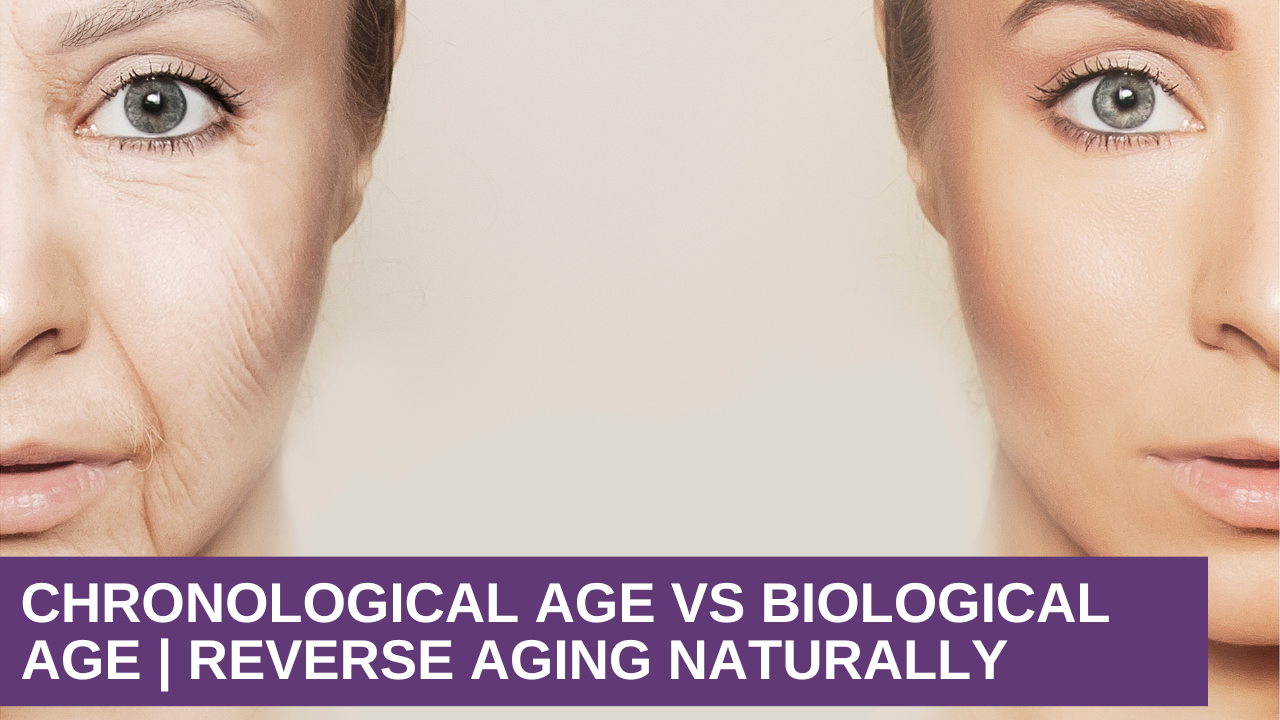
You might be 55. But your body could be functioning like it’s 45 — or 65. That gap between how many birthdays you’ve had and how well your cells are actually functioning is the difference between your chronological age and your biological age. And unlike your chronological age, your biological age is something you can actively influence.
Understanding this distinction is one of the most empowering shifts in modern functional medicine — and it’s at the heart of why two women the same age can feel so radically different in their energy, clarity, metabolism, and resilience.
What Is Chronological Age?
Chronological age is simply the number of years you’ve been alive. It’s fixed, linear, and entirely outside your control. It tells you very little about how your body is actually functioning.
What Is Biological Age — and How Is It Measured?
Biological age reflects how well your cells, tissues, organs, and systems are functioning relative to population norms. It’s dynamic — meaning it can go up or down depending on your lifestyle, stress load, hormonal health, and nutritional status.
Researchers measure biological age through several methods:
- Epigenetic clocks (such as the Horvath clock and DunedinPACE) — analyze DNA methylation patterns, which change predictably with aging and can be accelerated or slowed by lifestyle factors
- Telomere length — the protective caps on chromosomes shorten with each cell division; shorter telomeres correlate with accelerated biological aging and increased disease risk
- VO2 max — a measure of cardiovascular and metabolic fitness that strongly predicts longevity and functional age
- Inflammatory biomarkers — chronic low-grade inflammation (sometimes called “inflammaging”) is one of the strongest drivers of accelerated biological aging
- Hormonal panels — declining or dysregulated levels of key hormones including DHEA, growth hormone, estrogen, testosterone, and thyroid hormone are closely correlated with biological age acceleration
No single marker tells the whole story. But together, they paint a picture of how fast — or slowly — your body is aging at the cellular level.
What Drives Biological Age Acceleration?
Biological aging accelerates when the body’s repair and maintenance systems are chronically overwhelmed. The key drivers include:
- Chronic stress and elevated cortisol — sustained cortisol elevation promotes inflammation, shortens telomeres, suppresses immune function, and disrupts the hormonal rhythms that govern cellular repair
- Hormonal decline and dysregulation — as estrogen, progesterone, testosterone, DHEA, and growth hormone decline with age, the body loses key signals that regulate cellular repair, metabolism, and inflammation
- Poor sleep and disrupted circadian rhythm — the majority of cellular repair, detoxification, and hormonal restoration happens during deep sleep; chronic sleep disruption accelerates every marker of biological aging
- Chronic inflammation — driven by poor diet, gut dysbiosis, environmental toxins, and unresolved stress, inflammation is the common denominator in accelerated aging across all organ systems
- Hypothalamic dysfunction — the hypothalamus is the master regulator of hormonal aging, and when it loses its rhythmic signaling capacity, the entire cascade of hormonal decline accelerates
The Hypothalamus: Your Master Aging Clock
Most anti-aging conversations focus on the periphery — the skin, the gut, the mitochondria. But the real clock is sitting in the center of your brain.
Your hypothalamus is a small but extraordinarily powerful structure that regulates virtually every system involved in biological aging: your stress response (via the HPA axis), your sleep-wake cycle (via circadian rhythm regulation), your reproductive hormones (via the HPG axis), your thyroid and metabolism (via the HPT axis), your growth hormone release, your appetite and body composition, and your immune tone.
As the hypothalamus ages — or becomes dysregulated by chronic stress, poor nutrition, environmental toxins, or hormonal chaos — it loses its ability to send clear, rhythmic signals to the rest of the endocrine system. The result is a cascade of downstream hormonal decline that shows up as the classic symptoms of “getting older”: fatigue, brain fog, weight gain, poor sleep, low libido, mood instability, and reduced resilience.
But here’s the critical insight: the hypothalamus is not just a victim of aging — it is a driver of it. Research on hypothalamic aging suggests that the brain clock itself initiates many of the hormonal and inflammatory changes associated with biological age acceleration. This means that supporting the hypothalamus isn’t just one strategy among many — it is the upstream intervention that influences everything else.
How to Support Your HPA Axis to Slow Biological Aging
The HPA axis — the communication loop between your hypothalamus, pituitary gland, and adrenal glands — is your body’s central stress-response system. When it’s functioning well, your cortisol rises appropriately in the morning, supports energy and focus through the day, and falls in the evening to allow for recovery and repair.
When the HPA axis is chronically overactivated — by ongoing stress, poor sleep, blood sugar instability, or inflammation — cortisol becomes dysregulated. This dysregulation accelerates biological aging through multiple pathways:
- Elevated cortisol suppresses DHEA, one of the body’s primary anti-aging hormones
- Chronic cortisol elevation promotes visceral fat accumulation, a key driver of inflammation and metabolic aging
- HPA dysregulation disrupts growth hormone pulsatility, impairing the overnight cellular repair that keeps tissues young
- Sustained cortisol suppresses thyroid conversion, slowing metabolism and cellular energy production
Supporting the HPA axis means reducing the chronic stress burden — through sleep, nervous system regulation, blood sugar stability, and targeted nutritional support — while also nourishing the hypothalamus directly so it can restore the rhythmic, appropriate cortisol signaling that healthy aging requires.
How Circadian Rhythm Affects Biological Age
Your circadian rhythm is not just your sleep schedule. It is a 24-hour biological timing system embedded in virtually every cell of your body, coordinated by your hypothalamus — specifically by a cluster of neurons called the suprachiasmatic nucleus (SCN), which functions as your master body clock.
This internal clock governs:
- Hormonal release timing — growth hormone, melatonin, cortisol, and sex hormones are all released in precise circadian patterns; disruption blunts their amplitude and efficacy
- DNA repair — the majority of cellular DNA repair happens during specific circadian windows, primarily during deep sleep
- Detoxification — liver detox enzymes, lymphatic drainage, and glymphatic clearance (the brain’s waste-removal system) are all circadian-regulated
- Immune surveillance — immune cells patrol and repair tissues on a circadian schedule; disrupted rhythms impair this surveillance and increase inflammatory burden
- Metabolic regulation — insulin sensitivity, fat oxidation, and appetite hormones all follow circadian patterns that are disrupted by irregular sleep, artificial light exposure, and late-night eating
Chronic circadian disruption — whether from shift work, irregular sleep schedules, late-night screen exposure, or jet lag — is now recognized as an independent driver of accelerated biological aging, cardiovascular disease, metabolic dysfunction, and cognitive decline.
Realigning your circadian rhythm — through consistent sleep and wake times, morning light exposure, time-restricted eating, and hypothalamic support — is one of the most powerful levers available for shifting biological age.
The Genesis Gold® Difference: Supporting Biological Age at the Source
My patients who have consistently supported their hypothalamus nutraceutically with Genesis Gold® show biological age measures 8 to 18 years younger than their chronological age. This is not an accident — it is the direct result of addressing biological aging at its source rather than at its symptoms.
Genesis Gold® is formulated specifically to nourish the hypothalamus with the amino acids, micronutrients, and botanical cofactors it needs to maintain clear, rhythmic hormonal signaling. When the hypothalamus is well-supported, it restores the HPA axis rhythm that governs cortisol and DHEA balance, the circadian signaling that controls sleep architecture and cellular repair, the HPG axis communication that supports sex hormone production, the HPT axis regulation that optimizes thyroid and metabolic function, and the growth hormone pulsatility that drives overnight tissue repair and regeneration.
Rather than supplementing individual hormones or targeting individual symptoms, Genesis Gold® works upstream — giving the master regulator what it needs to coordinate the entire system. The result is a body that ages more slowly from the inside out.


What is the difference between chronological age and biological age?
Chronological age is the number of years you have been alive — a fixed number that increases by one every year regardless of how you live. Biological age is a measure of how well your cells, tissues, and physiological systems are actually functioning compared to population averages for your chronological age. Two people who are both 50 years old chronologically can have biological ages that differ by 20 years or more, depending on their hormonal health, stress history, sleep quality, inflammation levels, and lifestyle choices. Biological age is dynamic — it can be accelerated by chronic stress, hormonal dysfunction, poor sleep, and inflammation, or it can be slowed and even reversed through targeted interventions that address the root drivers of cellular aging.
How is biological age measured?
Biological age can be assessed through several different methods, each measuring a different aspect of cellular aging. Epigenetic clocks — including the Horvath clock and the DunedinPACE algorithm — analyze DNA methylation patterns across thousands of genetic sites to estimate biological age with high accuracy. Telomere length testing measures the protective caps on chromosomes that shorten with each cell division and with cumulative stress and inflammation. VO2 max testing assesses cardiovascular and metabolic fitness, which is one of the strongest predictors of longevity. Inflammatory biomarkers such as C-reactive protein, interleukin-6, and TNF-alpha reflect the inflammatory burden that drives accelerated aging. Comprehensive hormonal panels measuring DHEA, cortisol rhythm, thyroid hormones, sex hormones, and growth hormone factors also provide important data on biological age trajectory. No single test is definitive, but together these markers offer a meaningful picture of how fast or slowly your body is aging at the cellular level.
Can you reverse biological age naturally?
Yes — and this is one of the most exciting and well-supported areas of longevity research. Biological age is not fixed. Multiple studies using epigenetic clocks have demonstrated measurable reductions in biological age following interventions that address the root drivers of cellular aging. Key strategies with evidence behind them include optimizing sleep architecture and circadian rhythm alignment, reducing chronic inflammation through diet and stress management, restoring hormonal balance — particularly DHEA, thyroid hormone, and sex hormones — supporting the HPA axis to normalize cortisol patterns, engaging in regular resistance and aerobic exercise, practicing time-restricted eating aligned with circadian rhythms, and nourishing the hypothalamus — the master regulator that coordinates all of these systems. The hypothalamus is increasingly recognized in aging research as a central clock for the entire aging process, meaning that supporting it directly may be one of the highest-leverage interventions available for reversing biological age.
What role do hormones play in biological aging?
Hormones are among the most powerful regulators of biological aging. They act as cellular messengers that govern repair, regeneration, metabolism, inflammation, and resilience — all of which determine how quickly or slowly the body ages. Estrogen has antioxidant and anti-inflammatory properties that protect cardiovascular tissue, bone density, cognitive function, and skin integrity; its decline at menopause is associated with accelerated biological aging across multiple organ systems. Progesterone supports sleep quality, nervous system calm, and counterbalances estrogen’s proliferative effects. Testosterone supports muscle mass, metabolic rate, libido, and cognitive sharpness in both men and women. DHEA, produced by the adrenal glands under hypothalamic direction, is a master precursor hormone whose levels decline steadily with age and serve as one of the most reliable biomarkers of biological aging. Growth hormone drives overnight cellular repair and regeneration; its pulsatile release declines with age and with poor sleep. Thyroid hormone governs the metabolic rate of every cell in the body; subclinical dysfunction accelerates fatigue, weight gain, and cognitive aging. All of these hormones are regulated — directly or indirectly — by the hypothalamus, which is why hypothalamic support is central to any genuine anti-aging strategy.
What is the HPA axis and how does it affect aging?
The HPA axis — hypothalamic-pituitary-adrenal axis — is the body’s central stress-response system. It begins in the hypothalamus, which releases corticotropin-releasing hormone (CRH) in response to perceived stress. CRH signals the pituitary to release ACTH, which then triggers the adrenal glands to produce cortisol. In a healthy, well-regulated system, this cascade activates quickly in response to stress and resolves efficiently when the threat passes. In chronic stress states, however, the HPA axis becomes dysregulated — cortisol remains elevated, DHEA declines, the negative feedback loop becomes blunted, and the downstream effects on every other hormonal axis accelerate. Chronically elevated cortisol suppresses thyroid conversion, impairs sex hormone production, promotes visceral fat accumulation, disrupts sleep architecture, blunts immune function, and promotes systemic inflammation — all of which accelerate biological aging. Restoring HPA axis rhythm through hypothalamic support, sleep optimization, stress reduction, and targeted nutrition is one of the most direct ways to slow the biological aging process.
How does sleep affect biological age?
Sleep is arguably the single most important behavioral factor in biological aging. During deep sleep stages — particularly slow-wave sleep and REM — the body carries out the majority of its cellular repair, hormonal restoration, immune surveillance, and neurological detoxification. Growth hormone is released in its largest pulse during the first few hours of deep sleep, driving tissue repair and regeneration throughout the body. The brain’s glymphatic system — responsible for clearing metabolic waste products including amyloid proteins associated with cognitive aging — is active almost exclusively during sleep. Cortisol reaches its lowest point in the early hours of sleep, allowing the adrenal glands to rest and restore. Melatonin, released by the pineal gland under hypothalamic direction, serves not just as a sleep signal but as a powerful antioxidant that protects DNA from oxidative damage. Chronic sleep deprivation and disrupted sleep architecture accelerate virtually every epigenetic marker of biological aging. Studies have shown that even short-term sleep restriction produces measurable increases in inflammatory markers, cortisol dysregulation, and biological age acceleration on epigenetic clocks.
How does the hypothalamus control aging?
The hypothalamus is increasingly recognized by longevity researchers as a central driver — not just a bystander — of the aging process. Landmark research published in Nature demonstrated that the hypothalamus actively regulates systemic aging through its control of inflammatory signaling and hormonal communication with peripheral tissues. As the hypothalamus ages or becomes dysregulated, it loses the precision of its signaling — producing less distinct hormonal pulses, generating more baseline inflammation, and losing the circadian rhythmicity that coordinates repair and regeneration across all organ systems. This hypothalamic aging then accelerates aging throughout the body in a self-reinforcing cycle. Conversely, supporting hypothalamic function — through targeted nutrition, sleep optimization, stress reduction, and nutraceutical support — can slow this cascade and help restore the organized, rhythmic hormonal communication that characterizes a younger biological age. This is the central premise behind Genesis Gold®: nourish the hypothalamus, and you address biological aging at its source.

0 Comments