
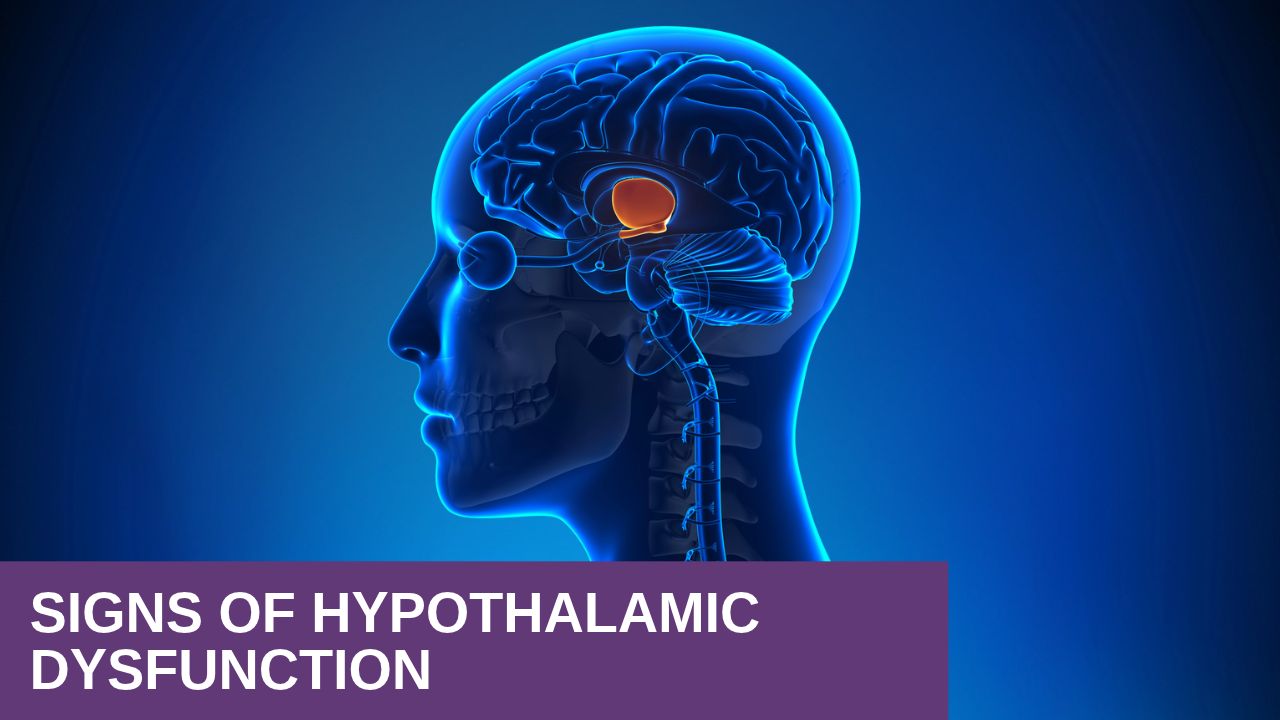
Signs of hypothalamic dysfunction often show up together: constant fatigue or wired-and-tired energy, poor sleep, hot flashes or feeling cold, irregular cycles or low testosterone, an off-rhythm stress response, low mood or poor focus, frequent illness, and stubborn metabolic changes. The hypothalamus coordinates all of these systems, so several symptoms at once can share one upstream source.
Most of us assume that when something goes wrong in the body, the problem is in the organ where we feel it. Irregular periods? Must be the ovaries. Low testosterone? The testes. Exhausted all the time? The adrenals.
But in my 30-plus years of clinical practice, I've found that very often the problem isn't in the organ. It's in the master controller telling that organ what to do. That master controller is your hypothalamus.
What is the hypothalamus?
The hypothalamus is an almond-sized region at the base of the brain that links the nervous system to the hormone system. It sends signals to the pituitary gland, which in turn directs the thyroid, adrenal glands, ovaries and testes. If your body were a computer, the hypothalamus would be the operating system.
It coordinates your:
- Sleep-wake cycle and circadian rhythm
- Body temperature
- Hunger, appetite and metabolism
- Stress response
- Thyroid, adrenal and reproductive hormones
- Mood, motivation and focus
- Immune balance
When your hypothalamus is working well, these systems stay in conversation. When it's struggling, the conversation breaks down, and symptoms show up in places that seem unrelated.
What is hypothalamic dysfunction?
Hypothalamic dysfunction means the hypothalamus isn't sending the right signals at the right times to the systems it controls. In conventional medicine, the term usually describes damage from an injury, tumor, surgery or genetic condition. In my practice, I also use it for a functional pattern: no structural damage, but signals that have fallen out of rhythm.
What are the signs of hypothalamic dysfunction?
Here are the patterns I've learned to recognize in my patients. Any one of them can have other causes and deserves a proper medical evaluation. But when several show up together, I always look upstream.
1. Your energy is off
You wake up exhausted. Or you're "wired and tired": fine as long as you keep moving, but the moment you sit down, you could fall asleep. You don't have steady, normal energy through the day.
2. You can't fall asleep or stay asleep
Your hypothalamus runs your internal clock. Trouble falling asleep, waking at 2 or 3 AM, or feeling unrested no matter how long you sleep can all point to circadian disruption.
3. Your temperature regulation is off
Hot flashes. Night sweats. You're freezing when everyone else is comfortable, or overheating when everyone else is cold. Your hypothalamus is your thermostat.
4. Your reproductive hormones are out of balance
For women: irregular periods, heavy bleeding, a difficult perimenopause or menopause, PCOS, or trouble conceiving. For men: low testosterone, loss of muscle mass, low libido or erectile dysfunction. The hypothalamus starts the reproductive hormone chain by releasing gonadotropin-releasing hormone (GnRH).
5. Your stress response is out of rhythm
Either you can't find enough energy to meet the day, or your cortisol pattern seems flipped. In my practice, I often see patients who feel flat during the day, then anxious and wide awake at night.
6. Your mood and mind are struggling
Anxiety, low mood, low motivation, trouble focusing and memory problems all involve brain chemistry the hypothalamus helps regulate.
7. Your immune system is out of balance
Frequent infections, allergies or autoimmune conditions. The hypothalamus influences immune function through its hormonal signals and its communication with the immune system.
8. Your metabolism is struggling
Insulin resistance, stubborn weight, high cholesterol or rising blood pressure. The hypothalamus helps regulate appetite, blood sugar, and how your body stores and burns energy. In humans, obesity has been linked to signs of injury in the part of the hypothalamus that controls body weight (Thaler et al., 2012).
9. You feel like you're aging faster than you should
In mice, inflammation in the hypothalamus sped up aging throughout the body. Blocking that inflammation extended lifespan (Zhang et al., 2013). We don't yet know whether the same holds in people, but it's one reason I take hypothalamic health seriously.
What signs of hypothalamic dysfunction do most people overlook?
These two come from my clinical experience, not from published research. I share them because I've seen them again and again in my patients.
Do you wake up hungry?
In my practice, the patients who feel best tend to wake up ready for breakfast, alert and ready to get up. When someone tells me they're not hungry until 10 AM, or they need caffeine just to get going, I take it as a sign that their body isn't fully shifting into daytime mode.
Do you remember your dreams?
This surprises people. In my experience, patients who remember their dreams tend to have healthier hypothalamic function. When my patients' hypothalamic health improves, many tell me their dreams come back.
How does your hypothalamus use light to run your day?
Your body's master clock is the suprachiasmatic nucleus (SCN), a small cluster of cells in the hypothalamus that sets your 24-hour rhythm using light. Special light-sensing cells in your eyes send signals straight to the SCN along a dedicated nerve pathway (Hattar et al., 2002).
When morning light hits, the hypothalamus starts your day. It promotes alertness, tells your adrenals to release cortisol, and shuts down melatonin production.
The cortisol awakening response is the sharp rise in cortisol over the first 30 to 45 minutes after you wake up (Stalder et al., 2016). Cortisol is called the stress hormone, but researchers believe one of this morning surge's main jobs is mobilizing energy for the day ahead (Stalder et al., 2025).
At night, darkness tells the hypothalamus to signal the pineal gland to make melatonin, your sleep hormone. The pineal gland can't sense light on its own. It takes its orders from the SCN through a chain of nerves (Simonneaux & Ribelayga, 2003).
Morning light matters for more than waking up. Brain serotonin production rises with hours of bright sunlight (Lambert et al., 2002). Serotonin is your feel-good, calming neurotransmitter, and it's also the raw material your body uses to make melatonin later that night. A bright morning helps build a restful night.
Why do screens at night confuse your hypothalamus?
Your body clock is exquisitely sensitive to light, and it reads bright evening light, from screens or overhead lights, as daytime.
The research is striking:
- Room light delays melatonin. Ordinary room light before bed delayed melatonin onset in 99% of people and shortened melatonin production by about 90 minutes, compared with dim light (Gooley et al., 2011).
- Screens shift your clock. Reading on a light-emitting device before bed made it take longer to fall asleep, suppressed melatonin, delayed the body clock and reduced next-morning alertness, compared with a printed book (Chang et al., 2015).
- Natural light resets it. A week of camping with only natural light shifted people's body clocks earlier and lined them up with sunrise and sunset (Wright et al., 2013).
Darkness at night and sunlight in the morning are two of the most powerful things you can give your hypothalamus.
How can you support your hypothalamus naturally?
- Get morning sunlight within an hour of waking.
- Dim the lights and put screens away in the evening.
- Be in bed and asleep by 10:30 or 11 PM. In my experience, that window starts the deepest, most restorative sleep for most people.
- Stop eating three hours before bed.
- Make lunch or an early dinner your biggest meal, and keep evenings light.
- Exercise intensely earlier in the day. Gentle evening movement is fine, but finish hard workouts at least an hour before bed (Stutz et al., 2019).
- Nourish your hypothalamus with the amino acids, phytonutrients and minerals it needs to function.
How does Genesis Gold® support the hypothalamus?
That last one is why I created Genesis Gold®: a plant-based daily formula designed to nourish the hypothalamus so every system it governs can work better. It's built around my Sacred Seven® blend of 21 hypothalamic amino acids, with whole plant foods from land and sea, 19 adaptogenic herbs, detoxifying phytonutrients, probiotics, and digestive enzymes.
Many people notice more energy within the first week and better sleep by week three. It takes about 90 days to truly begin optimizing hypothalamic function.
The bottom line
If you recognize yourself in several of these signs, it's not random, and it's not all in your head. Your symptoms may be pointing to the same upstream source. And when you support your hypothalamus, everything downstream has a chance to rebalance.
— Deborah, The Hormone Queen®
Frequently asked questions
What does the hypothalamus do?
The hypothalamus is the brain's control center for hormones and automatic body functions. It regulates body temperature, hunger, thirst, sleep-wake timing and the stress response. It also directs the pituitary gland, which controls the thyroid, adrenal glands and reproductive organs. That's why one hypothalamic problem can cause symptoms in many places.
Can hypothalamic dysfunction cause hot flashes?
Yes. The hypothalamus is the body's thermostat, so changes in how it reads and responds to temperature can trigger hot flashes, night sweats or feeling unusually cold. Hot flashes during perimenopause and menopause are tied to hormone changes acting on the hypothalamus's temperature control. Talk with your provider about any new or severe symptoms.
How does light affect the hypothalamus?
Light is the main signal that sets the hypothalamus's master clock, the suprachiasmatic nucleus. Light-sensing cells in the eyes send signals to it directly. Morning light starts daytime hormones like cortisol and stops melatonin. Darkness at night lets melatonin rise. Bright light in the evening can push the whole clock later.
Does screen time before bed affect melatonin?
Yes. In a controlled study, reading on a light-emitting device before bed suppressed melatonin, delayed the body clock, made it take longer to fall asleep and reduced next-morning alertness compared with a printed book. Even ordinary room light before bed can delay melatonin onset. Dimming lights and screens in the evening helps.
What is the cortisol awakening response?
The cortisol awakening response is the sharp rise in cortisol over the first 30 to 45 minutes after waking. It's a normal part of your daily hormone rhythm. Researchers believe it helps mobilize energy and prepare the body for the day's demands. It is regulated through the hypothalamic-pituitary-adrenal (HPA) axis.
How is hypothalamic dysfunction diagnosed?
There's no single test. Providers usually start with your symptoms and history, then check blood levels of hormones the hypothalamus influences, such as thyroid, adrenal and reproductive hormones. If they suspect a structural cause like a tumor or injury, they may order an MRI of the brain. A full evaluation helps rule out other conditions.
Can you support your hypothalamus naturally?
Daily habits that respect your body clock support hypothalamic rhythm. Get morning sunlight, keep evenings dim and screen-free, and go to bed at a consistent time. Eat your bigger meals earlier in the day and finish intense exercise well before bedtime. Good nutrition also gives the hypothalamus the building blocks it needs.
Sources
Light and the body clock
- Hattar S, Liao HW, Takao M, Berson DM, Yau KW. Melanopsin-containing retinal ganglion cells: architecture, projections, and intrinsic photosensitivity. Science. 2002;295(5557):1065-1070. Full text
- Wright KP Jr, McHill AW, Birks BR, Griffin BR, Rusterholz T, Chinoy ED. Entrainment of the human circadian clock to the natural light-dark cycle. Curr Biol. 2013;23(16):1554-1558. PubMed
Melatonin, the pineal gland and evening light
- Gooley JJ, Chamberlain K, Smith KA, et al. Exposure to room light before bedtime suppresses melatonin onset and shortens melatonin duration in humans. J Clin Endocrinol Metab. 2011;96(3):E463-E472. Full text
- Chang AM, Aeschbach D, Duffy JF, Czeisler CA. Evening use of light-emitting eReaders negatively affects sleep, circadian timing, and next-morning alertness. Proc Natl Acad Sci USA. 2015;112(4):1232-1237. Full text
- Simonneaux V, Ribelayga C. Generation of the melatonin endocrine message in mammals: a review of the complex regulation of melatonin synthesis by norepinephrine, peptides, and other pineal transmitters. Pharmacol Rev. 2003;55(2):325-395. PubMed
- Lambert GW, Reid C, Kaye DM, Jennings GL, Esler MD. Effect of sunlight and season on serotonin turnover in the brain. Lancet. 2002;360(9348):1840-1842. PubMed
The morning cortisol rise
- Stalder T, Kirschbaum C, Kudielka BM, et al. Assessment of the cortisol awakening response: expert consensus guidelines. Psychoneuroendocrinology. 2016;63:414-432. PubMed
- Stalder T, Oster H, Abelson JL, Huthsteiner K, Klucken T, Clow A. The cortisol awakening response: regulation and functional significance. Endocr Rev. 2025;46(1):43-59. Full text
Inflammation in the hypothalamus
- Zhang G, Li J, Purkayastha S, et al. Hypothalamic programming of systemic ageing involving IKK-β, NF-κB and GnRH. Nature. 2013;497(7448):211-216. Full text
- Thaler JP, Yi CX, Schur EA, et al. Obesity is associated with hypothalamic injury in rodents and humans. J Clin Invest. 2012;122(1):153-162. PubMed
Evening exercise
- Stutz J, Eiholzer R, Spengler CM. Effects of evening exercise on sleep in healthy participants: a systematic review and meta-analysis. Sports Med. 2019;49(2):269-287. PubMed
Used for the flags only (not cited in the post)
- Scheer FAJL, Morris CJ, Shea SA. The internal circadian clock increases hunger and appetite in the evening independent of food intake and other behaviors. Obesity. 2013;21(3):421-423. Full text
Regulatory reference for the disclaimer: FDA, Structure/Function Claims.

0 Comments