
If you've been stressed for so long that even when you finally have time to relax, your body still feels like it can't switch off, this is for you.
Maybe you're exhausted, but you still feel wired. You have trouble falling asleep. You wake up feeling tired. Or you notice that the more stressed you are, the harder it is to control your appetite and cravings.
There's a physical reason for that.
Stress Isn't Just Something You Feel Emotionally
Stress isn't just something you feel emotionally. Your body has an entire system designed to help you respond to it.
When your brain senses a threat or pressure, your body prepares you to act. Your heart beats faster. You become more alert. Hormones like adrenaline and cortisol help to make more energy available.
That response is useful.
Imagine you suddenly had to get out of the way of a moving car. You want your body to react quickly.
But your body can also activate that same stress response when the pressure is coming from work, family problems, financial worries, lack of sleep, or just feeling like you never get a break.
And when that keeps happening day after day, your body doesn't get as much opportunity to settle back into its normal resting state.
Your Hypothalamus and the HPA Axis
Your hypothalamus is part of that system that starts your stress response.
It communicates with your pituitary gland, which then signals your adrenal glands to release cortisol. That communication pathway is called the HPA axis: hypothalamic-pituitary-adrenal axis.
Cortisol isn't something we're trying to eliminate. You need it.
What your body also needs is the opportunity to come back down after the stress response has been activated.
When the HPA axis stays activated without enough recovery, it starts affecting how your body manages blood sugar, appetite, energy, and sleep.
You can start to see how that cycle develops.
Give Your Stress System Time to Recover
So, one of the most important things you can do is intentionally create more recovery.
Move your body regularly.
Protect your sleep by keeping your bedtime fairly consistent and reducing stimulation as the evening gets later.
Give yourself time every day when you're not working, scrolling, or reacting to something. A walk outside, slow breathing, meditating, reading, or simply sitting somewhere quiet.
You don't need a perfect stress-free life.
The goal is to give your stress system periods of recovery instead of keeping it activated from morning until night.
What Happens When the HPA Axis Has Been Dysregulated for a Long Time?
But when the HPA axis has been dysregulated for a long time, lifestyle recovery alone can take a while to restore it fully.
And in the meantime, the negative effects on your sleep, your blood sugar, your appetite, and your mood continue.
That's why optimizing hypothalamic function with nutraceutical support matters here.
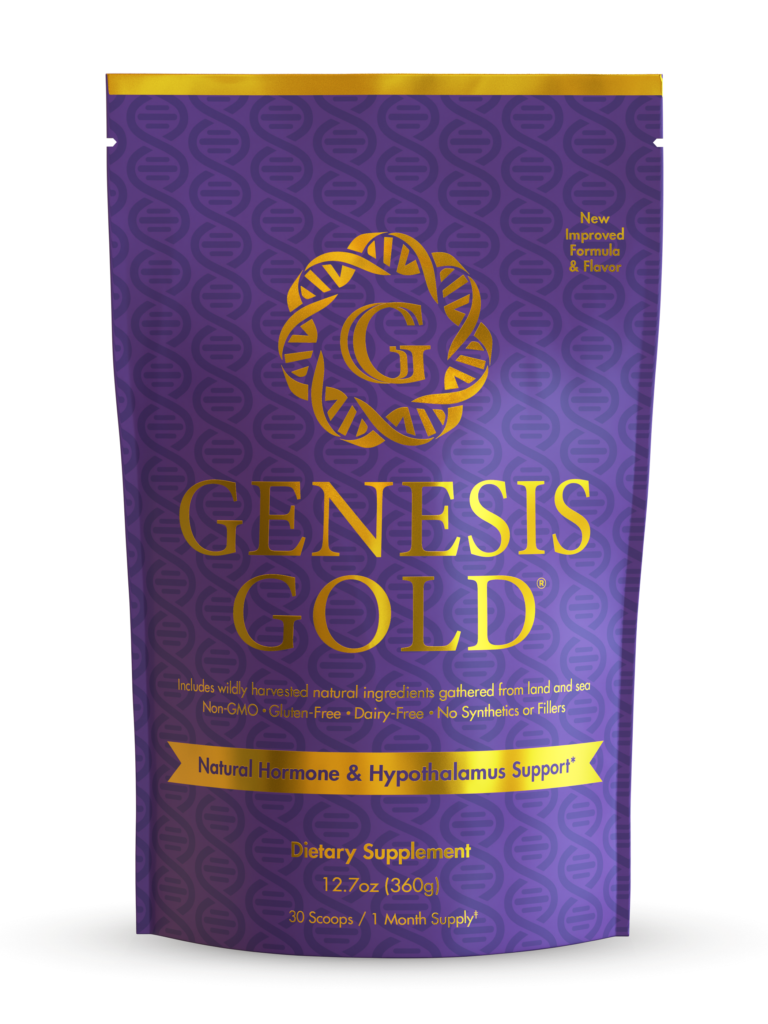
Genesis Gold® is formulated to help restore healthy HPA axis regulation, which reduces those negative downstream effects on your body while your hypothalamus recovers its normal rhythm.
Learn How Your Cortisol, HPA Axis, and Hormones Fit Together
If you want to understand how cortisol, your HPA axis, and the rest of your hormones fit together, and how Genesis Gold® can help support that recovery, that's what I teach in my Free Hormone Reboot Training.

0 Comments