
Permanent Daylight Saving Time Health Effects, Explained
I don’t love wading into politics. But when legislation collides with basic physiology, I have to speak up — the same way I did on Facebook Live throughout the pandemic.
This time it's Congress voting on permanent Daylight Saving Time. The House just passed the Sunshine Protection Act 308–117 on July 14, 2026, and it's now headed to the Senate.
Before your senators vote, I want you to understand what this bill actually does to your body.
The hypothalamus is running the show
Deep in your brain sits a tiny cluster of neurons called the suprachiasmatic nucleus (SCN) — the timekeeper of your hypothalamus, the master gland that regulates nearly every hormone, neurotransmitter, and metabolic process you have.
At dawn: light hits your SCN, which tells your hypothalamus to wake up the body — hormones surge, brain chemistry shifts into gear, metabolism switches on.
At dusk: your SCN flips the switch the other way. Your hypothalamus signals your pineal gland to release melatonin, drops you into deep sleep, and tells your immune system to start the overnight cleanup — clearing waste from your brain, your liver, your bloodstream and tissues. This detox work is only meant to happen in the dark.
Skip enough of that dark-phase cleanup and you get systemic inflammation, which is the common thread running through diabetes, heart disease, and even cancer.
Why permanent DST is the worse of the two options
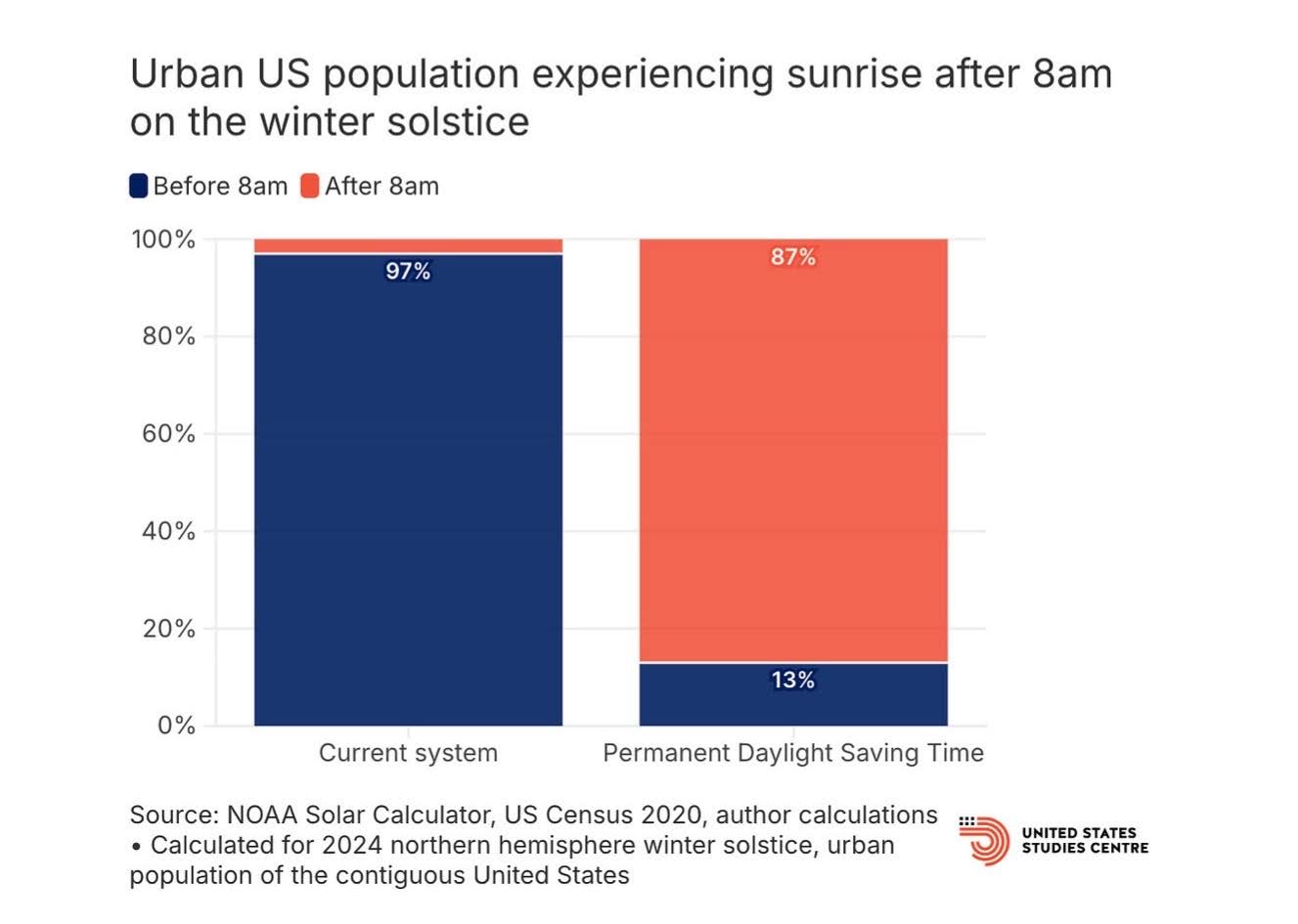
Both clock changes are hard on the body, but permanent DST does something specific: it strips away morning light for good, especially in winter.
Morning light is what stimulates your SCN to shut down nocturnal hormones and switch on the dopamine that gets you genuinely, functionally awake.
Take that away and you’re not just tired — you’re starting the day in a kind of biochemical sleepwalking. This is exactly why we see spikes in car accidents and workplace injuries every year in the week after we spring forward.
We do eventually adjust to a one-time shift. What we don’t adjust to is losing morning light permanently, every winter, year after year.
We already have the data — it’s called shift work
Shift work is one of the most heavily studied occupational health exposures on record, and the pattern is consistent: elevated metabolic, cardiovascular, and cancer risk. Permanent DST is essentially a nationwide, permanent version of the same circadian mismatch that makes shift work dangerous.
Losing morning light for half the year doesn’t just cost you a good night’s sleep — it drives sustained systemic inflammation, because the hypothalamus needs adequate daylight to calibrate properly.
The downstream effects read like a list of what I treat every day: learning disabilities, dementia, allergies, infections, cancer, heart attacks, strokes, hypertension, anxiety, depression, infertility, premature menopause, low testosterone. When your circadian rhythm is chronically disrupted, you also age faster — serotonin, dopamine, and acetylcholine stop being produced at the levels you need to focus, concentrate, and stay emotionally steady.
A relic of the Industrial Revolution
Daylight Saving Time was created to squeeze more working hours out of factory laborers. We don’t need that anymore, and the research on circadian disruption makes clear it’s actively harmful. Permanent standard time — not permanent daylight saving — is what lets the hypothalamus track natural seasonal light the way it evolved to.
Nearly 40 years of seeing this up close
I’m a nurse practitioner specializing in neuro-immune-endocrinology. For almost four decades I’ve treated shift workers who developed metabolic disease from exactly this kind of circadian strain — disease that eroded their quality of life and, in many cases, shortened it.
I don’t take pleasure in getting political. But this bill, as written, threatens the health of the entire country.
Call your senators. Ask them to reject permanent Daylight Saving Time and support permanent Standard Time instead.
Science should inform policy. Right now, it isn’t — and the cost will land on all of us.
Here’s some scripts you can use to reach out to your Senator
Phone call script
“Hi, my name is [NAME] and I’m a constituent from [CITY/ZIP]. I’m calling to ask Senator [LAST NAME] to vote NO on H.R. 139, the Sunshine Protection Act, which would make Daylight Saving Time permanent. The American Academy of Sleep Medicine and circadian researchers have warned that losing morning light year-round — especially in winter — is linked to higher rates of heart disease, metabolic disease, and mood disorders. I’d ask the Senator to support permanent Standard Time instead, which keeps our natural morning light intact. Thank you.”
Email/webform template:
Subject: Please vote NO on H.R. 139 — support Standard Time, not permanent DST
Dear Senator [LAST NAME],
I’m writing as a constituent from [CITY, STATE] to urge you to oppose H.R. 139, the Sunshine Protection Act, which the House passed on July 14 and which would make Daylight Saving Time permanent nationwide.
Circadian research is clear that morning light is essential for regulating sleep, hormones, and metabolism. Permanent DST would strip away that morning light for good, especially in winter months, creating a chronic version of the same light mismatch already linked to elevated rates in shift workers of heart disease, metabolic disease, and certain cancers.
I’d ask you to support permanent Standard Time instead, which preserves natural morning light exposure and avoids the twice-yearly clock change.
Thank you for considering the health implications of this legislation.
Sincerely,
[NAME]
[CITY, STATE]

0 Comments