
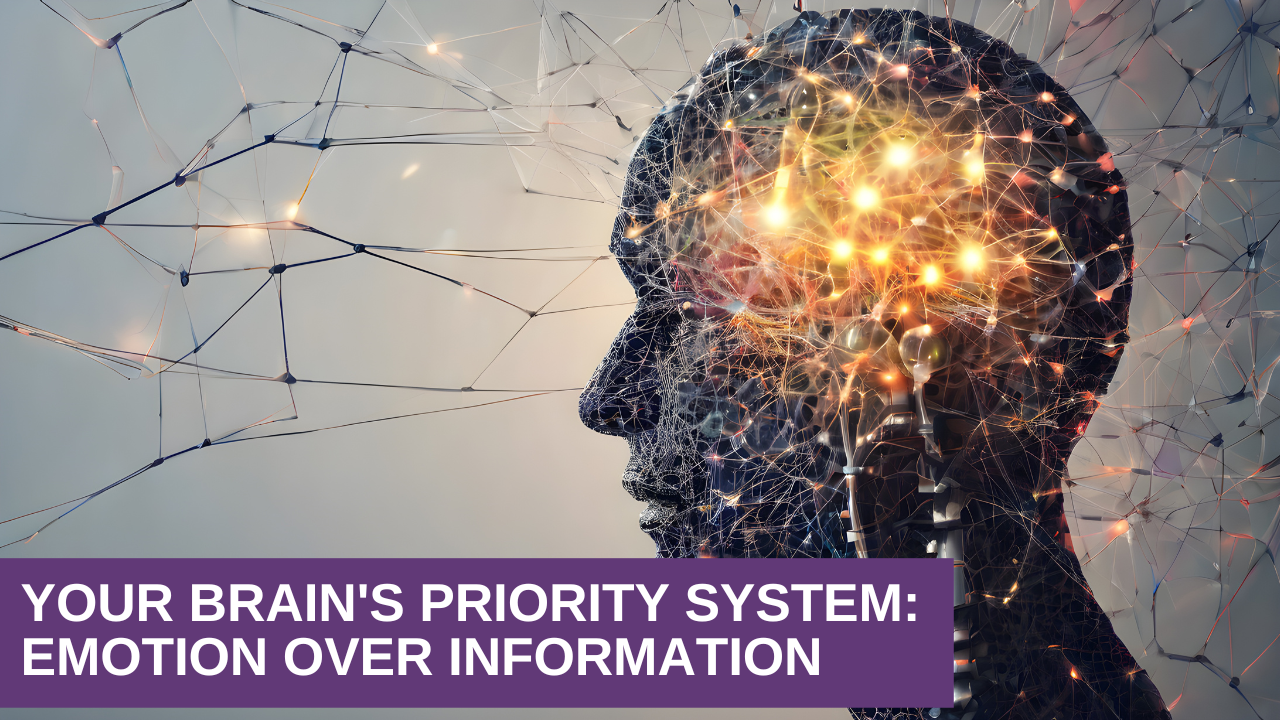
You forgot what you had for lunch on Tuesday, but you can still feel the exact weight of a moment from 20 years ago. A smell, a feeling in your chest, a room you haven’t been in since childhood. That’s not random; that’s physiology and your brain's priority system. Memory is not stored logically; it’s stored emotionally, and the structure coordinating both is the hypothalamus.
The Link Between Memory, Mood, and the Hypothalamus
I’m Deborah Maragopoulos, FNP. I’m a family nurse practitioner, and for thirty years I’ve worked with patients whose symptoms, emotional and physical, didn’t fit neatly into categories.
What I’ve learned is this:
When memory, mood, and healing feel blocked, the issue is rarely psychological weakness.
It’s dysregulation, and regulation begins in the hypothalamus.
How Emotional Memory Is Formed
Here’s what neuroscience now confirms, and it changes how we think about memory entirely.
Research has demonstrated that emotional memory formation occurs when the amygdala, the emotional center of the brain, actively communicates with memory regions like the hippocampus.
The stronger the emotional signal, the stronger the memory encoding.
Emotion doesn’t decorate memory.
Emotion determines memory.
The Role of the Hypothalamus in Memory
Over the last two decades, researchers have identified hypothalamic neuropeptides, especially orexin and melanin-concentrating hormone, as direct modulators of learning and memory.
These signals adjust synaptic strength, tag experience as meaningful, and influence whether memories are stored, updated, or suppressed.
What’s important is this:
These effects occur even when attention, motivation, and awareness are absent.
The hypothalamus is not just influencing memory indirectly.
It’s actively regulating it.
Why Trauma Memories Feel Different
Now, this explains something you’ve probably experienced your entire life without understanding why.
Fear-based experiences activate survival chemistry. Adrenaline and cortisol rise, logic shuts down, details blur. That’s why trauma memories often feel fragmented or incomplete.
The body prioritizes escape, not storytelling.
Joy-based experiences do the opposite.
Joy activates learning chemistry. Dopamine, oxytocin, stable hypothalamic signaling.
That’s why joyful memories retain texture, color, smell, and emotional warmth.
The hypothalamus decides which emotional state dominates and, therefore, how memory is stored.
What Happens When the Hypothalamus Is Dysregulated
Here’s something rarely discussed in clinical settings.
When the hypothalamus is chronically stressed, sleep-deprived, inflamed, blood sugar unstable, emotionally overwhelmed, it shifts into survival mode.
In survival mode, memory retrieval becomes less accessible, not because memories are gone, but because the system doesn’t feel safe enough to revisit them.
This is why trauma memories can stay hidden for decades. Why memories sometimes surface later in life during healing or hormonal transitions.
Healing doesn’t force memory open.
Healing restores the conditions that allow memory to return naturally.
When Regulation Returns
When regulation returns, people often notice clearer thinking, improved sleep, emotional steadiness, and sometimes access to memories they hadn’t thought about in years.
Not because we chase them, but because the body felt safe again.
This is why I don’t start with emotional processing or memory work. I start with regulation.
When the nervous system feels safe, understanding follows on its own.
A Question to Reflect On
I’ll leave you with this question:
What memory stands out most vividly for you, and what emotion is tied to it?
Your answer is a clue, not to the past, but to how your nervous system learned to survive.
Final Thoughts
If you want to learn more about how hypothalamic regulation supports emotional and physical healing, try my free Hormone Reboot Training.
Education always comes first.
Your memories are not random, and your body has been protecting you all along.
When regulation returns, understanding follows.


0 Comments