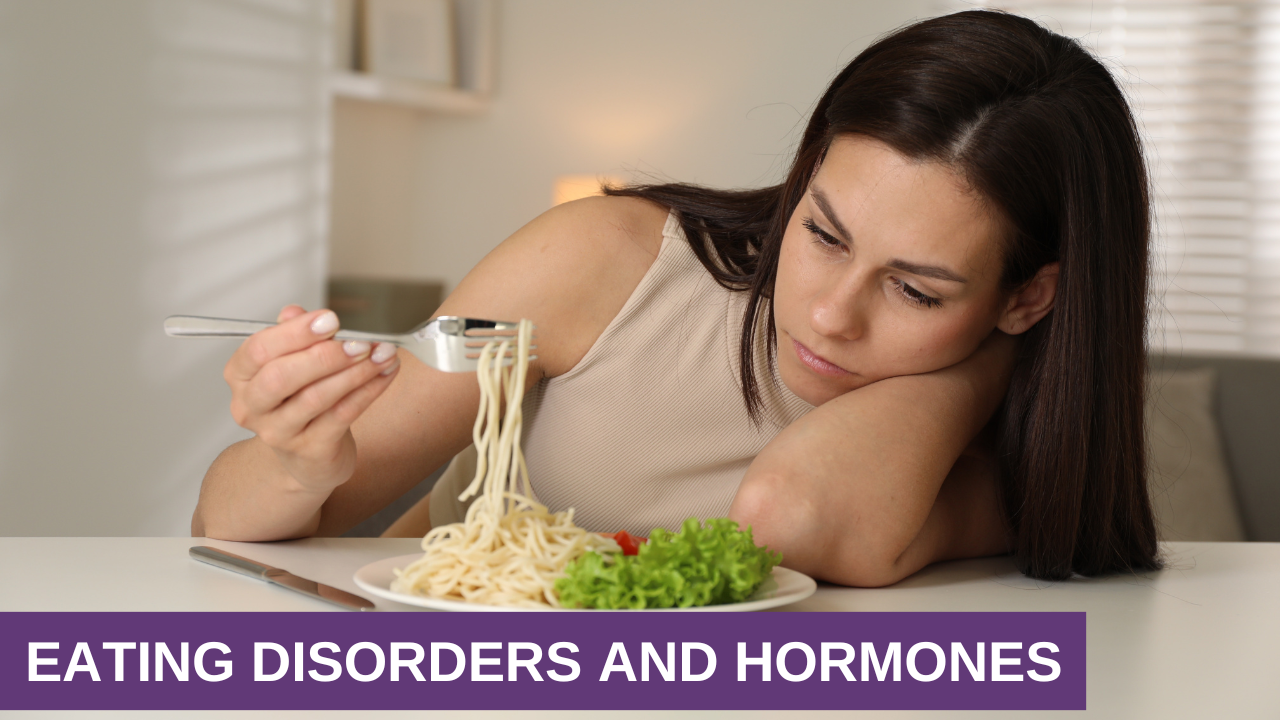
Eating Disorders and Hormones

by Deborah Maragopoulos FNP | May 22, 2026 | Hypothalamus | 0 comments

Did you know eating disorders are as much about your hormones as your habits?

Your hypothalamus plays a huge role in how you relate to food.

I’m Deborah Maragopoulos, FNP, an integrative nurse practitioner, and after decades of working with patients, I’ve seen how deeply the brain-hormone connection impacts eating behavior.

The hypothalamus regulates hunger and satiety signals.

When it’s out of balance, those signals get distorted, making recovery from eating disorders even harder.

Studies show that women with eating disorders have pathological changes in hypothalamic functioning that disconnect their hormonal appetite regulation.

That’s why so many people with eating disorders feel like their body is fighting against them, and it is at the level of the hypothalamus.

Healing Has to Address the Brain-Body Connection, Not Just Behavior

No amount of psychotherapy or hypnotherapy made a difference in my own disordered eating.

It wasn’t until I started supporting my hypothalamus with Genesis Gold® that I was able to finally heal from nearly 20 years of bulimarexia.

It’s not just about willpower; it’s biochemistry.

If you want to understand how your hypothalamus really works and start healing at the root, I created a free Hormone Reboot Training.

It’s a great first step towards reconnecting with your body.
Frequently Asked Questions

What is the Sunshine Protection Act?

The Sunshine Protection Act (H.R. 139) is federal legislation that would make daylight saving time permanent nationwide, ending the twice-yearly clock change. The U.S. House passed it on July 14, 2026, and it now awaits action in the Senate.

What's the difference between permanent daylight saving time and permanent standard time?

Both would end clock changes, but in opposite directions. Permanent standard time keeps clocks aligned with the sun so light arrives earlier in the morning. Permanent daylight saving time shifts clocks later year-round, meaning darker mornings — especially in winter — and more evening light.

Why do some sleep experts favor permanent standard time?

Many circadian researchers and the American Academy of Sleep Medicine have expressed support for permanent standard time, citing its closer alignment with natural light and the body's internal clock. The concern with permanent daylight saving time is the loss of morning light, which can influence sleep timing.

How does morning light affect the body?

Morning light exposure can help signal the brain's internal clock, which may support healthy sleep-wake timing, alertness, and hormone rhythms. Reduced morning light may make it harder for the body's clock to stay in sync. Individual responses vary, so speak with your provider about your own sleep concerns.

What is the suprachiasmatic nucleus (SCN)?

The SCN is a small cluster of neurons in the hypothalamus that acts as the body's master clock. It responds to light and dark cues and helps coordinate daily rhythms in sleep, hormone release, and metabolism.

About the Author - Deborah Maragopoulos FNP

Known as the Hormone Queen®️, I’ve made it my mission to help everyone - no matter their age - balance their hormones, and live the energy and joy their DNA and true destiny desires. See more about me my story here...


Last Updated: May 21, 2026

0 Comments

Submit a Comment

Your email address will not be published. Required fields are marked *