
A Hypothalamic–Insulin Resistance Pattern Restored
Patient: Lana, 31-year-old female
Chief Concerns: Irregular menstrual cycles, breast tenderness, weight gain, bloating, fertility concerns
Past Diagnosis: Polycystic Ovary Syndrome (PCOS)
Presenting History
Lana presented with a two-year history of irregular menstrual cycles, cyclical breast tenderness, abdominal bloating, and gradual weight gain despite maintaining a clean diet and exercising regularly.
She had previously been diagnosed with polycystic ovary syndrome and had been using DIM (diindolylmethane) consistently to manage estrogen dominance. While DIM helped somewhat with breast tenderness, it did not restore regular ovulation or menstrual cycles, and she remained concerned about her fertility.
Lana has never been pregnant and expressed a strong desire to optimize her health before conceiving.
Despite healthy lifestyle habits, her Body Roundness Index (BRI) measured at 6, placing her at borderline risk for metabolic dysfunction.
Clinical Insight: PCOS Is a Hypothalamic Issue — Not an Ovarian One
PCOS is often described as an ovarian disorder, but clinically, it is best understood as a miscommunication within the hypothalamic–pituitary–ovarian (HPO) axis, driven by insulin resistance at the hypothalamic level.
When the hypothalamus becomes insulin-resistant:
- Peripheral insulin resistance follows
- Ovarian insulin resistance develops
- Androgen production increases
- Estrogen dominance emerges
- Ovulation becomes irregular or absent
PCOS is fundamentally:
- Inflammatory
- Insulin-driven
- Neuroendocrine in origin
Left unaddressed, this pattern increases long-term risk for:
- Type 2 diabetes
- Hypertension
- Cardiovascular disease
- Ongoing fertility challenges
Assessment
- PCOS with anovulation
- Estrogen dominance (breast tenderness, bloating, weight gain)
- Insulin resistance (elevated HbA1c)
- Fertility risk secondary to hypothalamic dysregulation
Plan
1. Hypothalamic Support (Foundational)
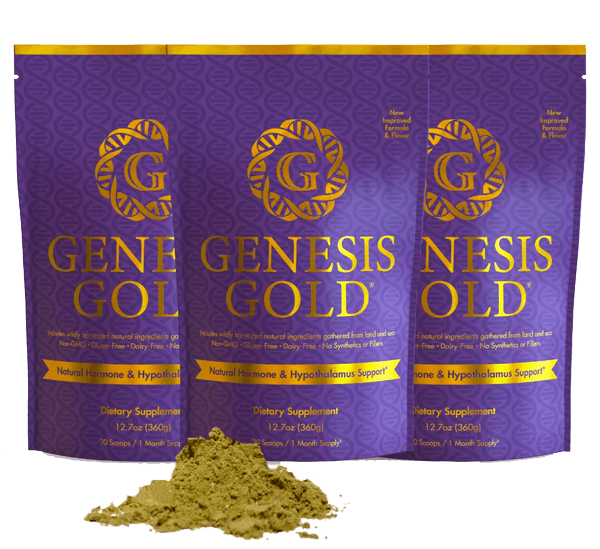
Given the root cause of Lana’s PCOS, I recommended Genesis Gold® as foundational hypothalamic support. In my clinical experience, consistent hypothalamic nourishment can:
- Improve insulin signaling
- Restore ovulatory rhythm
- Reduce excess androgen production
- Support progesterone production once ovulation resumes
2. Gut–Estrogen Clearance Support
Because hypothalamic healing takes time, we addressed Lana’s estrogen dominance symptoms concurrently.
A comprehensive stool analysis revealed elevated beta-glucuronidase, an enzyme produced by certain gut microbes that can deconjugate estrogen and recirculate it back into the bloodstream.
To address this:
- Calcium-D-glucarate was introduced to bind beta-glucuronidase and support estrogen clearance
- DIM (200 mg daily) was continued until ovulation was established
3. Metabolic & Hypoglycemic Support
Improving insulin sensitivity was emphasized through:
- Continued clean diet and regular movement
- Hypothalamic regulation rather than caloric restriction
Results (6-Month Follow-Up)
At her six-month follow-up, Lana reported significant improvements:
- Regular menstrual cycles
- Resolution of breast tenderness and bloating
- Noticeable reduction in waist circumference
- Gradual, sustainable weight loss
Laboratory findings showed:
- Adequate luteal-phase progesterone, confirming ovulation
- HbA1c decreased from 5.8 → 5.4, indicating improved insulin sensitivity
- AMH levels decreased – indicating less follicular cysts and normalizing ovarian reserve
Lana’s cycles stabilized without hormone suppression, and her fertility outlook improved naturally through restored hypothalamic signaling.
Clinical Takeaway
PCOS is not an ovarian disorder to be suppressed — it is a hypothalamic communication issue to be corrected.
When insulin resistance, inflammation, and estrogen dominance are addressed at the level of the hypothalamus, the ovaries often regain their natural rhythm.
For many women, healing PCOS is not about adding more hormones —
It’s about restoring the system that tells hormones when, how, and why to function.
Genesis Gold® vs. Standard PCOS Medications
Symptom Management vs. Root-Cause Regulation
Polycystic Ovary Syndrome (PCOS) is most commonly treated with oral contraceptives, sometimes combined with anti-androgens or insulin-sensitizing drugs. These approaches can be helpful for short-term symptom control — but they do not correct the underlying cause of PCOS.
What Birth Control Pills Do for PCOS
Oral contraceptives are often prescribed because they:
- Regulate menstrual bleeding
- Suppress ovarian androgen production
- Improve acne and excess hair growth
However, birth control pills work by overriding the body’s hormonal signaling, not restoring it.
Importantly, they:
- Do not resolve insulin resistance
- Do not improve metabolic dysfunction
- Do not restore ovulation
- Do not support fertility
- Do not heal hypothalamic–pituitary–ovarian (HPO) axis communication
In fact, many women with PCOS experience:
- Continued weight gain
- Worsening insulin resistance
- Suppressed natural hormone production
- Delayed diagnosis of the true underlying imbalance
Periods may appear “regular,” but ovulation is often still absent.
PCOS Is Not an Ovarian Disorder
PCOS originates upstream, at the level of the hypothalamus.
The hypothalamus coordinates:
- Insulin signaling
- Ovulation timing
- Androgen production
- Progesterone release
- Metabolic set point
When hypothalamic signaling becomes insulin resistant:
- Ovaries respond abnormally
- Androgens rise
- Estrogen dominance develops
- Ovulation shuts down
This is why PCOS is increasingly understood as a neuroendocrine–metabolic condition, not simply a gynecologic one.
How Genesis Gold® Fits In
Genesis Gold® was designed to support hypothalamic regulation, which is essential for addressing PCOS at its root.
Rather than suppressing ovarian function, Genesis Gold® helps:
- Improve insulin sensitivity at the hypothalamic level
- Restore communication along the HPO axis
- Support natural ovulation and progesterone production
- Reduce estrogen dominance over time
- Address metabolic drivers of weight gain
- Create the hormonal environment necessary for fertility
This process takes time — typically 3–6 months — because true regulation is biological, not pharmaceutical suppression.
A Different Goal: Restoration, Not Override
Birth control pills can manage symptoms.
Genesis Gold® supports systemic recalibration.
For women with PCOS who want:
- Metabolic healing
- Cycle regularity with ovulation
- Hormonal balance without suppression
- Fertility support
- Long-term health risk reduction
Optimizing hypothalamic function is essential.
PCOS does not resolve by controlling hormones alone.
It heals when the brain–hormone–metabolism conversation is restored.
Related Reading:
Body Roundness Index (BRI) Calculator
Is polycystic ovary syndrome a hypothalamic disease?
Genesis Gold®

0 Comments