
At 38 years old, Chris didn’t recognize himself anymore.
A firefighter for 15 years, he was used to pushing his body hard. But lately, his energy was gone. His workouts stalled. He’d gained weight—especially in his chest, which he referred to with frustration as “man boobs.” His hair had been thinning at the temples for years. Worse, his confidence had collapsed.
Divorced and raising three young children, Chris avoided dating altogether. Low libido and sexual performance issues made him feel defeated before he even tried.
“I’m sick and tired of being told my labs are fine,” he said during our first visit. “Because I don’t feel fine.”
And he was right.
A Deeper Look at the Pattern
Chris had been diagnosed years earlier with Hashimoto’s thyroiditis and placed on synthetic thyroid hormone. Initially, his energy improved—but about a year later, everything declined again. Fatigue returned. He was cold all the time. His weight climbed. Hair loss accelerated.
Chris’s lifestyle offered important clues:
- Long overnight shifts and disrupted sleep cycles
- Chronic stress from emergency work and shared custody
- Heavy caffeine and energy drink use
- A diet high in sugar and fat, low in vegetables
- Little time for stress regulation or recovery
This is a classic setup for circadian rhythm disruption and hypothalamic dysregulation—especially in high-stress professions.
What the Labs Really Revealed
Chris’s labs told a very different story than “everything looks fine”:
- Prolactin: Elevated at 67 ng/mL
- Testosterone: Low-normal at 348 ng/dL with low LH (HPG-axis suppression)
- DHT: High-normal, contributing to androgenic hair loss
- Thyroid: Suppressed TSH, low-normal free T3 and T4, TPO antibodies at 600 IU/mL
- Metabolic markers:
- LDL 130 mg/dL (pattern B)
- HbA1c 5.9% (insulin resistance)
An MRI ruled out a pituitary tumor. The real issue was daytime prolactin elevation, which blocks hormone receptor sensitivity. Until prolactin was addressed, neither testosterone nor thyroid hormone could work properly.
This wasn’t a testosterone problem.
It was a hypothalamus–pituitary axis problem.
The Healing Strategy (Rooted, Not Reactive)
Chris’s plan focused on restoring communication at the top of the hormonal cascade:
- Hypothalamic Support
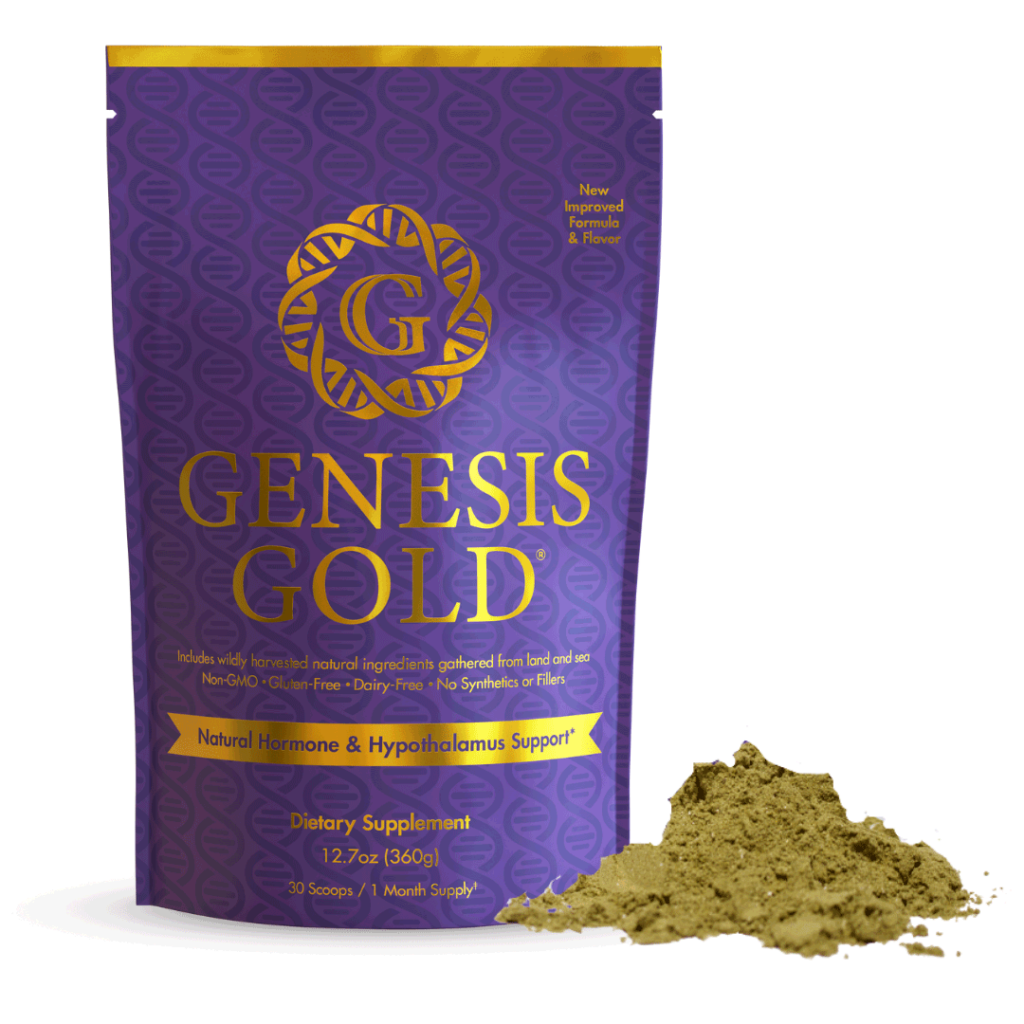
- Genesis Gold® (dosed by body weight)
- Added Sacred Seven® amino acids to support autoimmunity and dopamine production
- Lowering Prolactin + Resetting Circadian Rhythm
- Short-term bromocriptine to lower daytime prolactin
- Gradual weaning as hypothalamic dopamine production improved
- Thyroid Axis Restoration
- Transition from synthetic thyroid to desiccated thyroid extract
- Careful monitoring to allow the HPT axis to recover
- Nutrition & Metabolism
- Short liver cleanse → insulin-resistant diet
- Reduced sugar and energy drinks
- Improved lipid and glucose markers
- Sleep & Nervous System Support
- GABA at bedtime
- Strict sleep hygiene despite shift work
- Movement & Body Composition
- Walking, gentle resistance, and waist-focused activity
- No overtraining during recovery
- Mindset & Emotional Health
- Therapy to address lifelong codependency patterns
- Relearning self-care without guilt
The Results
Within weeks, Chris noticed a dramatic shift.
“It feels like my body is waking up.”
Early morning erections returned—a key sign of healthy testosterone signaling. His energy stabilized. Sleep deepened. Weight dropped steadily. Hair loss slowed. Confidence returned.
Chris never needed testosterone replacement therapy.
As prolactin normalized and thyroid signaling recovered, his body began producing and responding to its own hormones again. Over time, his thyroid antibodies fell, and we gradually weaned him off thyroid medication entirely.
A few years later, Chris was back to full physical fitness, leaner, stronger, emotionally grounded—and dating again.
The Takeaway
Low testosterone is often a downstream symptom, not the root cause.
When the hypothalamus is supported, hormone receptors reopen, circadian rhythm stabilizes, and the body regains its ability to self-regulate.
Healing doesn’t start with replacing hormones.
It starts with restoring communication.
A Foundational Note on Hypothalamic Support
In cases like Chris’s, hormone replacement was not the starting point.
Before adjusting thyroid medication or considering testosterone therapy, the priority was restoring communication between the hypothalamus and the rest of the endocrine system. When that signaling improves, the body often begins responding to its own hormones again.
That is why I use Genesis Gold® as foundational support in complex cases.
Genesis Gold® was formulated to nourish the hypothalamus and stabilize neuro-immune-endocrine communication using:
- Targeted hypothalamic amino acids (Sacred Seven®)
- Mineral-rich sea vegetables
- Adaptogenic and anti-inflammatory botanicals
- Whole-food phytonutrients designed for daily, long-term use
This is not a stimulant.
It does not force hormone production.
And it does not override your body’s natural feedback loops.
Instead, it supports the conditions your body needs to restore sensitivity, rhythm, and balance over time.
For individuals dealing with fatigue, hormone resistance, autoimmune thyroid patterns, disrupted sleep, metabolic issues, or chronic stress, Genesis Gold® is often where healing becomes possible—because the hypothalamus finally has the nutrients it needs to do its job.
If you’re exploring hypothalamus-centered healing, you can learn more about Genesis Gold® here:
👉 Learn about Genesis Gold®
And if you’re new to this approach, I strongly recommend starting with education.
👉 Watch the free Hormone Reboot Training
Healing doesn’t begin with replacing what’s missing.
It begins by restoring communication.


0 Comments