
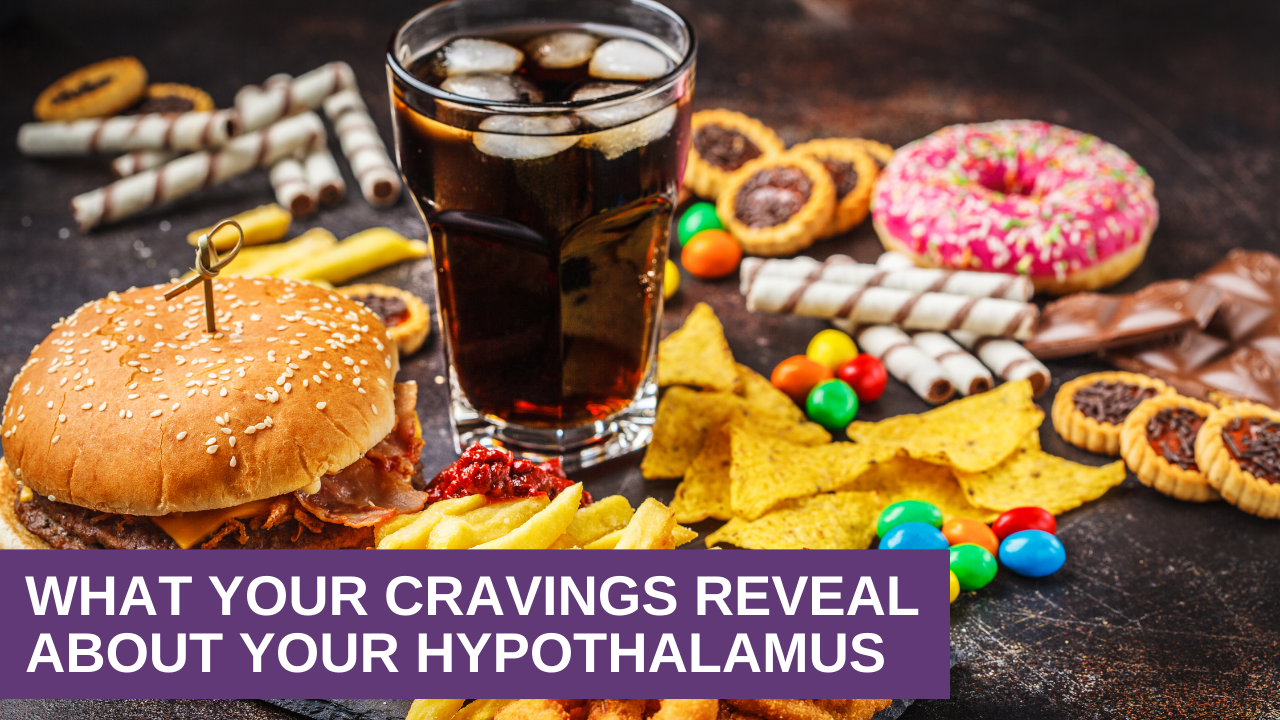
That 3 pm sugar craving? That urge for salty chips? That desperate need for carbs? These aren't character flaws. These aren't signs that you lack willpower. These are your hypothalamus sending you SOS signals, telling you exactly what it needs. Today I'm going to teach you how to decode your cravings so you understand what your body is really asking for.
I'm Deborah Maragopoulos, FNP, an integrative nurse practitioner, and I've spent decades studying how the hypothalamus communicates through cravings. Once you understand this language, everything changes.
Let's dive in.
Sugar Cravings
Let's start with the most common craving. Sugar cravings, especially in the afternoon or after meals.
When you crave sugar, your hypothalamus is usually telling you one of two things.
1. Dopamine Production Is Off
First possibility, your dopamine production is off.
Dopamine is your motivation and reward neurotransmitter. Produced in your hypothalamus from the amino acid tyrosine. When dopamine is low, you feel unmotivated, tired, and you can't concentrate; your brain craves sugar for more energy.
The problem is that sugar only temporarily stimulates dopamine, then crashes it even lower. So you crave more sugar, turning into a vicious cycle. What your hypothalamus actually needs is the amino acid tyrosine to make more dopamine naturally and sustainably.
2. Blood Sugar Dysregulation
The second possibility is blood sugar dysregulation.
Your hypothalamus monitors your blood sugar levels constantly. When blood sugar drops too low, it triggers your hypothalamus to release cortico-releasing hormones to tell your pituitary gland to tell your adrenals to make cortisol. Cortisol then releases stored sugar from your liver. Except constantly activating the HPA axis is not sustainable. So you keep craving sugar. And if your blood sugar is constantly crashing (which happens when your hypothalamus is not properly regulating insulin and glucagon), you have constant sugar cravings.
What the hypothalamus needs is support to regulate blood sugar more effectively, so you don't have these crashes in the first place.
Salt Cravings
The second most common craving is for salt, especially for salty, savory foods like chips or salted nuts.
Salt cravings, especially fat or sugar cravings, usually indicate adrenal insufficiency. Your hypothalamus controls your adrenal glands through the HPA axis. When your adrenals are not producing enough aldosterone, you lose salt through urine. Your hypothalamus senses this sodium loss and triggers salt cravings to replenish it.
This is particularly common in people with chronic stress (exhausted adrenals), in perimenopause and menopause (changing hormone signals to adrenals), or those who have thyroid problems (which affect adrenal function). If you're constantly craving salt, your hypothalamus is telling you that your stress response system needs support.
Starchy Carbohydrates Cravings
The third craving that indicates hypothalamus imbalance is for starchy carbohydrates, especially bread, pasta, and potatoes.
Carb cravings often indicate low serotonin. Serotonin is your calming, feel-good neurotransmitter. It’s produced from the amino acid tryptophan. Hypothalamic serotonin controls eating behavior.
When serotonin is low, you feel anxious or worried, sad or down, irritable, and you can't relax.
Your hypothalamus knows that eating carbohydrates temporarily raises serotonin. That’s because carbs trigger an insulin release, which helps tryptophan cross into the brain to make serotonin. But again, this is a temporary fix. The sustainable solution is to provide your hypothalamus with adequate tryptophan and the cofactors it needs to produce serotonin consistently.
Interestingly, carb cravings often get worse in the evening. Because serotonin converts to melatonin at night. If you don't have enough serotonin to convert to melatonin, you crave carbs so you can sleep.
Fat Cravings
The fourth craving that indicates your hypothalamus needs support is Fat Cravings.
If you’re craving cheese, nuts, fatty meats, or butter, it usually means your body needs building blocks for hormones. All of your steroid hormones (cortisol, estrogen, progesterone, testosterone, DHEA) are made from cholesterol, which comes from fat.
You crave fats if you're not eating enough healthy fats or if your body is using up fats rapidly to make stress hormones. Your hypothalamus triggers fat cravings to get the raw materials it needs to sustain hormone production. Fat cravings are particularly common in perimenopause (hormone production is in flux) and during chronic stress (burning through hormones rapidly).
Protein Cravings
The fifth craving that indicates your hypothalamus needs support is Protein Cravings.
If you can’t get enough meat, eggs, or fish, it usually indicates that your body needs more amino acids. Amino acids are the building blocks for all your neurotransmitters (dopamine, serotonin, GABA, acetylcholine), all your hormones, your enzymes, and for tissue repair.
Your hypothalamus needs amino acids to function.
When you're not getting enough protein, or when you're under high stress and burning through amino acids rapidly, your Hypothalamus triggers protein cravings. If you crave protein, especially first thing in the morning, your body is telling you it needs these building blocks.
Almost all cravings are your hypothalamus telling you it needs specific nutrients: amino acids (tyrosine, tryptophan, and others), B vitamins (cofactors for neurotransmitter production), minerals (magnesium, zinc, etc.), and healthy fats (for hormone production).
Support Your Hypothalamus
When you provide your hypothalamus with comprehensive nutrition, not just empty calories from sugar or processed carbs, but actual nutrients, the cravings start to normalize. You stop feeling controlled by cravings. You can make food choices based on what you actually want, not what your deficient hypothalamus is desperately demanding.
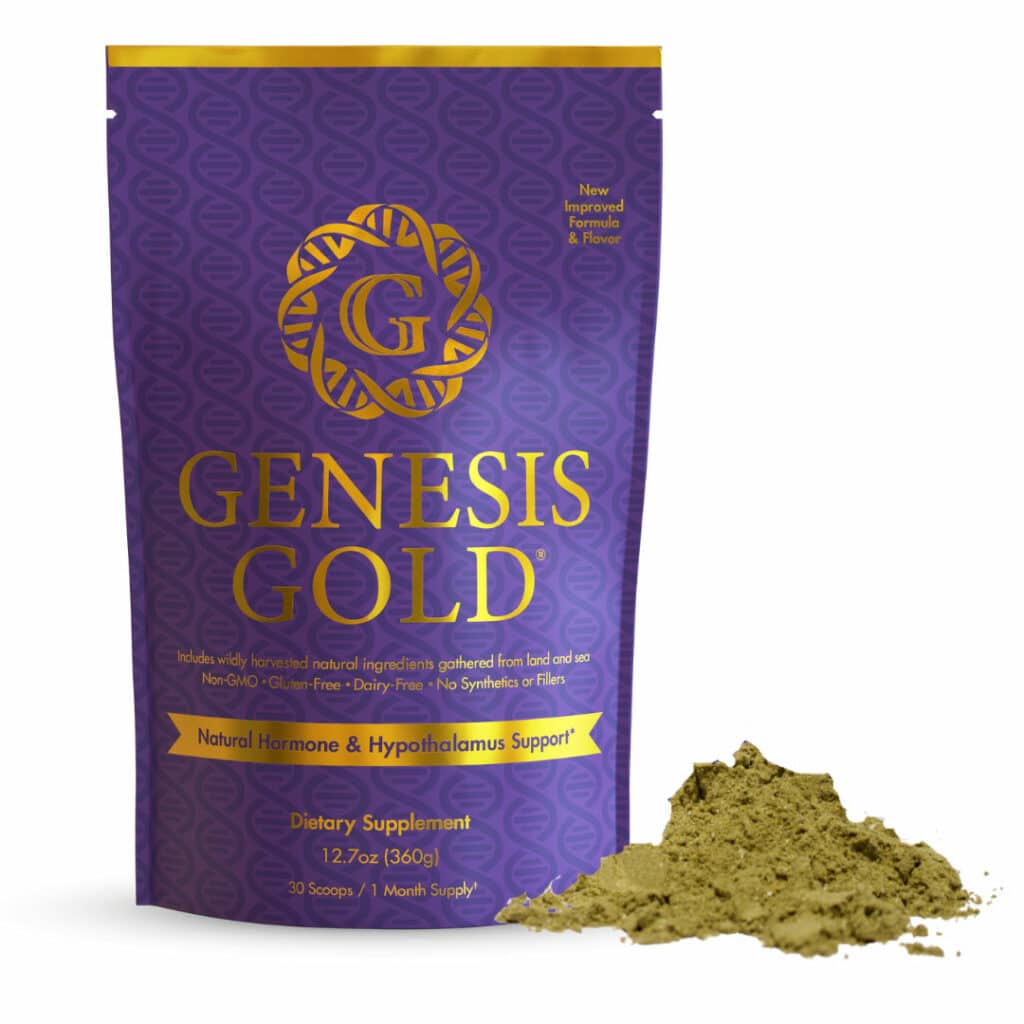
This is exactly why I formulated Genesis Gold® the way I did.
Genesis Gold® provides your hypothalamus with:
- All the amino acids it needs to produce neurotransmitters and hormones
- B vitamins and cofactors to support these processes
- Adaptogenic herbs to help balance stress response
- Whole food nutrients for comprehensive support
When people start taking Genesis Gold®, one of the first things they notice is that their cravings change. The desperate 3pm sugar cravings calm down. The chip cravings reduce. They feel more in control.
That's because we're feeding the hypothalamus what it actually needs, so it stops sending those SOS signals. If you want to learn more about Genesis Gold®, CLICK HERE.
Stop fighting your cravings. Listen to them, decode them, and give your hypothalamus what it's really asking for.


0 Comments