
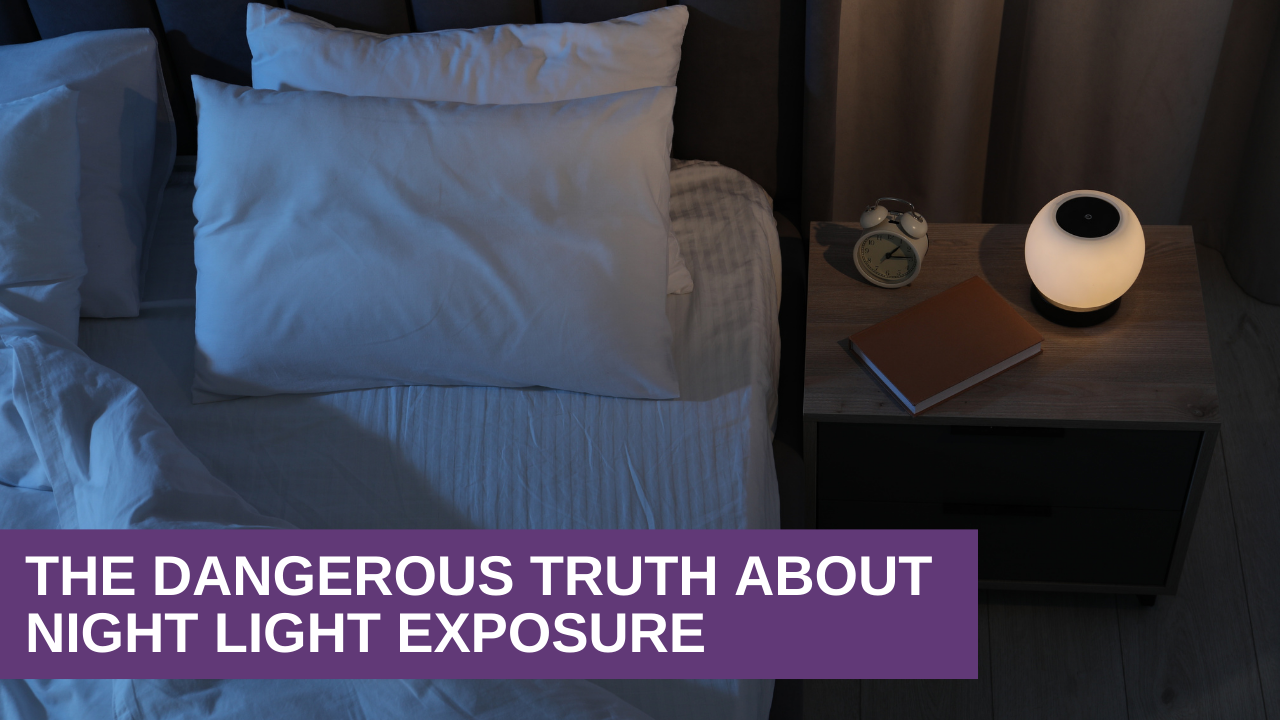
A massive new study just followed over 88,000 adults for years and discovered something shocking: night light exposure in your bedroom at night - your phone charging, your alarm clock, the streetlight coming through your window - is quietly increasing your risk of heart attack and stroke. And the mechanism behind why this happens is absolutely fascinating.
Let me break it down for you.
I'm Deborah Maragopoulos, a family nurse practitioner specializing in how the hypothalamus affects your health. And when I saw this research, I immediately understood the mechanism behind it - because it all comes back to your hypothalamus. Today I'm going to explain what this study found and why it matters for your health.
The Research
First, let’s look at the research. This was a massive international study that followed 88,905 adults over age 50 (Mean age about 62, about 57% women) and measured light exposure at night using light sensors, then tracked cardiovascular outcomes.
Researchers found that people in the brightest night light exposure group had significantly higher risks of coronary artery disease, myocardial infarction (heart attack), heart failure, atrial fibrillation (irregular heartbeat), and stroke. These were measurable, significant increases in serious cardiovascular disease.
Most media coverage just said "Turn off your lights at night", yet didn't explain WHY this happens. When you understand the mechanism, you understand just how critical this is.
Your Hypothalamus Controls Your Circadian Rhythm
Your hypothalamus controls your circadian rhythm - your day-night cycle.
What most people don't know is that your hypothalamus perceives light in TWO ways: through your eyes (via special cells in your retina) and through your skin (your skin has photoreceptors). This means that even if you sleep with an eye mask, if there's light in your room, your skin is picking it up and sending signals to your hypothalamus.
When your hypothalamus detects light, it thinks it's daytime and tells your pineal gland to stop producing melatonin, dumps dopamine to turn off prolactin, and stimulates your adrenals to release cortisol. Your circadian rhythm becomes significantly altered.
Why the Increase In Cardiovascular Risk?
Well, when your hypothalamus detects light at night, it cannot properly regulate your immune system to clear inflammation from your cardiovascular system.
Let me explain what I mean.
While asleep in complete darkness, your hypothalamus coordinates several critical processes.
#1: Melatonin Production
Melatonin isn't just a sleep hormone. It's a powerful antioxidant and anti-inflammatory hormone that travels throughout your body during the night, reducing inflammation and oxidative stress. When there's light at night, melatonin production gets blunted or delayed, and you don’t get its anti-inflammatory protection.
#2: Immune System Activation
During deep sleep in darkness, your hypothalamus activates specific immune responses that clear out inflammatory cytokines, oxidative damage, cellular debris, and atherosclerotic plaques (the buildup in your arteries). Your hypothalamus coordinates your body's nightly maintenance program - cleaning out the cardiovascular system, reducing inflammation, and repairing damage.
When there's light at night, this cleanup doesn't happen properly. Your hypothalamus can't activate these immune-clearing mechanisms as effectively.
#3: Cortisol and Stress Response
At night, cortisol should be at its lowest point, which gives your cardiovascular system a break from stress hormones. When there's light at night, it can trigger cortisol release or prevent the natural nocturnal falling. Cortisol promotes inflammation and damages blood vessels.
The result of night after night with light exposure is inflammation building up in your cardiovascular system. Normal clearing processes aren't happening. Over months and years, this accumulation of inflammation contributes to atherosclerosis (plaque in arteries), arterial stiffness, increased blood pressure, blood clots, heart attacks, and strokes.
This is why researchers saw those dramatic increases in cardiovascular disease.
Circadian Rhythm and Your Metabolism
Another piece that wasn’t mentioned is how circadian disruption affects your metabolism. Your hypothalamus uses circadian signals to regulate: insulin sensitivity (which affects blood sugar), cholesterol metabolism, blood pressure, and inflammation throughout your body.
When circadian rhythm is disrupted by night light, all of these metabolic processes get thrown off. You become more insulin resistant. Your cholesterol profile worsens. Your blood pressure goes up. All risk factors for cardiovascular disease. Not just the direct effect on inflammation, but indirect effects through metabolic dysfunction, all stemming from circadian disruption caused by light at night.
Sleep In Complete Darkness
What you can do is sleep in complete darkness.
Cover or unplug any devices with LED lights. Use blackout curtains or heavy drapes. Turn your alarm clock face away from you. Put your phone in another room or face down. Use electrical tape to cover any small lights you can't eliminate. If you need a nightlight for safety, use red light only (red wavelengths don't disrupt circadian rhythm like blue and green light do).
Complete Darkness Means: If you can see your hand in front of your face, it's not dark enough. You can use a sleep mask, but remember that your skin still perceives light. So ideally, you want the room itself to be dark. This is one of the simplest, cheapest interventions for cardiovascular health. Yet almost nobody is talking about it.
Free Hormone Reboot Training
If you want to dive deeper into how your hypothalamus controls your circadian rhythm - and how circadian disruption affects every aspect of your health - I've created a free training called Hormone Reboot.
In this training, I explain how your hypothalamus regulates:
- Your sleep-wake cycle
- Your hormone production
- Your inflammation levels
- Your metabolic health
- Your immune function
And I show you practical steps to support optimal hypothalamus function, including optimizing your circadian rhythm. It's completely free, and it could add years to your life.
Turn off those lights tonight. Your heart will thank you.
0 Comments