
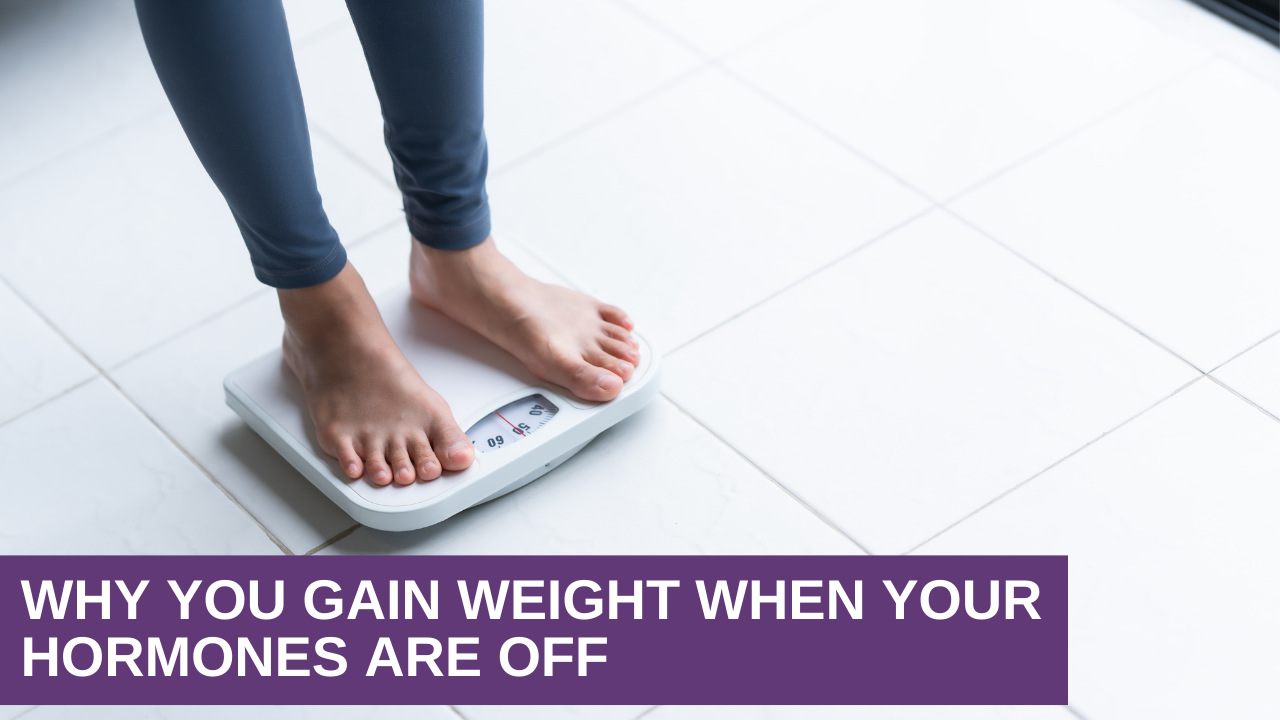
You're eating less. You're exercising more. You're doing everything 'right.' But the scale won't budge. Or worse, you're gaining weight. Here's what nobody's telling you: when your hormones are out of balance, your body literally cannot lose weight the way it should. Your hormones are hijacking your metabolism. And today I'm going to explain exactly why you gain weight when your hormones are off.
I'm Deborah Maragopoulos, a family nurse practitioner specializing in hormones and metabolism. And this is one of the most frustrating things I see people go through - doing everything right but not getting results because their hormones are working against them. Let me break down what's really happening.
The Hypothalamus Sets Your Metabolic Thermostat
The hypothalamus sets your metabolic thermostat, and it sets your weight 'set point' - the weight your body tries to maintain. It does this by producing a hormone called proopiomelanocortin (POMC). POMC gets broken down into hormones that control:
- appetite
- metabolic rate
- glucose metabolism
- fat storage
- stress response
- day-night cycles
- even your motivation
When your hypothalamus is functioning well, POMC is produced properly, and all these systems work in balance. When your hypothalamus is dysfunctional (from hormone changes, chronic stress, or inflammation), POMC production gets disrupted.
When POMC is Low:
When POMC is low, your:
- appetite increases (especially for high-calorie foods)
- metabolic rate slows down
- body holds onto fat
- and you feel less motivated to move
It’s like your hypothalamus has turned down your metabolic thermostat. Now you’re burning fewer calories at rest, and your body is fighting to hold onto every pound.
Your Hypothalamus Controls Cortisol Through the HPA Axis
POMC breaks down into cortico releasing hormone (CRH), which is how your hypothalamus controls cortisol production through the HPA Axis. When working properly, cortisol rises in the morning to wake you up, then gradually declines through the day. When the hypothalamus is dysfunctional, cortisol patterns get disrupted: too high all day, spiking at the wrong times, or too low in the morning, and too high at night.
Chronic elevated or dyscircadian cortisol tells your body to store fat (specifically around your middle), breaks down muscle tissue (reducing your metabolic rate), over time creates insulin resistance (so you gain weight more easily), and increases appetite, especially for sugar and carbs. This is why chronic stress makes you gain weight, even if you're not eating more.
Cortisol is literally telling your body to hold onto fat.
The Thyroid-Estrogen-Insulin Trio
Thyroid:
Besides producing POMC, your hypothalamus orchestrates proper thyroid, estrogen, and insulin function. Which is important because weight management requires that these three hormones work in harmony: Your hypothalamus tells your thyroid how fast your metabolism should run. When thyroid hormone is low, everything slows down, so you burn fewer calories, store more fat, and you can't seem to lose weight no matter what you do.
Estrogen:
Estrogen affects where you store fat. When estrogen is adequate, women store fat in a healthier female pattern (hips, thighs, breasts). When estrogen declines, they start storing more fat around their middle, like men do. Men’s testosterone converts to estrogen. A small amount is vital for proper brain function. Too much and men store belly fat. A thickening waistline can indicate visceral fat storage around your internal organs. Visceral fat is highly inflammatory.
Insulin:
Your hypothalamus regulates how your body responds to insulin. When your hypothalamus is dysfunctional, it cannot properly regulate your glucose metabolism, and you develop insulin resistance. Cells don't respond to insulin properly so glucose can’t get in to be converted into cellular energy. Your pancreas responds to the rising blood sugar by making more and more insulin. Except your cells won’t let it in so all that extra blood sugar gets stored as fat.
The problem is that when even ONE of these three hormones is off, weight loss becomes difficult. When ALL THREE are off (common in perimenopause and menopause), weight loss feels impossible.
Why Calorie Restriction Makes It Worse
What Can You Do?
Well, most people just start cutting their caloric intake. Except calorie restriction makes it worse. When you drastically reduce calories, your hypothalamus perceives this as starvation. It responds by lowering your metabolic rate even more (to conserve energy), increasing hunger hormones (making you ravenous), reducing thyroid hormone production (slowing metabolism to conserve energy), increasing cortisol production to deal with the stress of the famine, and becoming resistant to leptin to force your body to hold onto fat stores.
So you're eating 1200 calories a day, feeling miserable. Your body is fighting you every step of the way. Because your hypothalamus thinks you're starving. 'Eat less, move more' doesn't work when your hormones are imbalanced. You're fighting your own hypothalamus, which is programmed for your survival.
The Solution: You Have to Support Your Hypothalamus
You have to support your hypothalamus so it can properly regulate all these metabolic hormones. When your hypothalamus is functioning well, your metabolic set point normalizes, your cortisol patterns become healthy, your thyroid gets proper signals, your insulin sensitivity improves, and your appetite regulates naturally.
And soon, weight loss becomes possible again. Not through deprivation and suffering but through actually fixing the root cause.
If you're tired of fighting your own body - if you want to understand how to work WITH your hormones instead of against them - I've created a free training called Hormone Reboot.
In this training, I teach you exactly how your hypothalamus controls your metabolism, and what you can do to support it naturally. I'll show you:
- Why your metabolism has slowed down
- How to reset your metabolic set point
- What to eat to support hypothalamus function
- How to balance the hormones that control weight
It's completely free and could be the missing piece that finally allows you to lose the weight.
Stop blaming yourself. It's not your willpower. It's your hypothalamus. And we can fix it.


0 Comments